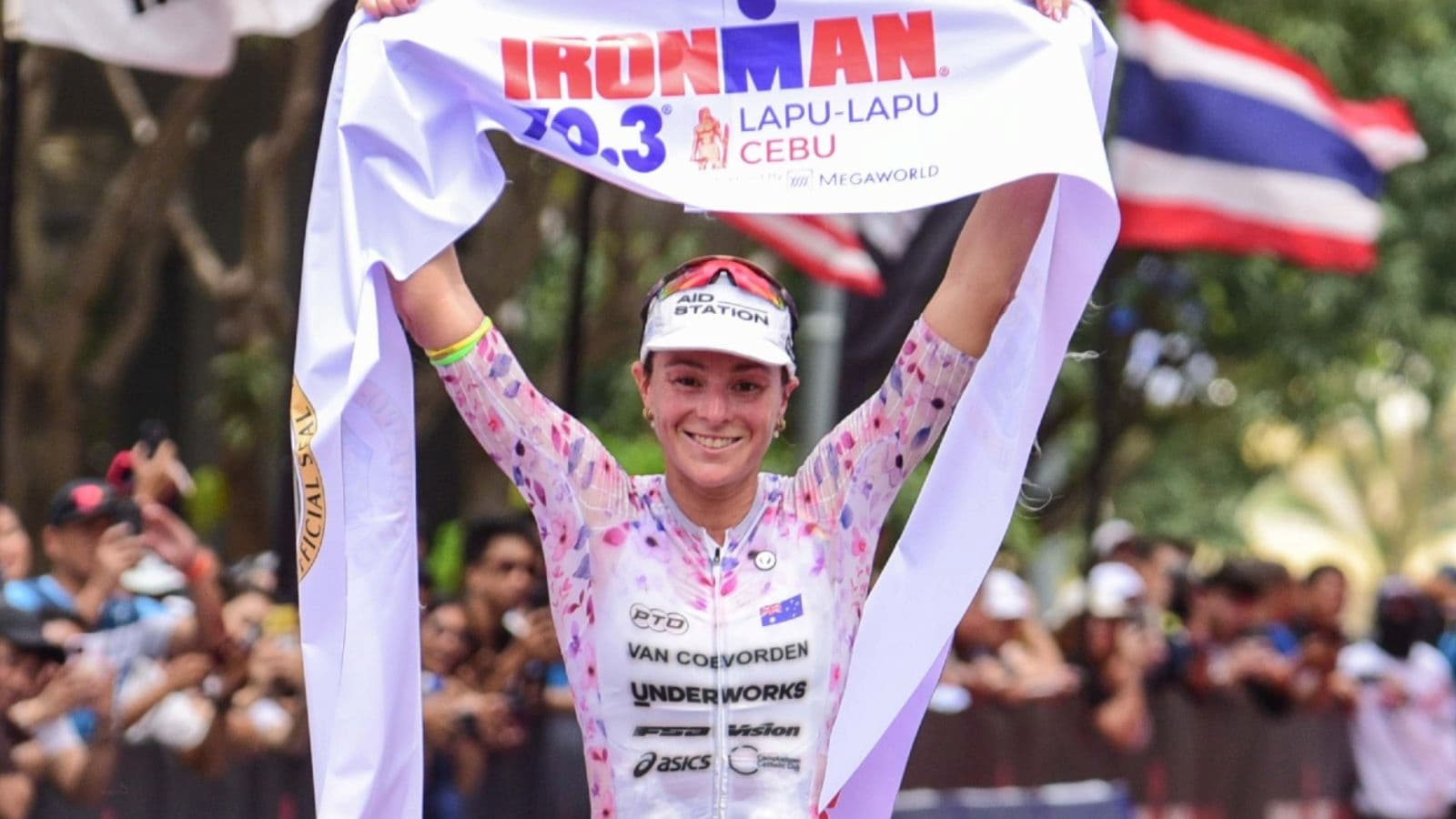


Moving from sprint or Olympic distance triathlon to a 70.3 means preparing your body to exercise for much longer rather than simply becoming faster. A 70.3 consists of a 1.2 mile swim, 56 mile bike, and 13.1 mile run, so endurance and pacing become increasingly important. Short course experience gives you a useful foundation. You already understand transitions, open water swimming, cycling after the swim, and running off the bike. The next step is developing enough endurance to maintain controlled effort for several hours. You do not need to immediately double your training volume. Rapid increases in long rides, runs, and total weekly training can create unnecessary fatigue and increase injury risk. The transition should be gradual. Build aerobic endurance, progressively extend key sessions, practice fueling, improve pacing, and make some training increasingly specific to the demands of a 70.3.

In Short
- Increase training volume gradually.
- Prioritize aerobic endurance.
- Extend your long bike sessions.
- Build running volume carefully.
- Maintain consistent swim training.
- Practice race fueling.
- Learn sustainable bike pacing.
- Include brick workouts.
- Practice race specific intensity.
- Protect recovery as workload increases.
Build Your Aerobic Base First
A 70.3 relies heavily on aerobic endurance. You need to maintain a sustainable effort across all three disciplines rather than repeatedly working near your maximum.
Your training should include plenty of controlled aerobic work through:
- Easy swimming.
- Zone 2 cycling.
- Easy running.
- Longer steady sessions.
Hard intervals can still improve fitness, but they should sit on top of an endurance foundation. For the bike leg in particular, how to build an aerobic base for triathlon cycling can help you develop the ability to produce steady power for longer without accumulating excessive fatigue.
Increase Weekly Training Gradually
Moving to longer distance racing usually requires more total training, but there is no single weekly volume every athlete must reach.
Increase workload according to:
- Current fitness.
- Training history.
- Available time.
- Recovery.
- Injury history.
- Race goals.
Avoid increasing swimming, cycling, running, and intensity aggressively at the same time. A gradual progression gives your body time to adapt. If your schedule is limited, how to adjust triathlon training when time is limited can help you prioritize important sessions rather than simply trying to fit more workouts into every available hour.
Make the Long Ride a Priority
The 56 mile bike leg is a major step up from sprint and Olympic distance racing. Gradually extend your long ride until spending several hours on the bike becomes familiar.
Long rides develop:
- Aerobic endurance.
- Muscular durability.
- Position comfort.
- Fueling habits.
- Pacing discipline.
Do not turn every long ride into a race effort.
Much of the session can remain controlled while selected sections are completed at your intended 70.3 effort.
Build Run Volume More Carefully
Running usually creates greater impact stress than swimming or cycling, so increases in run volume deserve particular care.
Progress by gradually extending:
- Easy runs.
- Weekly volume.
- Long runs.
- Brick running.
You do not need to run a half marathon after every long ride. Consistent running is more valuable than completing occasional very long sessions that leave you unable to train properly afterward. Following how to avoid running injuries as mileage increases in a triathlon becomes particularly important as your 70.3 training volume rises.
Keep Swimming Consistently
The 1.2 mile swim is longer than the swim in most short course races, but simply adding distance is not enough.
Continue working on:
- Technique.
- Aerobic endurance.
- Sighting.
- Open water confidence.
- Sustainable pacing.
Longer continuous swims can help, but structured sets also allow you to accumulate useful volume while maintaining technique. If endurance is currently your limitation, how can you improve your swim stamina for a triathlon can help you build the ability to maintain efficient swimming for longer.
Learn to Pace the Bike Conservatively
One of the biggest mistakes when moving to a 70.3 is cycling as if the event ends at T2. It does not. A bike effort that feels manageable for the first hour can become expensive later.
Control:
- Early power.
- Heart rate.
- Climbing effort.
- Accelerations.
- Cadence.
Your goal is to reach T2 ready to run a half marathon. The principles in how should you pace the bike to run better in a triathlon are central to 70.3 racing because an overly aggressive bike can destroy an otherwise strong run.
Practice Holding Steady Power
Long course cycling rewards consistency. Repeated power spikes can increase fatigue without producing a proportional improvement in overall bike speed.
During race specific rides:
- Start conservatively.
- Control climbs.
- Shift early.
- Accelerate smoothly.
- Maintain sustainable effort.
Do not try to keep exactly the same wattage on every part of the course. The goal is controlled variation rather than perfectly constant power.
Fuel During Training
Nutrition becomes much more important as race duration increases. You cannot approach a 70.3 with the same fueling strategy you use for a short sprint triathlon.
Practice:
- Carbohydrate intake.
- Fluid intake.
- Electrolytes when appropriate.
- Timing.
- Products you intend to race with.
Long rides are particularly useful for testing your plan. Start with familiar principles such as how to fuel for a 2 hour cycling ride in a triathlon, then adapt intake to your longer training and individual tolerance. Never introduce an entirely new fueling strategy on race morning.
Practice Brick Sessions
Running after 56 miles of cycling feels different from starting a fresh run. Brick sessions prepare you for that transition. A useful brick does not always need a long run.
You can complete:
- Longer bike + short easy run.
- Race pace bike + controlled run.
- Short bike + race pace run.
The goal is to learn how your legs respond and whether your cycling effort allows you to run effectively. Using how can you bike smarter to improve your triathlon run can help you interpret poor brick runs instead of automatically assuming your running fitness is the problem.
Make Some Sessions Race Specific
General fitness gets you ready to train for a 70.3. Race specific sessions teach you how to race one.
As the event approaches, practice:
- Race pace.
- Aero position.
- Fueling.
- Race equipment.
- Brick running.
- Open water skills.
You do not need to complete the full race distance in training. Instead, combine elements of the race across well planned sessions.
Keep Some Higher Intensity Training
Long course training does not mean every workout should become slow and long.
Controlled higher intensity sessions can maintain or improve:
- FTP.
- Running speed.
- Swim speed.
- Aerobic capacity.
The amount should fit around your increasing endurance workload. On the bike, how can interval training improve triathlon cycling speed can help you maintain higher end fitness without turning every ride into a long endurance session.
Recovery Becomes More Important
Longer training creates more accumulated fatigue. Recovery needs to increase alongside workload.
Prioritize:
- Sleep.
- Appropriate nutrition.
- Easy training.
- Rest days.
- Managing life stress.
Do not treat persistent exhaustion as a normal requirement of 70.3 preparation. Your plan needs enough recovery for you to absorb the training you are doing.
Test Your Race Equipment
Longer races expose small equipment problems. Something comfortable for 40 minutes may become uncomfortable after several hours.
Practice with your intended:
- Wetsuit.
- Tri suit.
- Bike position.
- Shoes.
- Hydration setup.
- Nutrition storage.
If your cycling position becomes uncomfortable during longer rides, how do you adjust your bike for a better fit can help you identify changes before race day.
Do Not Copy Ironman Training
A 70.3 is a long endurance event, but it is not a full Ironman. You do not automatically need extremely long training sessions simply because you are moving beyond Olympic distance.
Training should reflect:
- 70.3 race duration.
- Your experience.
- Your goals.
- Available recovery.
More volume is useful only when you can consistently absorb it.
Common Mistakes
- Increasing training volume too quickly.
- Making every session longer.
- Neglecting easy aerobic training.
- Cycling too hard during brick sessions.
- Increasing run mileage aggressively.
- Ignoring race fueling.
- Skipping recovery.
- Testing new nutrition on race day.
- Treating every long workout as a race simulation.
Practical Tips
- Build volume progressively.
- Prioritize the long bike.
- Increase running carefully.
- Keep swimming consistently.
- Practice race fueling.
- Include regular brick sessions.
- Test race equipment.
- Practice sustainable power.
- Schedule enough recovery.
Actionable Takeaways
- Build endurance before chasing more intensity.
- Practice fueling during long training.
- Pace the bike for the half marathon that follows.
- Make training gradually more race specific.
As race day approaches, how to maintain fitness while tapering for a triathlon can help you reduce training load without trying to squeeze extra fitness into the final days.