



The moment everything he’d feared for nine months finally arrived.
For 20 days, through six continents, thousands of miles of travel and six full-distance triathlons, Spencer Matthews had managed his anxiety about one thing: the final swim on King George Island.
The first six Ironmans had brought their share of discomfort, logistics and fatigue – but none carried the existential threat of the last one.
When he finally stepped into the freezing Antarctic water, he wasn’t thinking about the world record, or the bike loop, or the run. He was thinking about survival.
“It was a life-threatening situation if you got it wrong,” he told TRI247 when we sat down with him to talk through his epic adventure. “I’d lost loads of sleep over it. Months of anxiety. The swim was the worry.”
Seven wildlife spotters
Unlike every other part of PROJECT SE7EN, this wasn’t a matter of resilience. It was a matter of risk.
Matthews knew the dangers. The team knew the dangers. The fact he required seven wildlife spotters dedicated purely to leopard seals tells its own story.
But the moment he began swimming, the challenge took an unexpected turn.
To avoid hypothermia, Matthews opted for a 13mm neoprene diving suit – warm enough for the sub-zero water, but utterly unsuited to swimming technique.
He explained: “It felt like swimming with resistance bands. I was boiling hot inside it but freezing outside. I’ve never felt anything like it.”
His body reacted instantly: His face went completely numb. He lost the use of his left hand. He couldn’t control his mouth, leading to constant saltwater intake.
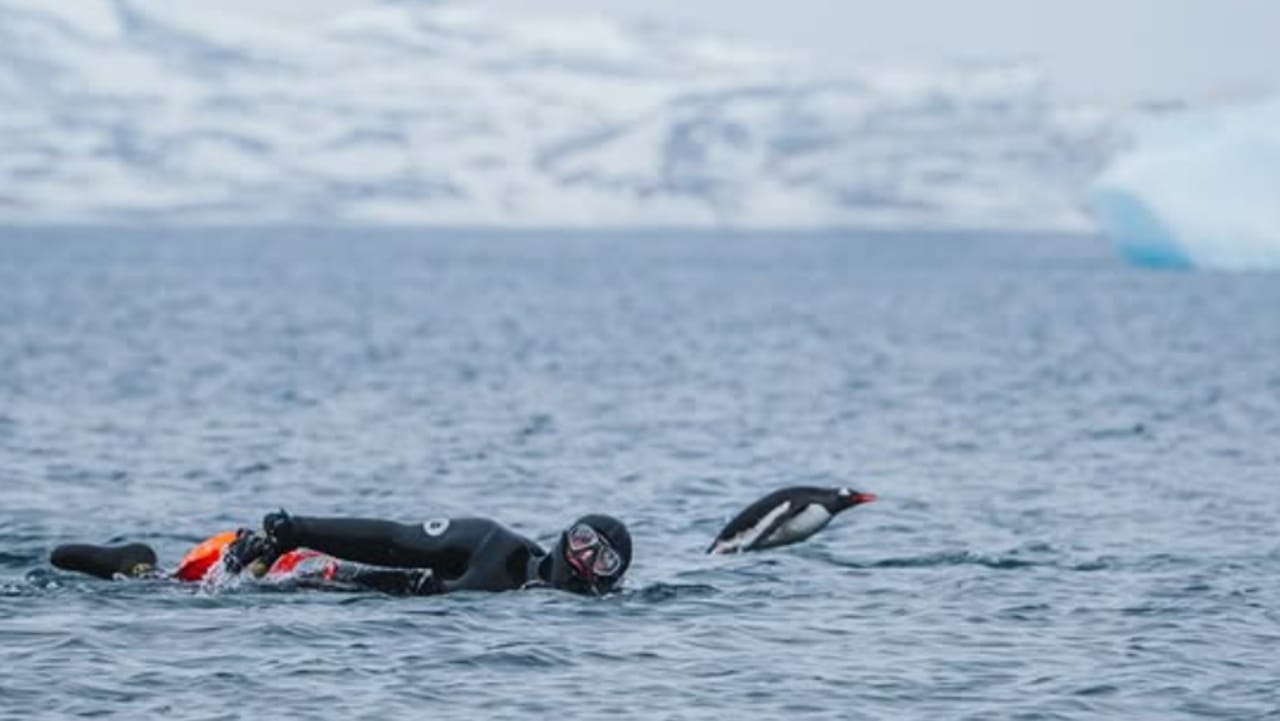
He vomited four or five times, both during and after the swim, saying: “It was like having a hosepipe in my mouth every time I breathed. I had no control over my face.”
Just the start
This wasn’t a moment to “dig deep”. It was primal, chaotic, physically shocking.
It lasted one hour and 48 minutes.
And this was just the opening act of a triathlon in the harshest environment on Earth.
“It was an hour and 48 minutes of heavy discomfort… just to kick the day off,” recalls Matthews, now with a smile on his face.
Antarctica may have been the final chapter of PROJECT SE7EN, but for Matthews, that swim was the point where nine months of fear collided with the reality of the water. And the moment he realised he was going to have to fight for every single metre.
The psychology of surviving the swim
Matthews is open about how quickly his mental state deteriorated once he began swimming. The boiling heat inside the wetsuit, the freezing outside it, and the suffocating, claustrophobic sensation combined with the knowledge that rescue options were limited.
Evacuation was impossible that day and medical support on the continent was basic.
It wasn’t irrational fear. It was rational fear.
He explains: “They told me: if there’s a serious medical emergency, you’re here. We can’t get you back to Chile.”
And yet, he kept going. “I was swallowing water, boiling hot, freezing cold, losing feeling… but I just kept going. It was horrible – but it was possible.”
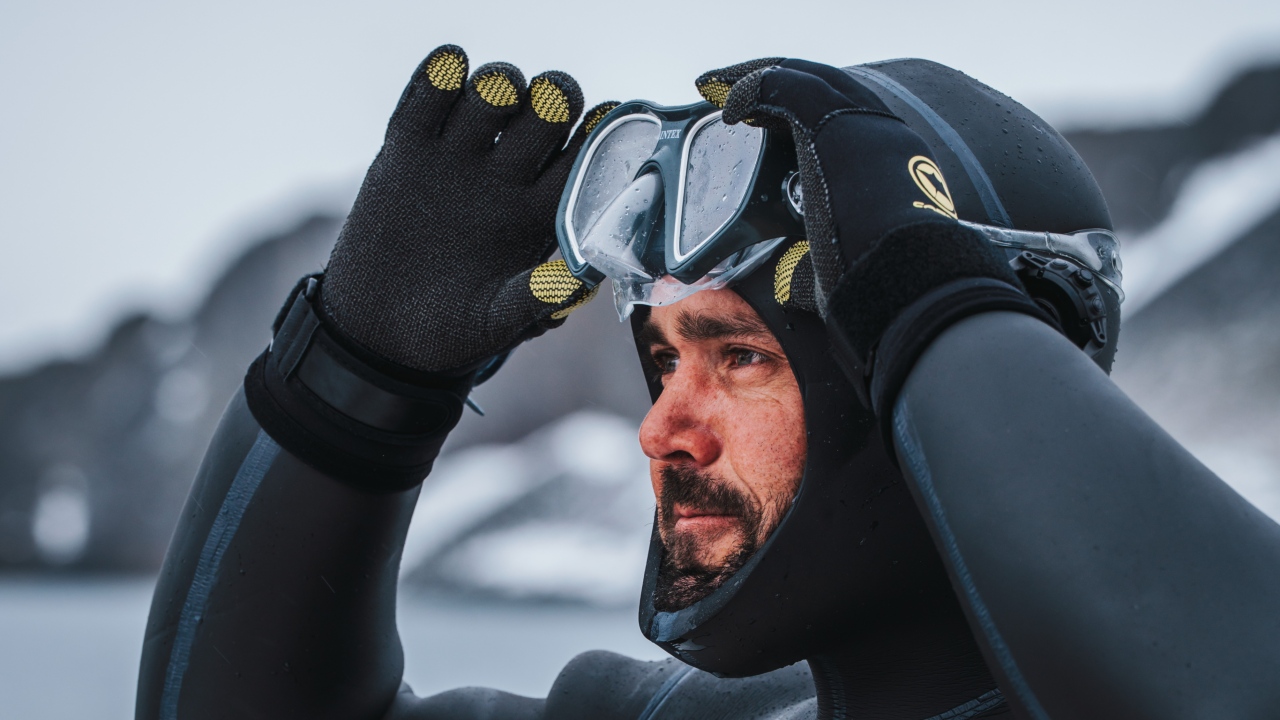
And once he overcame the swim, the rest of the day unfolded with a strange sense of clarity – even calm. The adversity of the water had created a shift and everything after felt achievable.
By the time he exited the swim, the worst fear – the singular threat he had carried for months – was behind him.
In the story of seven triathlons on seven continents, that Antarctic swim is the moment that stands alone. The moment he faced the danger he feared most – and didn’t let it beat him.
- Spencer Matthews’ PROJECT SE7EN has been raising funds and vital awareness for James’ Place, the men’s suicide-prevention charity. For more details or if you’d like to donate, click here.