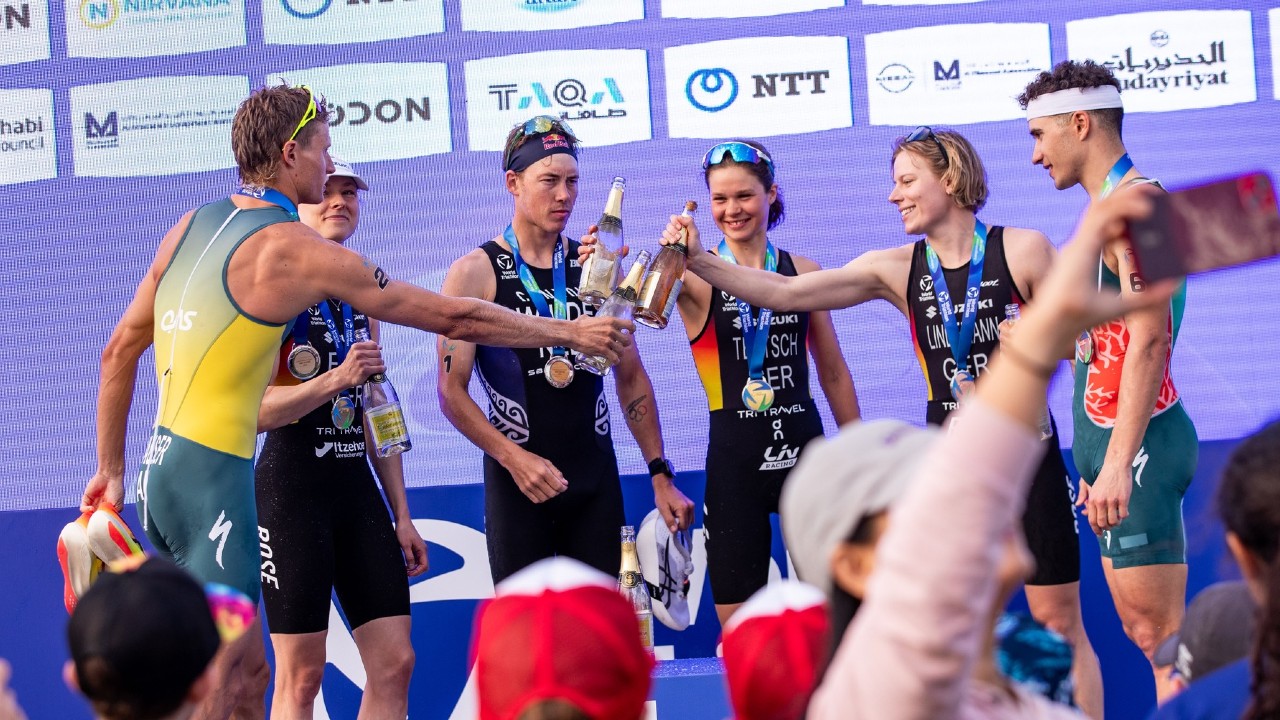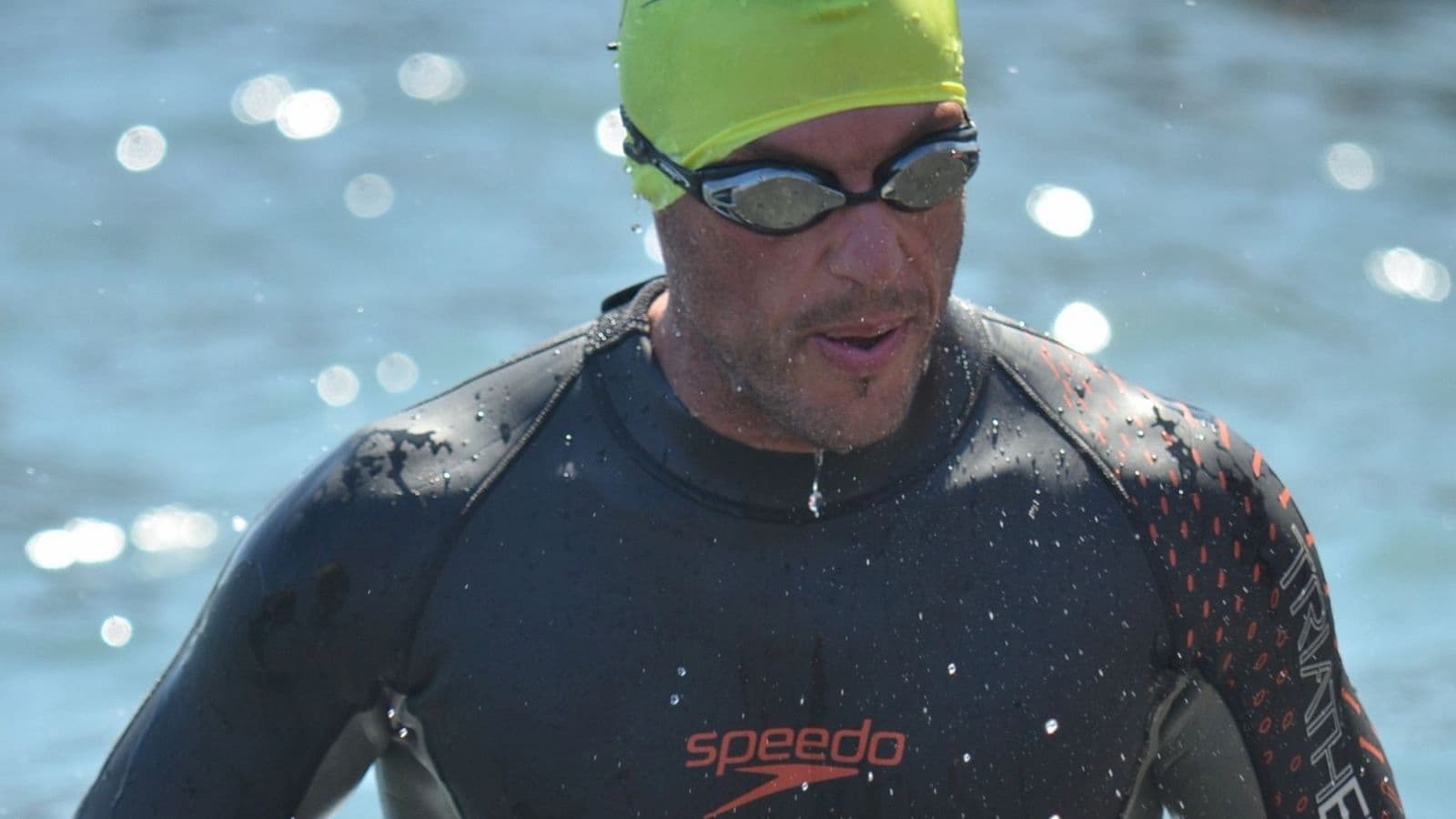


Many triathletes spend countless hours trying to improve their swimming technique, yet overlook one of the most important skills of all, breathing. Poor breathing can disrupt your stroke, increase drag and leave you feeling exhausted long before you’ve reached the first buoy. In contrast, efficient breathing creates a smooth rhythm that allows you to swim with less effort while maintaining better body position in the water. Whether you’re new to triathlon or aiming to improve your open-water performance, learning to coordinate your breathing with your stroke will help you swim more confidently, conserve energy and start the bike leg feeling fresher.
In Short
- Exhale continuously underwater.
- Turn your head with your body, not independently.
- Avoid lifting your head.
- Practise bilateral breathing when appropriate.
- Stay relaxed during every breath.
- Develop breathing skills in both the pool and open water.
Why Breathing Matters in Triathlon Swimming?
Unlike cycling and running, swimming requires you to breathe while your face is submerged.
Without proper breathing coordination, many athletes:
- Hold their breath.
- Lift their head excessively.
- Lose body position.
- Interrupt their stroke rhythm.
- Tire much more quickly.
Efficient breathing allows your stroke to remain smooth while ensuring your muscles receive the oxygen they need throughout the swim.
Exhale Underwater
One of the most common mistakes beginners make is holding their breath until it’s time to inhale. Instead, begin exhaling as soon as your face returns to the water.
Continuous underwater exhalation helps:
- Prevent carbon dioxide buildup.
- Reduce feelings of breathlessness.
- Create a calmer breathing rhythm.
- Make inhaling quicker and easier.
- Promote relaxation.
By the time your mouth reaches the surface, your lungs should already be mostly empty and ready for a quick inhale.
Rotate Your Body, Not Just Your Head
Good freestyle breathing begins with body rotation. Rather than lifting or twisting your neck independently, allow your natural body roll to bring your mouth to the air.
This approach helps maintain:
- Better body alignment.
- Reduced drag.
- Smoother stroke timing.
- Improved balance.
- Lower neck tension.
Your head should simply follow the rotation already created by your shoulders and hips.
Keep One Goggle in the Water
A useful coaching cue is to keep one goggle submerged while breathing. This encourages a small, efficient head turn instead of lifting your face completely out of the water.
Benefits include:
- Improved body position.
- Reduced frontal resistance.
- Faster return to the stroke.
- Better stroke rhythm.
The less your head moves, the easier it becomes to maintain an efficient swimming position.
Match Your Breathing to Your Stroke Rhythm
Breathing should become part of your stroke rather than interrupting it and this is where how to improve your swim stroke effortlessly is an important guide.
Many triathletes breathe every two or three strokes, although the ideal pattern depends on:
- Swimming speed.
- Fitness level.
- Race distance.
- Water conditions.
- Personal comfort.
The most important goal is maintaining a rhythm that feels natural and sustainable. Avoid changing your breathing pattern repeatedly throughout a swim unless conditions require it.
Bilateral vs Unilateral Breathing
Many swimmers practise bilateral breathing, where they alternate breathing to both sides.
Benefits include:
- Improved stroke symmetry.
- Better body balance.
- Increased comfort in open water.
- Greater flexibility when waves or competitors affect one side.
However, many experienced triathletes breathe predominantly to one side during races if it feels more comfortable or suits the course. Rather than forcing bilateral breathing at all times, develop the ability to breathe confidently on either side when needed.
Avoid Lifting Your Head
Lifting your head to breathe is one of the quickest ways to slow yourself down.
When your head rises:
- Your hips tend to sink.
- Drag increases.
- Your kick becomes less efficient.
- Forward momentum decreases.
Instead, rotate smoothly and keep your chin close to the water’s surface while taking a quick breath.
Relax During Every Breath
Breathing should never feel rushed or panicked. This is important especially for the different water temperatures as they might affect the swim performance.
A relaxed swimmer generally:
- Breathes rhythmically.
- Maintains steady stroke timing.
- Conserves energy.
- Swims more efficiently.
- Finishes stronger.
If you feel yourself becoming anxious, reduce your pace slightly and focus on smooth exhalation before attempting to swim faster.
Find a Breathing Pattern That Suits the Distance
The ideal breathing frequency depends partly on the race distance and your swimming intensity.
For example:
- Sprint triathlons often involve a faster stroke rate and more frequent breathing.
- Olympic-distance races require a sustainable rhythm that balances speed and endurance.
- Half Ironman and Ironman swims reward a relaxed, energy-efficient breathing pattern.
Many athletes naturally breathe every two strokes at race pace because it provides a regular oxygen supply. Others prefer every three strokes during easier efforts to encourage balanced stroke development. Rather than copying another swimmer, choose the breathing pattern that allows you to maintain both efficiency and comfort and transition faster after open water swimming.
Adapt Your Breathing in Open Water
Pool swimming provides calm, predictable conditions, but open water often requires greater flexibility.
You may need to adjust your breathing when dealing with:
- Waves.
- Wind.
- Other swimmers.
- Sighting buoys.
- Crowded starts.
Being able to breathe comfortably to either side becomes especially valuable if waves are breaking on your preferred breathing side. Practicing in open water before race day helps you develop the confidence to adapt without disrupting your stroke.
Coordinate Sighting with Your Breathing
Triathlon swimming requires occasional sighting to stay on course. Many beginners make the mistake of lifting their head high before taking a separate breath, creating unnecessary drag. Instead, combine sighting with your normal breathing rhythm whenever possible. For triathletes, how to sight properly in open water swimming is essential as it helps them in staying on course and managing the directions.
A common sequence is:
- Look forward briefly to identify the next buoy.
- Rotate naturally into your regular breathing stroke.
- Return your face smoothly to the water.
This minimises disruption and helps maintain your momentum.
Use Drills to Improve Breathing Coordination
Breathing is a skill that improves through focused practice rather than simply swimming more laps.
Useful drills include:
- Side-kick breathing drill.
- 6-3-6 drill.
- Single-arm freestyle.
- Catch-up drill.
- Bubble-bubble-breathe drill.
These exercises help reinforce proper timing, controlled exhalation and smooth body rotation without causing swimming drills burnout. Even spending a few minutes on breathing drills during each swim session can lead to noticeable improvements over time.
Stay Calm at the Start of a Race
Many triathletes find the opening minutes of an open-water swim the most challenging. Adrenaline, cold water and nearby competitors can cause breathing to become fast and shallow. For triathletes, how to manage pre-race nerves before open water swimming is extremely essential guide.
To stay composed:
- Start slightly below your maximum pace.
- Focus on slow, continuous exhalation.
- Establish your breathing rhythm early.
- Avoid sprinting unnecessarily.
- Relax your shoulders and neck.
Once your breathing settles, you’ll usually find it much easier to maintain an efficient stroke for the remainder of the swim.
Practise Breathing Under Fatigue
It’s relatively easy to breathe well during relaxed pool sessions. The greater challenge is maintaining good technique when you’re working harder.
Include sessions that practise breathing while:
- Swimming continuous endurance sets.
- Completing race-pace intervals.
- Finishing longer workouts.
- Swimming in open water.
- Wearing your race equipment if appropriate.
This helps ensure your breathing remains efficient even when fatigue begins to build.
Common Mistakes
- Holding your breath underwater.
- Lifting your head to breathe.
- Turning only your neck instead of rotating your body.
- Taking slow, exaggerated breaths.
- Changing breathing rhythm constantly.
- Becoming tense during inhalation.
- Never practising breathing to both sides.
- Panicking during open-water swims.
Practical Tips
- Exhale continuously underwater.
- Keep one goggle submerged while breathing.
- Rotate your body naturally.
- Take quick, relaxed breaths.
- Maintain a consistent breathing rhythm.
- Practise bilateral breathing during training.
- Include breathing drills every week.
- Stay calm and controlled at the start of races.
Actionable Takeaways
Coordinating your breathing with your swim stroke is one of the simplest ways to improve both efficiency and endurance in triathlon swimming. Small adjustments, such as exhaling continuously underwater, rotating your body instead of lifting your head and maintaining a consistent breathing rhythm, can make swimming feel significantly easier.
Like every technical skill, efficient breathing develops through regular practice. By including breathing drills in your training and learning to adapt your breathing pattern to different race conditions, you’ll become a more confident swimmer who conserves energy for the bike and run.