

Running gait analysis can be worth it for triathletes who experience recurring running discomfort, struggle with technique, or want a detailed assessment of their movement patterns. It provides information about how the body moves during running and may help identify areas where targeted training or technique adjustments could be useful. Unlike runners who train for only one discipline, triathletes must run after swimming and cycling. The transition from cycling to running can temporarily change how the legs feel, making it harder to maintain a familiar running rhythm. Many athletes assume gait analysis is necessary for improving speed or preventing injuries. However, there is no single perfect running technique, and an unusual movement pattern does not automatically indicate a problem.
For most beginners, consistent training, appropriate recovery, and basic running technique are more important than advanced movement testing. Gait analysis becomes more valuable when there is a specific question to investigate, such as persistent pain, repeated injuries, or difficulty maintaining comfortable running mechanics.
In Short
- Gait analysis evaluates running movement.
- It can identify individual movement patterns.
- It may help investigate recurring discomfort.
- Not every triathlete needs professional testing.
- Video analysis can provide useful feedback.
- Running form varies between individuals.
- Assessment should consider cycling fatigue.
- Results should guide practical training decisions.
What Is Running Gait Analysis?
Running gait analysis is the assessment of how your body moves while running. It typically examines the interaction between the feet, ankles, knees, hips, pelvis, and upper body throughout the running stride.
Depending on the assessment, a professional may evaluate:
- Foot placement.
- Stride length.
- Running cadence.
- Hip and pelvic movement.
- Knee alignment.
- Trunk posture.
- Arm movement.
- Ground contact patterns.
Understanding how does pronation affect your running gait can help triathletes recognize why foot movement is only one part of the overall running pattern. Gait analysis should consider how different body segments work together rather than focusing on a single joint or movement.
Running Gait Analysis Work Mechanism
Gait analysis can range from a simple video recording to a detailed laboratory assessment.
Video Running Analysis
A coach or clinician records the athlete running from different angles. The footage can be reviewed to assess visible movement patterns.
Common observations include:
- Foot placement.
- Stride timing.
- Trunk movement.
- Pelvic control.
- Arm swing.
- Changes in technique with fatigue.
Video analysis is often accessible and can provide useful feedback without specialized laboratory equipment.
Treadmill Gait Analysis
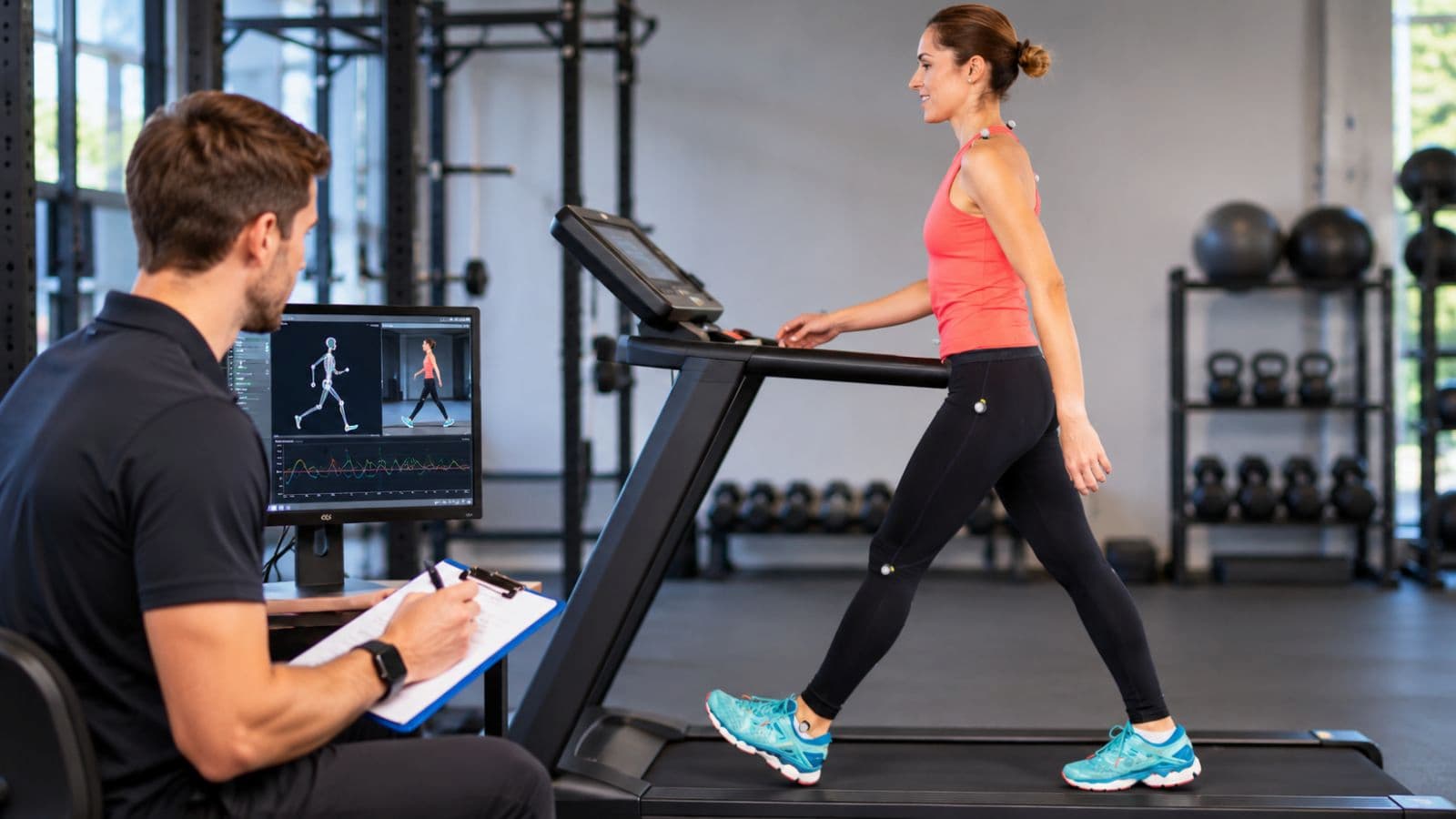
Treadmill assessments allow professionals to observe running at controlled speeds. They may record movement from the side, front, and rear. However, treadmill mechanics can differ slightly from outdoor running, particularly when athletes are unfamiliar with the equipment.
Advanced Biomechanical Analysis
Specialized facilities may use motion capture systems, force plates, and wearable sensors. These tools can measure variables that are difficult to assess through ordinary video. Advanced testing may provide detailed information, but more data does not automatically lead to better training decisions.
Benefits of Running Gait Analysis for Triathletes
Understanding Running Mechanics
One of the main benefits is gaining a clearer picture of how your body moves. Some athletes may discover that their stride changes when they become tired or increase speed. Understanding how to improve your triathlon running form can help athletes apply simple technique adjustments without attempting to change every aspect of their stride. The most useful assessment identifies movement patterns that are relevant to the athlete’s goals or symptoms.
Investigating Recurring Discomfort
Gait analysis may help clinicians investigate possible contributing factors when a runner experiences repeated discomfort.
For example, an assessment might examine:
- Excessive overstriding.
- Differences between left and right movement.
- Changes in pelvic control.
- Running cadence.
- Movement under fatigue.
Understanding what causes knee pain during a triathlon run can help athletes recognize that discomfort may involve training load, tissue capacity, and several biomechanical factors. Gait analysis alone cannot diagnose every injury or establish its cause.
Improving Movement Awareness
Some runners benefit from seeing their technique on video. Visual feedback can make it easier to understand coaching cues and practice controlled adjustments. However, not every visible difference requires correction. The objective is to improve useful movement habits rather than create an artificial running style.
Why Gait Analysis Matters After Cycling?
Triathlon running presents a particular challenge because athletes begin the run after completing the bike leg. Cycling can create muscular fatigue and temporary changes in perceived coordination. Understanding what causes jelly legs after bike to run transition in a triathlon can help athletes recognize why their first running strides may feel unfamiliar. A gait assessment performed only when the athlete is completely fresh may not capture the movement patterns that occur during a race.
For some triathletes, it may be useful to compare:
- Running when fresh.
- Running after an easy bike session.
- Running after a more demanding bike effort.
- Running at different intensities.
These comparisons should be performed under appropriate supervision when symptoms or injury concerns are present.
Can Gait Analysis Improve Running Speed?
Gait analysis may identify opportunities to improve movement efficiency, but it does not guarantee faster running.
Running performance depends on several factors:
- Aerobic fitness.
- Muscular endurance.
- Training consistency.
- Pacing.
- Running economy.
- Recovery.
Understanding what makes triathlon runners faster can help athletes recognize why technique is only one component of performance. A movement change may improve comfort or efficiency for one athlete while offering little benefit to another. Changes should be evaluated through training outcomes rather than appearance alone.
Gait Analysis Can Prevent Running Injuries
Running gait analysis cannot reliably predict whether an individual athlete will become injured. Running injuries are influenced by multiple factors, including previous injury history, training load, recovery, and individual tissue capacity. Some movement characteristics may be relevant to particular conditions, but there is no universal running pattern that guarantees protection. Understanding what training habits increase injury risk in triathlon runners can help athletes appreciate why managing training demands is essential. Gait analysis is best viewed as one possible assessment tool within a broader approach to running health.
Common Running Patterns Assessed
| Movement pattern | What it may reveal |
|---|---|
| Overstriding | Increased braking during landing |
| Cadence | Step frequency at a given speed |
| Pelvic movement | Control during single-leg support |
| Trunk position | Upper-body alignment |
| Foot strike | Initial ground contact pattern |
| Arm swing | Coordination and upper-body movement |
These observations require individual interpretation.
A movement pattern should not automatically be labeled incorrect simply because it differs from a textbook example.
When Is Running Gait Analysis Worth It?
Professional gait analysis may be particularly useful when:
- Running discomfort keeps returning.
- Technique changes have not helped.
- You are returning from a running injury.
- You experience unexplained differences between legs.
- Running becomes uncomfortable after cycling.
- A clinician recommends movement assessment.
- You want specific feedback from a qualified coach.
Understanding how to prevent running injuries with strength and mobility training in a triathlon can help athletes combine movement assessment with practical strength and training strategies. For persistent or worsening pain, medical evaluation should take priority over a commercial gait assessment.
When You Do Not Need It
Not every triathlete requires formal testing.
You may not need professional gait analysis if:
- You run comfortably.
- You have no recurring running symptoms.
- Your training is progressing consistently.
- You are satisfied with your technique.
- You do not have a specific movement concern.
Beginners may benefit more from developing consistent running habits before investing in advanced assessments. Understanding how to improve your running form without overthinking it can help athletes focus on simple, practical adjustments.
How to Choose a Gait Analysis Professional?
The quality of the assessment matters more than the number of measurements collected. Look for someone who understands running biomechanics and can connect observations to your symptoms, training, and goals.
Useful questions include:
- What qualifications do you have?
- Do you work with endurance athletes?
- Will you assess running at different speeds?
- Can you explain which findings actually matter?
- Will I receive practical recommendations?
- Is follow-up support available?
For injury concerns, a qualified sports physical therapist or other appropriate healthcare professional is a sensible starting point.
Avoid services that promise to eliminate injury risk or guarantee faster running.
What to Do After a Gait Analysis
An assessment is only useful if the findings lead to appropriate decisions.
Possible recommendations include:
- Adjusting running cadence.
- Practicing specific technique cues.
- Improving hip or calf strength.
- Reviewing training load.
- Modifying workout progression.
- Addressing mobility limitations when relevant.
Understanding how to reduce injury risk when increasing triathlon volume can help athletes manage training progression alongside any technique changes. Avoid changing several aspects of running form simultaneously. Give your body time to adapt and monitor comfort during training.
Common Mistakes
- Assuming everyone needs gait analysis.
- Treating unusual movement as an injury risk.
- Focusing only on foot strike.
- Ignoring training load.
- Making dramatic technique changes.
- Expecting immediate speed improvements.
- Choosing testing based only on equipment.
- Ignoring persistent pain.
Practical Tips
- Identify a specific reason for assessment.
- Choose a qualified professional.
- Consider running after cycling.
- Review findings in context.
- Focus on useful changes.
- Progress adjustments gradually.
- Monitor comfort and symptoms.
- Combine technique work with balanced training.
Actionable Takeaways
- Gait analysis can provide useful movement feedback.
- It is not essential for every triathlete.
- Recurring discomfort deserves proper assessment.
- Running after cycling may reveal different patterns.
- Use findings to guide practical, gradual changes.