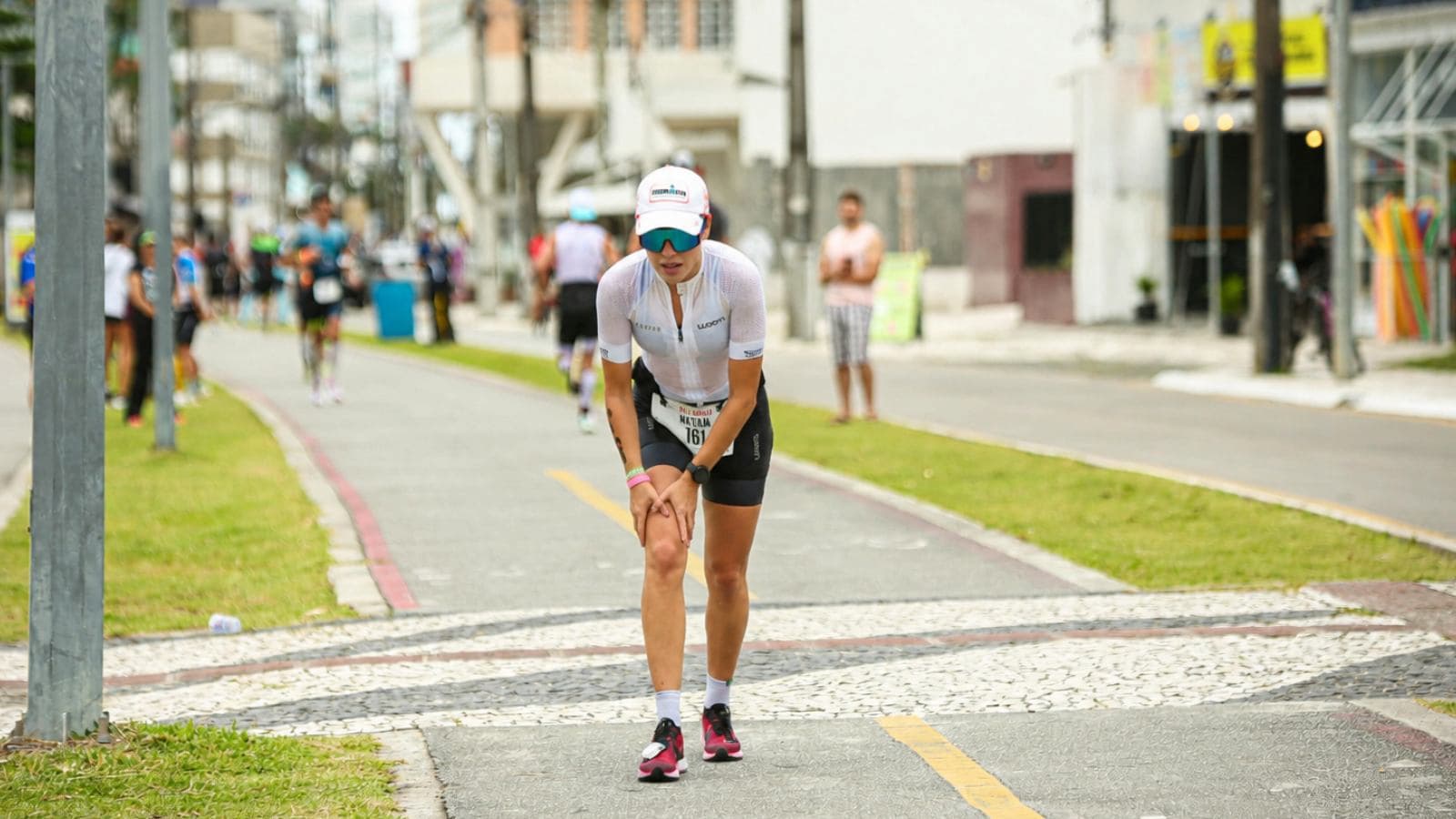


Knee pain is one of the most common complaints among triathletes, particularly during the run leg of a race. Many athletes complete the swim and bike feeling strong, only to experience discomfort or pain once they start running. This can be frustrating because the knee itself is not always the true source of the problem. In many cases, knee pain is the result of issues elsewhere in the body, such as:
- Muscle imbalances
- Poor movement patterns
- Training errors
- Fatigue
- Equipment choices
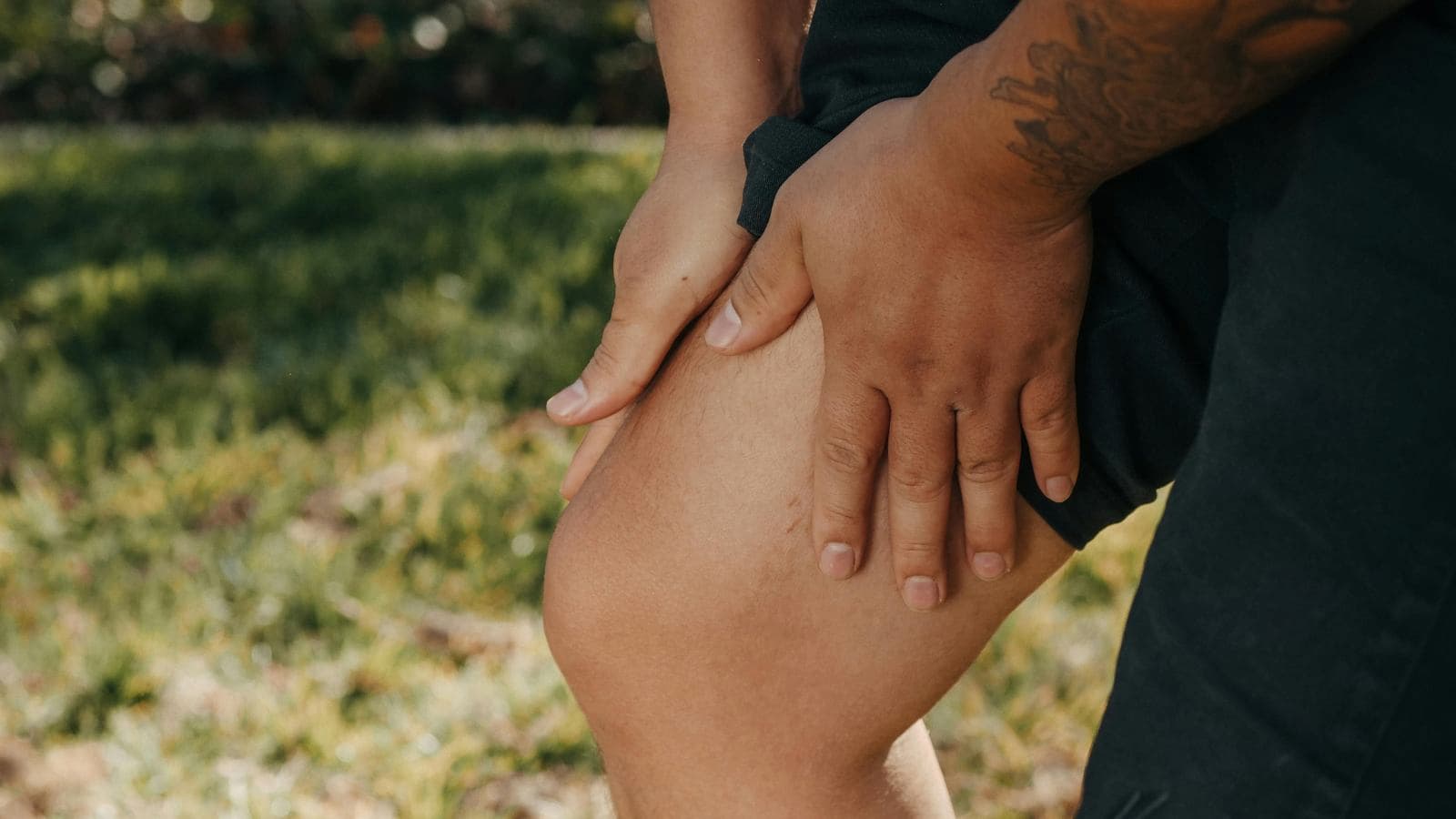
Understanding why knee pain develops during a triathlon run is important because early intervention can often prevent a minor issue from becoming a long-term injury. The goal is not simply treating symptoms. The goal is identifying the factors contributing to the pain so that training and racing can continue safely.
Fatigue from the Bike Leg
One of the unique challenges of triathlon is that running occurs after cycling.
During the bike leg, athletes spend significant time:
- In a flexed position
- Repetitively loading the quadriceps
- Producing sustained power
By the time the run begins, the legs are already fatigued.
This fatigue can alter:
- Running mechanics
- Stride efficiency
- Joint loading
Athletes who understand how to mount and dismount your bike smoothly in a race often appreciate how the transition from cycling to running places unique stresses on the body.
Small mechanical changes after the bike can sometimes increase knee stress significantly.
Increasing Run Volume Too Quickly
One of the most common causes of knee pain is simply doing too much, too soon.
Examples include:
- Increasing weekly mileage rapidly
- Adding extra run sessions
- Suddenly introducing long runs
The cardiovascular system may adapt quickly, but connective tissues often require more time. Athletes preparing through run technique for triathlon often discover that efficient mechanics and gradual progression work best when developed together.
Rapid training increases rarely produce long-term success.
Weak Glute Muscles
The glutes play a major role in stabilising the hips during running. When they are weak, other structures may compensate.
This can increase stress on:
- Knees
- IT bands
- Quadriceps
- Lower legs
Poor hip stability often contributes to knee discomfort during longer runs. Strength training can help improve force distribution throughout the entire running chain.
Poor Running Mechanics
Running form influences how forces travel through the body.
Common issues include:
- Overstriding
- Excessive braking forces
- Poor posture
- Low cadence
These factors may increase repetitive loading around the knee joint. Athletes who regularly perform the running drills often improve movement efficiency and reduce unnecessary stress on the knees.
Small technical improvements can have a significant impact over thousands of running steps.
Lack of Recovery
Recovery is often where adaptation occurs. Without adequate recovery, small problems may accumulate.
Common recovery mistakes include:
- Poor sleep
- Consecutive hard sessions
- Inadequate nutrition
- Skipping recovery weeks
Athletes who recognise how to recover faster after a triathlon often reduce injury risk because they allow the body sufficient time to adapt between training blocks.
The knee does not care how motivated you are. It responds to stress and recovery.
Tight Quadriceps and Hip Flexors
Cycling places the hips and quadriceps in repetitive positions for long periods.
As a result, some triathletes develop:
- Tight hip flexors
- Tight quadriceps
- Reduced mobility
These restrictions can influence running mechanics and increase stress around the knee. Athletes who regularly practise mobility work often experience fewer problems during the bike-to-run transition.
Poor Bike Fit
Many runners assume knee pain during the run must be caused by running. However, the bike may be contributing.
Potential bike-fit issues include:
- Saddle too low
- Saddle too high
- Cleat position problems
- Excessive reach
These factors may increase stress on the knees during cycling, creating irritation that becomes more noticeable during the run. Athletes who follow lactate threshold for smarter training often learn that efficient bike setup is just as important as fitness development.
Power production should not come at the expense of joint health.
Running Through Fatigue
Many triathletes push through warning signs.
Early symptoms often include:
- Mild discomfort
- Stiffness
- Localised soreness
Ignoring these signals may allow a manageable issue to become more serious. Athletes who understand how to increase triathlon volume without injury often appreciate that occasionally modifying training is sometimes the smartest long-term decision.
Missing one session is better than missing several weeks.
Weak Core Stability
The core helps control:
- Pelvic position
- Running posture
- Force transfer
Weakness in this area can contribute to inefficient movement patterns that increase stress on the knees.
Core training supports:
- Stability
- Efficiency
- Injury prevention
It is often an overlooked component of triathlon durability.
Training Surface Changes
Sudden changes in terrain may increase knee stress.
Examples include:
- Moving from roads to trails
- Increased hill running
- Technical terrain
- Harder surfaces
Each environment places slightly different demands on the body. Athletes who explore what are adaptations in a triathlon training plan often recognise that the body adapts best when changes occur gradually.
Abrupt transitions can create unnecessary injury risk.
Poor Pacing Early in the Race
Starting too aggressively may contribute to knee discomfort later.
When fatigue accumulates rapidly:
- Form deteriorates
- Efficiency declines
- Joint loading patterns change
Athletes who learn how to stop thigh cramps during a triathlon often experience more consistent run performances because they manage effort more effectively throughout the race.
Good pacing protects both performance and durability.
Previous Injury History
A previous knee injury may increase sensitivity to training errors. This does not mean future pain is inevitable.
However, athletes with a history of:
- Patellofemoral pain
- IT band issues
- Tendon problems
often benefit from extra attention to:
- Strength
- Recovery
- Training progression
Past injuries frequently provide valuable information about individual risk factors.
Insufficient Strength Training
Triathlon training often consumes so much time that strength work gets neglected.
This can contribute to:
- Muscle imbalances
- Poor stability
- Reduced resilience
Strong muscles help absorb force before excessive stress reaches joints. Athletes who focus exclusively on endurance training sometimes overlook this important aspect of injury prevention.
Nutritional and Recovery Deficits
Inadequate energy intake can affect:
- Recovery quality
- Tissue repair
- Adaptation
Athletes who underfuel may experience:
- Persistent soreness
- Increased injury risk
- Reduced recovery capacity
Those improving through drinking per hour on bike often become more aware of how energy availability influences performance and recovery. Fueling matters for joint health too.
Mental Factors Can Influence Pain
Stress and fatigue do not only affect performance.
They can also influence:
- Recovery
- Muscle tension
- Perception of discomfort
Athletes who understand mental strategies to improve triathlon performance often make better decisions when symptoms arise because they avoid emotional reactions and focus on practical solutions.
Good decision-making is part of injury management.
Common Causes of Knee Pain During a Triathlon Run
Many triathletes experience knee pain because of:
- Bike-induced fatigue
- Rapid training increases
- Weak glutes
- Poor running mechanics
- Inadequate recovery
- Tight hip flexors
- Poor bike fit
- Insufficient strength training
Rarely is there a single cause. Most cases result from several factors interacting over time.
How Triathletes Can Reduce Knee Pain Risk
Athletes can reduce knee injury risk by:
- Progressing training gradually
- Improving running mechanics
- Strengthening glutes and core
- Prioritising recovery
- Addressing mobility restrictions
- Optimising bike fit
- Fueling appropriately
- Monitoring early symptoms
The healthiest triathletes are not usually the athletes who avoid training stress completely. They are the athletes who manage stress, recovery, and adaptation effectively throughout the season.