

Pronation is a normal part of running gait. After the foot contacts the ground, it typically rolls inward to some degree as the arch changes shape and the lower leg responds to impact. This movement helps the foot adapt to the ground and manage forces before becoming more rigid again for push off. Problems are more likely when a runner’s movement pattern, training load, strength, previous injuries, footwear, or individual anatomy combine in a way that causes symptoms. Overpronation describes greater or prolonged inward movement, while under-pronation, often called supination, describes relatively limited inward movement. For triathletes, the important question is not whether the foot pronates. It is whether the entire running gait remains comfortable, controlled, and capable of handling the demands of training and racing.

In Short
- Pronation is a normal part of running.
- The foot usually rolls inward after ground contact.
- Pronation contributes to adapting to impact.
- Runners naturally differ in how much they pronate.
- More pronation does not automatically mean injury.
- Limited pronation is not automatically a problem either.
- Foot movement can influence the ankle, lower leg, knee, and hip.
What Is Pronation in Running?
Pronation describes a combination of movements that occurs as the foot responds to the ground. It is often simplified as the foot or ankle “rolling inward,” but the actual movement is more complex. The foot, ankle, and lower leg work together as your body moves over the planted foot. Some pronation is expected. It helps the foot adapt to the surface and contributes to managing the forces generated when you land. The foot then changes as you move toward push off. Trying to eliminate pronation completely would therefore misunderstand its role in normal running.
How Pronation Fits Into the Running Gait Cycle
Running gait can be divided broadly into a stance phase, when a foot is in contact with the ground, and a swing phase, when that leg moves forward.
A simplified sequence looks like this:
| Gait stage | What happens |
|---|---|
| Initial contact | Foot contacts the ground |
| Early stance | Foot begins accepting load |
| Midstance | Body moves over the supporting foot |
| Late stance | Foot becomes more stable for propulsion |
| Toe-off | Foot leaves the ground |
| Swing | Leg moves forward for the next step |
Pronation is only one element of this sequence. Cadence, stride length, posture, hip movement, knee motion, foot placement, and terrain also influence the complete gait. This is why how to improve your triathlon running form should consider the runner as a whole rather than concentrating only on how the foot lands.
What Is Overpronation?
Overpronation is commonly used to describe relatively large or prolonged inward foot movement during stance. You may notice the arch appearing to collapse more noticeably or the ankle moving inward when the foot is loaded. However, there is no simple visual threshold separating every runner into “normal” and “overpronating.” Runners have different anatomy and movement patterns. A person can show considerable pronation and run comfortably for years. Another runner with less visible pronation may experience pain because of training errors, previous injury, insufficient recovery, or other factors. Pronation should therefore be interpreted in context.
What Is Underpronation?
Underpronation, often associated with supination, means the foot demonstrates relatively little inward movement during loading. This can result in more loading toward the outside of the foot in some runners. A runner who underpronates but remains comfortable and tolerates training well does not necessarily need to deliberately change the movement.
- Symptoms
- Training history
- Strength
- Mobility
- Footwear
- Overall gait
provide more useful context than assigning a label based only on foot position.
Affect of Pronation on the Rest of Leg
The foot is connected mechanically to the rest of the lower limb. As the foot pronates, movement also occurs through the ankle and lower leg. That can influence how the knee and hip move during stance.
- Training volume
- Intensity
- Recovery
- Previous injury
- Tissue capacity
- Strength
- Sudden changes in workload
can all matter.VThis broader approach is central to how to prevent running injuries with strength and mobility training in a triathlon, where improving the body’s ability to tolerate running load can be more useful than trying to make every runner move identically.
Does Overpronation Cause Running Injuries?
The idea that visible overpronation inevitably leads to injury is too simplistic. Many runners naturally pronate substantially without developing symptoms.
Instead of asking whether pronation exists, consider whether the runner is experiencing:
- Persistent pain.
- Recurrent injuries.
- A recent change in gait.
- Difficulty controlling movement.
- Symptoms that increase with training.
- A sudden decline in running tolerance.
The principles behind how to avoid running injuries as mileage increases in a triathlon matter because even an efficient gait can become overloaded if running volume increases faster than the body can adapt.
Fatigue Can Change Your Gait
Running mechanics are not completely fixed. As fatigue develops, stride characteristics and muscular control can change. This is particularly relevant during a triathlon because you begin the run after swimming and cycling. Some runners may show more movement at the foot, knee, or hip when tired. That does not mean every small change is dangerous. The important issue is whether fatigue repeatedly causes a substantial loss of control, pain, or inability to maintain efficient movement. Building appropriate strength can help the body tolerate the demands of running, which is one reason what strength routine should triathlete runners do to stay injury free can complement endurance training.
Should You Change Your Foot Strike?
Pronation and foot strike are related concepts, but they are not the same thing. Foot strike describes which part of the foot initially contacts the ground.
- Heel strikers
- Midfoot strikers
- Forefoot strikers
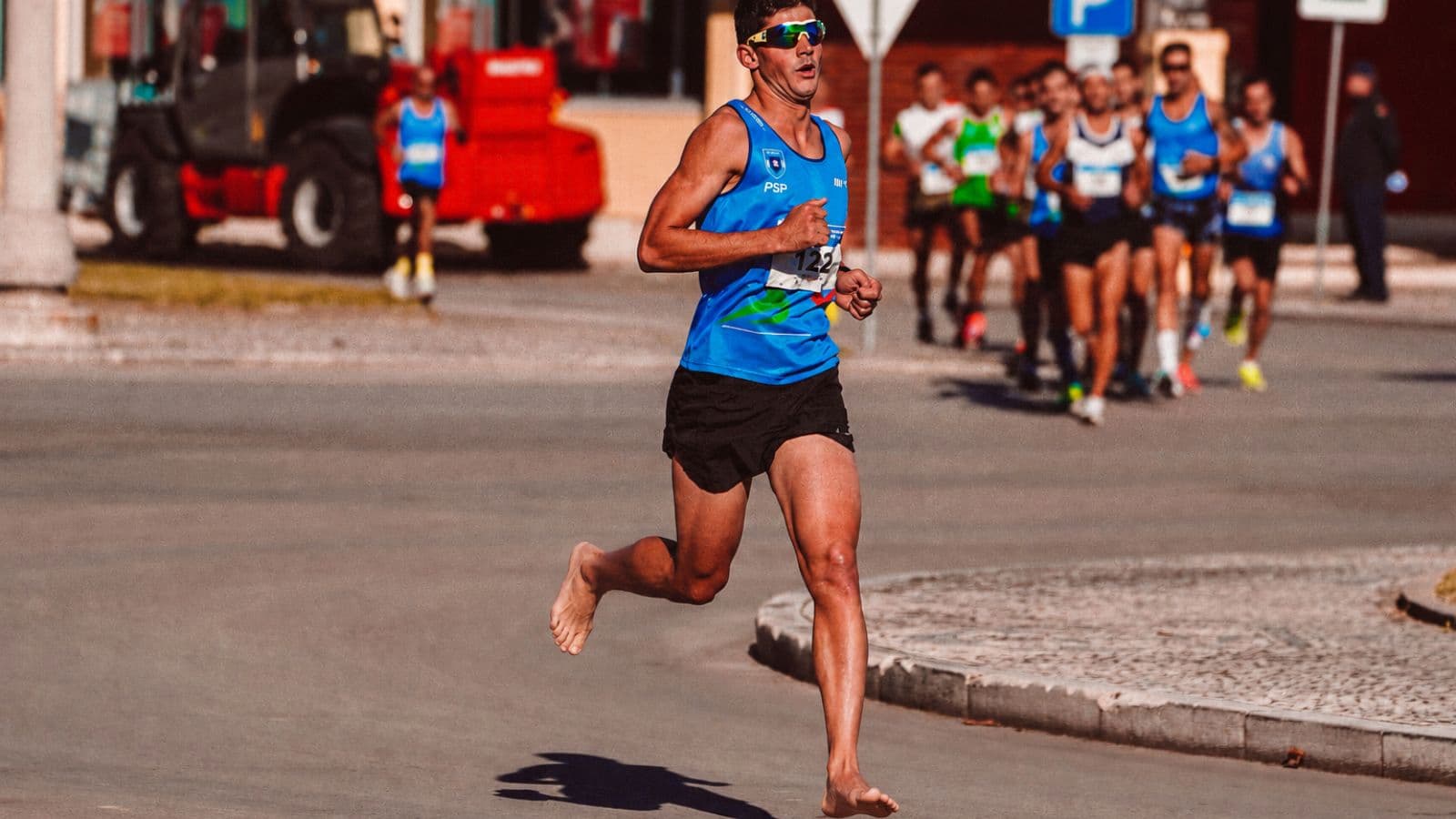
can all pronate.
Changing from heel striking to forefoot running does not automatically correct excessive pronation or reduce injury risk. The same caution applies to what is barefoot running and how do i start safely. Changing footwear or foot strike alters loading and should be introduced progressively rather than treated as a quick correction for gait concerns.
Do You Need Stability Shoes for Pronation?
Not every runner who pronates needs stability shoes. Modern running shoes vary in:
- Cushioning
- Geometry
- Stiffness
- Width
- Support features
- Overall feel
Do not assume that visible wear on one part of the outsole provides a complete gait analysis either.
Shoe wear can provide clues, but it cannot explain everything happening while you run.
Strength Can Support Gait Control
Strength training cannot and should not eliminate normal pronation. Its role is to improve the capacity of muscles and tissues involved in controlling running movement and tolerating load.
Useful areas commonly include:
- Calves.
- Feet and ankles.
- Quadriceps.
- Hamstrings.
- Glutes.
- Hip stabilizers.
- Trunk.
It is one part of a broader injury resistance strategy rather than a method for forcing the foot into a supposedly perfect position.
Training Load Often Matters More Than Foot Shape
When pain develops, runners frequently blame their feet first. Sometimes the more important question is what recently changed:
- Did you suddenly increase mileage?
- Add intervals?
- Start running hills?
- Change shoes?
- Increase long run distance?
- Reduce recovery?
Understanding what training habits increase injury risk in runners helps put pronation into perspective. Gait characteristics may influence how forces are distributed, but the amount and speed at which training stress increases also matter greatly. Do not overlook workload while searching for a biomechanical explanation.
Hills and Uneven Surfaces Change Foot Movement
Your foot does not move exactly the same way on every surface. Running:
- Uphill
- Downhill
- Around corners
- Across uneven terrain
changes how you contact and load the ground. The adaptations developed through how does hill running improve fitness strength and endurance can prepare runners for changing gradients, but hill training should still be introduced progressively because climbing and descending create different muscular demands.
When Should Pronation Be Assessed?
You generally do not need to fix asymptomatic pronation simply because someone notices it. Assessment becomes more useful when there is:
- Noticeable change in gait
- Persistent or recurring pain
- Difficulty returning from injury
- Repeated problems that have not improved after sensible adjustments
A qualified sports medicine professional, physiotherapist, or other appropriate clinician can assess more than the foot.
A useful evaluation may consider:
- Training history.
- Previous injuries.
- Pain location.
- Strength.
- Mobility.
- Running gait.
- Footwear.
- Recent workload changes.
Persistent symptoms should not automatically be attributed to pronation without considering other explanations.
Pronation Can Change as You Return to Fitness
After time away from running, the body may not immediately have the same strength, coordination, or workload tolerance it previously had. Trying to resume old mileage and speed immediately can expose the runner to unnecessary stress. A gradual return gives:
- Muscles
- Tendons
- Bones
- Cardiovascular fitness
time to adapt. The same principle applies when using how can you regain triathlon running speed after slowing down. Restore consistent running capacity before making aggressive attempts to recover previous pace. Gait often becomes more comfortable as fitness and running tolerance return.
Repetitive Load Matters
Running involves thousands of repeated steps, so even relatively small stresses can become important when combined with high training volume. That does not mean every biomechanical variation needs correction. Instead, consider whether the runner can repeatedly tolerate the movement without symptoms. The broader factors discussed in what causes repetitive strain injuries in runners are useful because repetitive problems often involve a mismatch between training demand and tissue capacity rather than one universally faulty gait pattern. Good progression gives the body time to adapt.
Common Mistakes
- Assuming all pronation is bad.
- Trying to eliminate normal inward foot movement.
- Blaming every running injury on overpronation.
- Choosing shoes only from a pronation label.
- Changing foot strike without a clear reason.
- Increasing mileage while simultaneously changing footwear.
- Copying another runner’s gait.
- Ignoring persistent pain.
- Focusing on the foot while overlooking training load.
Practical Tips
- Treat pronation as a normal part of running gait.
- Pay attention to symptoms rather than appearance alone.
- Choose comfortable running shoes that suit your needs.
- Avoid suddenly forcing a new foot strike.
- Consider fatigue when evaluating gait changes.
- Review recent training changes when pain appears.
- Seek professional assessment for persistent or recurring symptoms.
Actionable Takeaways
Pronation is the natural inward movement of the foot as it accepts load during running. It contributes to the way the foot adapts to impact and interacts with movement throughout the lower leg. Greater pronation does not automatically indicate poor running form, and limited pronation does not automatically indicate better mechanics. A runner’s gait should be considered alongside symptoms, training history, strength, footwear, terrain, and workload.
For triathletes, fatigue adds another variable because running begins after swimming and cycling. If you run comfortably and consistently without recurring problems, there is usually little reason to obsess over visually correcting normal pronation.