

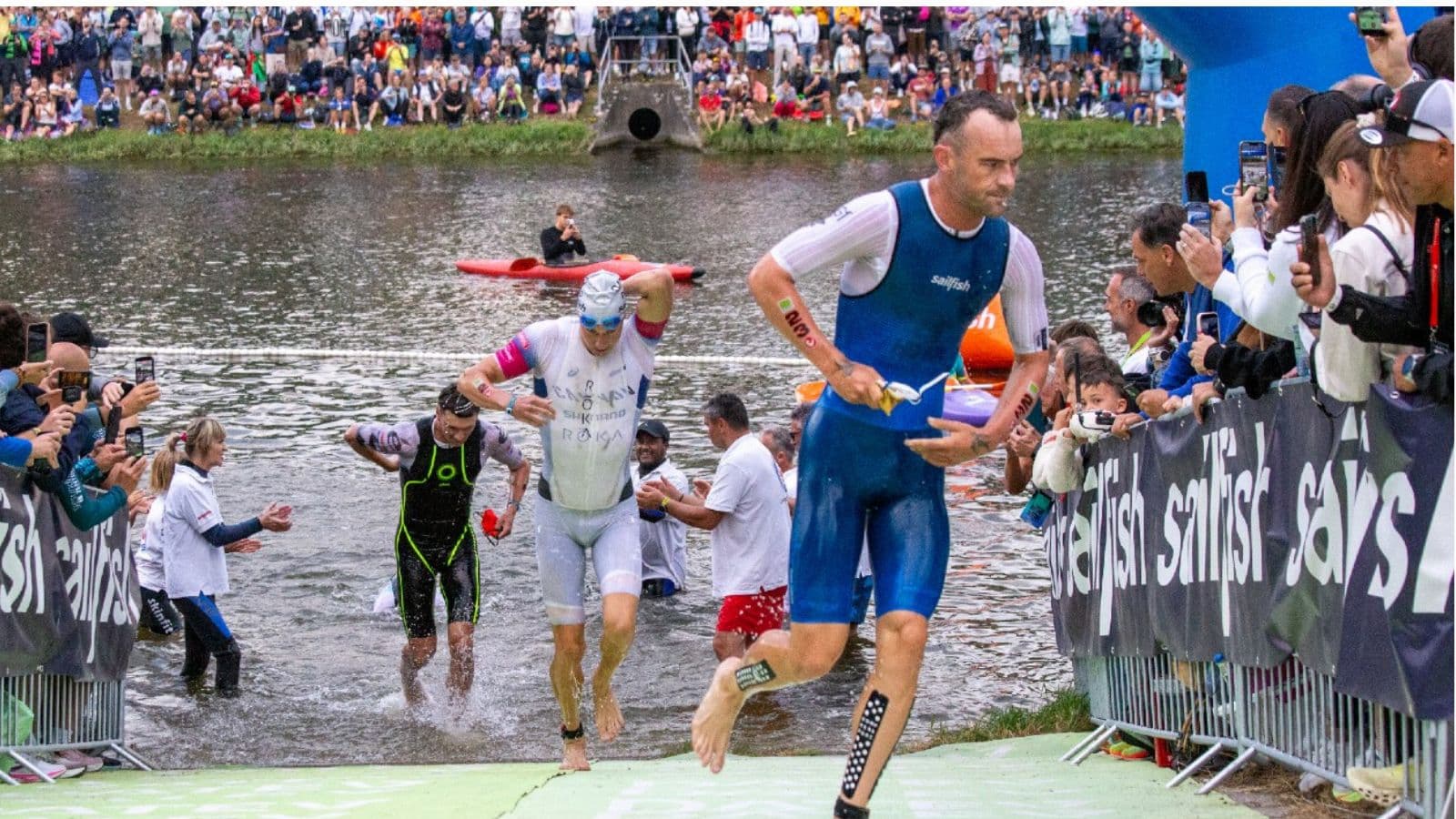
You can improve triathlon transition times by simplifying your routine and practicing it regularly before race day. Transition is sometimes called the fourth discipline because the clock continues running while you change from swimming to cycling in T1 and from cycling to running in T2. Beginners often lose time because they are deciding what to do while already inside transition. Experienced athletes usually have a clear sequence that requires very little thought. The goal is not simply to move as fast as possible. Rushing can lead to forgotten equipment, helmet mistakes, difficulty putting on shoes, or unsafe bike handling. A good transition is organized, controlled, and repeatable. Small improvements to equipment placement and movement can often save more time than trying to sprint through the transition area.
In Short
- Learn the transition layout before racing.
- Keep equipment organized and minimal.
- Develop a fixed routine for T1 and T2.
- Practice removing your wetsuit quickly.
- Put your helmet on before handling the bike.
- Learn where the mount and dismount lines are.
- Practice bike mounting and dismounting safely.
- Use equipment you have already tested.
- Remove unnecessary actions rather than simply moving faster.
Learn the Transition Area Before the Start
Walk through transition before your race begins. Locate the swim entrance, your bike rack, bike exit, mount line, dismount line, run exit, and any other areas specified by the organizer. Large transition areas can contain hundreds or thousands of bikes, making your rack difficult to identify after the swim. Use permanent landmarks such as trees, signs, buildings, or numbered rows to remember your location. Do not depend on towels, balloons, or other markers that race organizers may prohibit or remove.
Knowing where you are going prevents hesitation and unnecessary distance.
Keep Your Transition Setup Simple
More equipment creates more decisions. Place only the items you genuinely need in transition, following the event’s rules. A basic setup may include your bike equipment, helmet, cycling or running shoes, race number where required, and any permitted nutrition. Avoid spreading equipment across a large area because transition space is usually shared with other athletes. Your bike should also be ready before you leave transition. Checking tires, brakes, drivetrain, bottles, and other essentials follows the same logic as what you should check on your bike before every ride, reducing the chance that an avoidable mechanical problem disrupts T1.
Create a Fixed T1 Routine
T1 begins when you leave the swim and ends when you start the bike section according to the event’s timing setup. Develop one sequence and practice it repeatedly.
A simple T1 routine could be:
- Start removing the upper part of the wetsuit while moving toward your bike, if race rules and conditions allow.
- Reach your transition position.
- Remove the rest of the wetsuit.
- Put on any required bike equipment.
- Put on and fasten your helmet.
- Take the bike from the rack.
- Move toward the bike exit.
- Mount only after the designated mount line.
Do not introduce an unfamiliar routine on race morning.
Practice Wetsuit Removal
A wetsuit can become one of the biggest sources of frustration in T1. Practice removing it after swimming when your body is wet and your heart rate is elevated. Removing a dry wetsuit calmly at home is not the same experience. As you leave the water, begin opening the wetsuit when permitted and pull it down toward your waist while moving toward transition. Once beside your bike, remove it from your legs without interfering with neighboring athletes. Open water confidence also reduces the chance of arriving in T1 overwhelmed or disoriented. Developing how can you improve your swim stamina for a triathlon can make the final part of the swim more controlled, leaving you better prepared to begin transition.
Slow Down Enough to Avoid Mistakes
Moving faster does not always create a faster transition.
A rushed athlete may:
- Drop equipment
- Forget sunglasses
- Struggle with shoes
- Run past the bike
- Leave without fastening the helmet correctly
Instead, move deliberately. Think of transition speed as eliminating pauses rather than creating frantic movement. A smooth athlete who continuously completes the correct actions can be faster than someone moving aggressively but repeatedly correcting mistakes. This becomes particularly important after difficult open water conditions, when why do you feel dizzy after swimming in a triathlon may help explain why some athletes need a few controlled moments before safely handling the bike.
Practice Helmet Placement
Your helmet should be easy to reach and positioned according to event rules. Practice putting it on and fastening it without needing several attempts. Make helmet fastening an automatic part of your routine before touching or removing the bike from its rack. Never sacrifice safety for a few seconds. Transition penalties or disqualification rules vary between events, so read the specific race instructions. Knowing the rules is part of becoming faster because it prevents avoidable mistakes.
Prepare for the Bike Before Race Day
Your bike setup should already be familiar. Know which gear you want when leaving transition, where your nutrition is stored, how your bottles are arranged, and how you will handle your shoes. An unsuitable starting gear can make the first pedal strokes unnecessarily difficult, particularly if the bike course begins uphill. Smooth gear use matters beyond transition as well, and how do you adjust your bike gears for smoother shifting becomes useful when preparing the bike so that acceleration out of T1 feels controlled rather than awkward.
Improve Your Mounting Skills
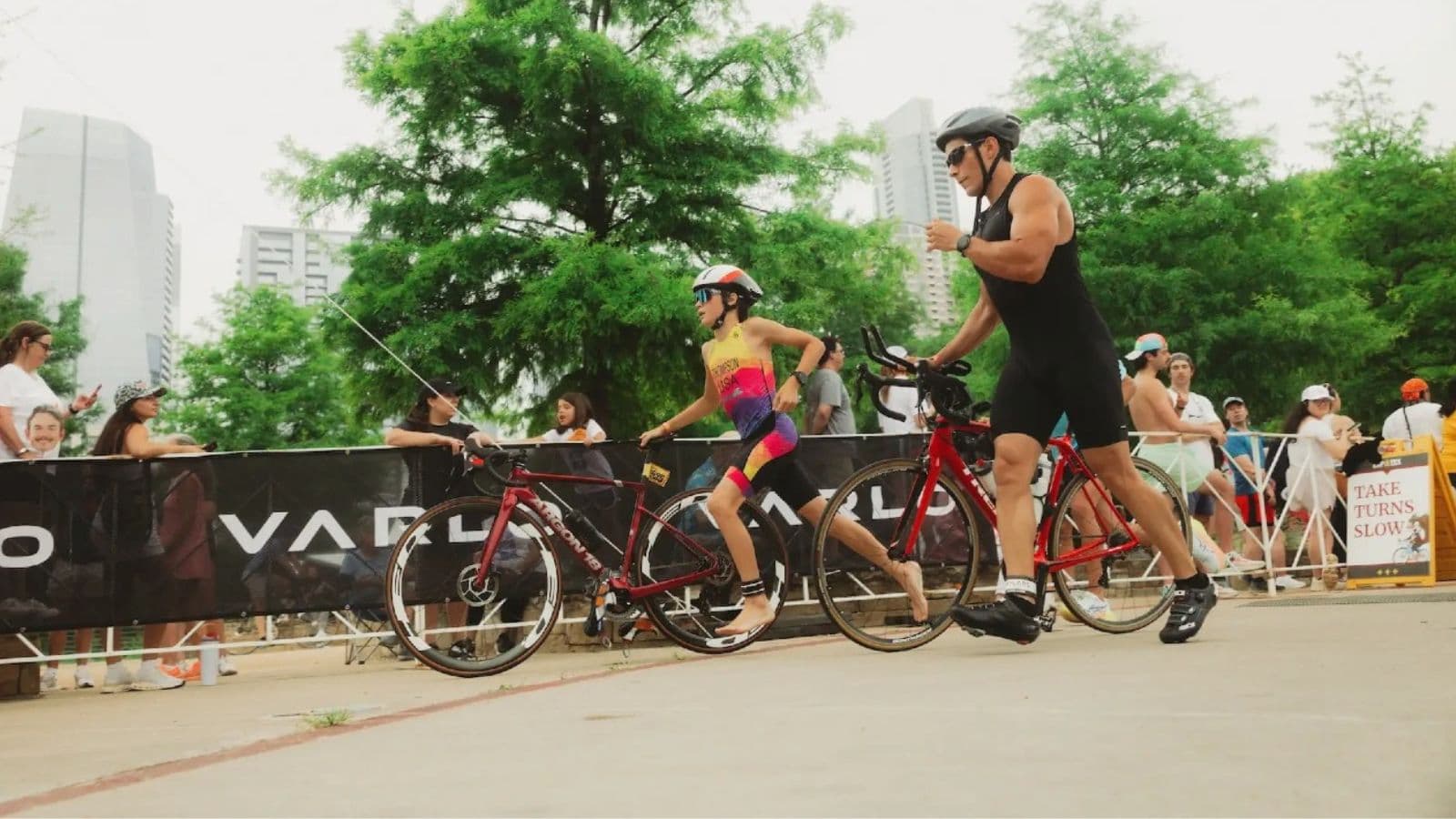
Running quickly to the mount line achieves little if you then spend several seconds struggling to get onto the bike.
- Practice mounting in a quiet, safe environment
- Beginners should prioritize a normal controlled mount
- More advanced athletes may use different techniques after sufficient practice
but these should never be attempted for the first time during competition. The same applies when returning to transition. Regular practice of how to mount and dismount your bike smoothly in a race can remove hesitation at both ends of the bike leg while maintaining control.
Do Not Copy Advanced Techniques Too Early
Some experienced athletes attach cycling shoes to the bike and put their feet into them while riding. This can be fast when executed correctly, but it requires skill and practice. It can also cost time or create a safety risk when performed poorly. Beginners may be faster overall by putting cycling shoes on in transition and completing a normal mount.
Choose the fastest technique that you can execute reliably, not the technique that looks fastest when performed by an elite athlete.
Use the Bike Leg to Prepare for T2
A fast T2 begins before reaching the dismount line. As you approach transition, think ahead. Make sure you know where the dismount line is and prepare to slow safely. Do not become so focused on transition speed that you compromise bike control. The final part of the bike should also leave you capable of running effectively. How can you bike smarter to improve your triathlon run applies here because excessive cycling effort can make the first kilometers of running far more difficult than any transition technique can fix.
Create a Simple T2 Routine
T2 is usually less complicated than T1 because there is no wetsuit to remove.
A typical sequence is:
- Dismount before the required line.
- Move to your rack position.
- Rack the bike correctly.
- Remove your helmet.
- Change shoes if required.
- Put on your race number or other required equipment.
- Leave through the run exit.
Follow the event’s specific rules.
Practice this sequence until you can perform it without stopping to decide what comes next.
Make Running Shoes Easy to Use
Running shoes should be ready to put on quickly. Elastic laces can reduce the time required to tie shoes, but they should be tested during training before racing. Whatever system you use, make sure the shoe remains secure and comfortable during the run. Transition speed has little value if poorly adjusted footwear creates discomfort several kilometers later. Good preparation supports how to improve your triathlon running form because starting the run comfortably allows you to settle into normal mechanics rather than immediately adjusting equipment.
Practice Transitions During Brick Sessions
Transition practice does not require a full race simulation. During some brick workouts, set up a small transition area and time how long it takes to move from cycling to running. Occasionally practice swim to bike transitions as well when logistics allow. Repeat the routine rather than changing it every session. You are trying to make the sequence automatic. Brick training also reveals whether your equipment setup works when fatigued, particularly when how can you reduce fatigue during the triathlon run leg is a priority for longer events.
Practice at Race Effort
Eventually, transition practice should happen when your heart rate is elevated.
- A calm rehearsal in your garage is useful for learning the sequence
- Practice after a swim, hard bike section, or appropriate race specific effort so you learn to make simple decisions while breathing heavily.
- Keep these sessions controlled.
- You do not need to simulate an entire triathlon every week.
Time Individual Parts of Your Transition
Timing transitions can reveal where seconds are actually being lost. Instead of simply trying to make the entire transition faster, identify specific problems.
You might discover that you lose time:
- Removing your wetsuit.
- Finding your bike.
- Putting on shoes.
- Fastening your helmet.
- Mounting the bike.
- Finding the run exit.
Improve the slowest repeatable step first.
This is more effective than rushing every movement.
Prepare for Weather Conditions
Weather can change transition decisions. Cold races may require additional clothing. Hot races may increase hydration needs. Rain can affect bike handling and make surfaces slippery. If extra clothing is necessary, practice putting it on while damp. When conditions are wet, transition speed should never come before control. How to cycle safely in the rain remains relevant from the moment you leave T1 because wet roads, painted surfaces, corners, and braking zones can require greater caution.
Common Mistakes
- Bringing unnecessary equipment into transition.
- Trying new equipment on race day.
- Forgetting the transition layout.
- Rushing wetsuit removal.
- Handling the bike before securing the helmet.
- Attempting advanced mounts without practice.
- Crossing mount or dismount lines incorrectly.
- Changing the routine immediately before racing.
- Prioritizing seconds over safety.
Practical Tips
- Walk through transition before the start.
- Memorize your rack location.
- Keep equipment minimal.
- Arrange items in order of use.
- Practice T1 and T2 repeatedly.
- Rehearse wetsuit removal while wet.
- Practice safe mounting and dismounting.
- Read race specific transition rules.
- Time your routine and remove unnecessary steps.
Actionable Takeaways
Faster triathlon transitions come primarily from preparation, simplicity, and practice. Build a fixed T1 and T2 routine, organize equipment logically, learn the transition layout, and rehearse each sequence until it requires very little conscious thought. Do not mistake rushing for speed. The quickest transitions usually contain fewer pauses, unnecessary movements, and corrections rather than dramatically faster actions.
Practice transitions during training, including occasionally when fatigued. Use techniques appropriate to your skill level and follow the rules of each event. Saving seconds matters, but equipment security, bike control, and athlete safety always come first.