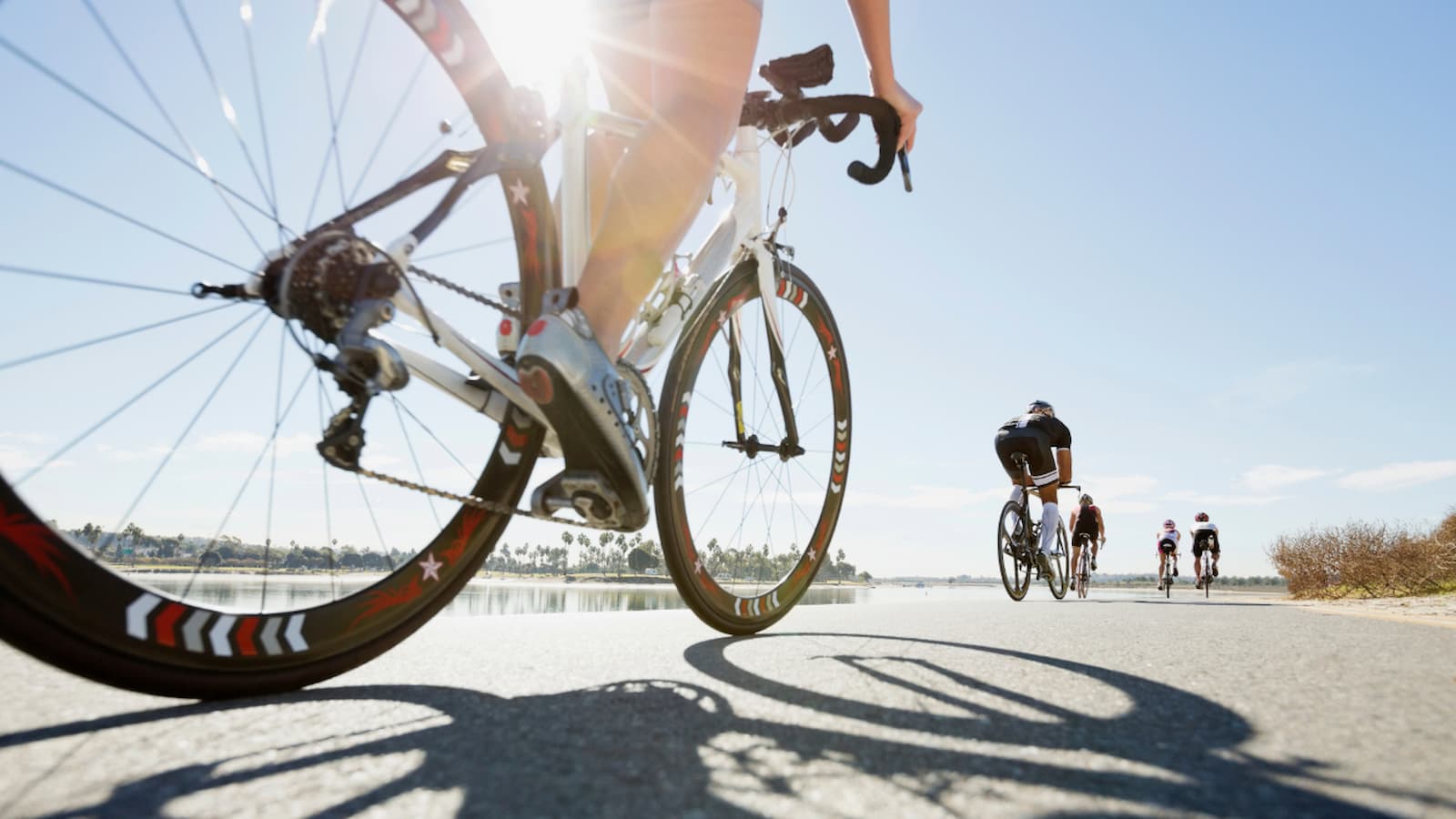


Bike geometry describes the dimensions and angles that determine the shape of a bicycle frame and how the rider is positioned relative to the wheels, pedals and handlebars. In triathlon, these measurements matter because athletes often spend long periods riding in an aerodynamic position before immediately transitioning to running. A bike with suitable geometry can make it easier to maintain an efficient position, handle confidently and produce sustainable power. Poorly matched geometry may force excessive adjustments or make the desired riding position difficult to achieve comfortably. Geometry should not be viewed as a shortcut to speed. Fitness, aerodynamics, equipment, technique and bike fit all contribute to performance. The objective is to choose a frame that gives you an appropriate foundation for a position you can actually sustain throughout your race.
In Short
- Bike geometry determines the basic range of positions a bike can accommodate.
- Stack and reach are particularly useful when comparing frame sizes and models.
- Triathlon geometry generally supports sustained aerodynamic positioning.
- The fastest position is only useful when you can maintain it comfortably and safely.
What Is Bike Geometry?
Bike geometry is the collection of measurements and angles used to describe a bicycle frame.
Important measurements can include:
- Stack.
- Reach.
- Seat tube angle.
- Head tube angle.
- Wheelbase.
- Chainstay length.
- Bottom bracket position.
These dimensions interact rather than working independently. Two bikes labelled the same size can therefore fit and handle differently.
Why Does Geometry Matter in Triathlon?
Triathlon cycling has a different objective from many forms of road cycling.
The rider generally wants to:
- Reduce aerodynamic drag.
- Maintain sustainable power.
- Remain comfortable for the race distance.
- Control the bike confidently.
- Arrive at T2 capable of running effectively.
Geometry helps determine whether the bike can support those requirements without extreme adjustments.
Geometry and Bike Fit Are Different
Bike geometry describes the bicycle. Bike fit describes how the rider is positioned on it. The distinction matters.
Two athletes can use the same frame but require different:
- Saddle heights.
- Saddle positions.
- Crank lengths.
- Extension positions.
- Pad widths.
- Cockpit heights.
Geometry provides the foundation within which those adjustments are made.
Stack Determines Frame Height
Stack is the vertical distance from the centre of the bottom bracket to the top centre of the head tube. In simple terms, it helps describe how tall the front of the frame is. A greater stack can make it easier to achieve a higher front end. A lower stack may provide greater scope for a lower position, depending on the cockpit and adjustment system. Stack alone does not determine whether a bike fits.
It should be considered together with reach and the adjustability of the complete front end.
Reach Determines Frame Length
Reach measures the horizontal distance from the bottom bracket to the top centre of the head tube. It provides useful information about how long a frame is.
Too much reach may leave a rider:
- Overextended.
- Uncomfortable at the shoulders.
- Unable to relax in the aero position.
Too little may create an overly cramped position. The correct range depends on the athlete’s body dimensions, mobility and intended riding position.
Compare Stack and Reach Instead of Size Labels
Frame labels such as small, medium, 54cm or 56cm are not perfectly standardized. A 54cm frame from one manufacturer can differ substantially from another. Stack and reach provide more useful reference points when comparing bikes. They still do not tell you everything, but they provide objective measurements rather than relying solely on the size printed on the frame.
Seat Tube Angle Influences Rider Position
Seat tube angle describes the orientation of the seat tube relative to the ground. Triathlon bikes commonly allow riders to sit farther forward than traditional road setups.
A forward position can help place the rider appropriately relative to the:
- Bottom bracket.
- Aerobar pads.
- Extensions.
However, simply moving the saddle as far forward as possible does not guarantee better performance. Saddle position should support sustainable pedalling and the complete bike fit.
Geometry Can Support an Aerodynamic Position
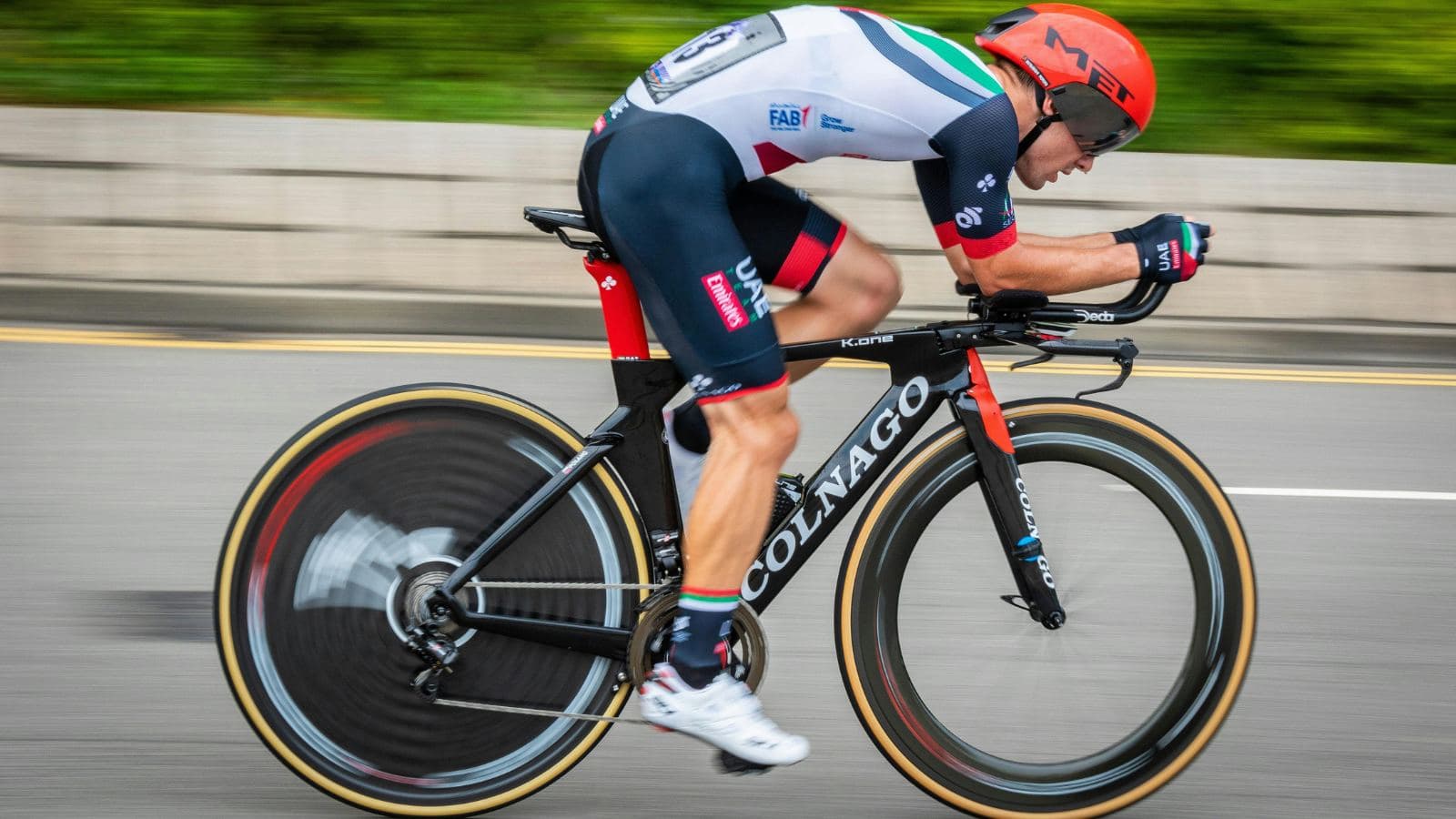
Aerodynamic drag is a major resistance when cycling quickly. Triathlon bikes are designed to help riders reduce frontal area while supporting the forearms on aero bars.
Geometry can make it easier to position:
- Torso.
- Arms.
- Hips.
- Head.
But lower is not automatically faster. A very aggressive position that cannot be maintained for more than a few minutes may be less effective than a slightly higher position that can be sustained for most of the race.
Sustainable Aerodynamics Matter More Than Appearance
Aero positions are sometimes judged by how aggressive they look. That is not a useful performance measure.
A practical position should allow you to:
- See safely ahead.
- Breathe effectively.
- Produce appropriate power.
- Remain reasonably comfortable.
- Maintain control.
- Stay in the aero position for long periods.
If discomfort repeatedly forces you onto the base bars, the theoretical aerodynamic benefit of the position becomes less valuable.
Geometry Can Affect Power Production
Your position influences the relationship between the hips, knees, ankles and pedals. An unsuitable setup can make normal power production uncomfortable or difficult to sustain. However, there is no universal geometry that produces maximum power for every athlete. The goal is to find a position that allows you to produce the power required for your event while meeting aerodynamic, comfort and handling requirements.
Training principles such as how to increase your cycling ftp remain important because frame geometry cannot replace physiological fitness.
Geometry Can Influence the Run After Cycling
Triathletes need to consider what happens after T2. A bike position should not be judged solely by the fastest possible cycling split. If an unsustainable position contributes to excessive discomfort or muscular fatigue, the run may suffer. This is why bike packing is relevant when evaluating position. Cycling performance should be considered as part of the complete triathlon rather than an isolated event.
Head Tube Angle Influences Steering
Head tube angle is one of several measurements influencing steering behaviour.
It works alongside:
- Fork offset.
- Trail.
- Wheelbase.
- Weight distribution.
Small differences can affect how responsive or stable a bicycle feels. Triathlon bikes need enough stability for sustained aero riding while still allowing riders to corner and navigate safely.
Wheelbase Can Influence Stability
Wheelbase is the distance between the front and rear wheel axles. A longer wheelbase can contribute to a more stable feeling, although handling depends on several interacting geometry measurements. A shorter bike may feel more responsive in some situations. Neither characteristic is automatically better. Race course demands and rider confidence matter.
Handling Matters Even on a Fast Triathlon Bike
Aerodynamics receives considerable attention in triathlon, but a bike still needs to be ridden safely.
Good handling allows you to:
- Corner confidently.
- Descend under control.
- Respond to wind.
- Navigate turns.
- Avoid unnecessary braking.
A theoretically faster setup may provide little advantage if you lose substantial time whenever the course becomes technical.
Crosswinds Can Expose Position Problems
Strong crosswinds can make maintaining an aerodynamic position more difficult. The rider’s position, wheel choice, bike design and handling ability can all affect confidence. Do not assume geometry alone determines crosswind stability. Practicing the skills in how to ride in headwinds and crosswinds on a bike can help you remain controlled when conditions become challenging.
Geometry Matters on Climbs
Triathlon courses can contain anything from flat roads to long mountain climbs.
A rider may spend more time out of the aero position when:
- Gradient becomes steep.
- Speed falls.
- Handling becomes more important.
- Standing is required.
The bike should still feel manageable outside the aero bars. Learning when should you climb seated vs standing on a bike can also help you adjust technique as gradients and fatigue change.
Comfort Becomes More Important as Distance Increases
A position that feels manageable during a 30 minute test ride may become uncomfortable after several hours.
Long distance triathletes should pay particular attention to:
- Saddle comfort.
- Neck comfort.
- Shoulder tension.
- Hand pressure.
- Hip comfort.
- Ability to remain aerodynamic.
Geometry should provide enough adjustment to create a sustainable position for the intended event.
More Aggressive Is Not Always Better
Choosing the smallest or lowest frame possible is not a reliable route to speed.
An excessively aggressive setup may create:
- Neck discomfort.
- Shoulder tension.
- Hip restriction.
- Difficulty seeing ahead.
- Poor bike control.
Choose geometry according to your body and intended position, not according to how professional athletes appear on their bikes.
Mobility Can Affect Your Position
Your ability to maintain a particular position depends partly on your mobility and movement characteristics. This does not mean every triathlete needs exceptional flexibility. It means the position should respect what you can sustain comfortably.
Do not force your body into a position simply because the frame can physically accommodate it.
Cockpit Adjustability Matters
Modern triathlon bikes can offer substantial adjustment at the aero bars.
Depending on the system, you may be able to change:
- Pad height.
- Pad reach.
- Pad width.
- Extension length.
- Extension angle.
- Hand position.
This means frame geometry should be evaluated together with cockpit adjustment range. A suitable frame with a highly adjustable cockpit may provide more useful fitting options than looking at frame measurements alone.
Saddle Adjustment Has Limits
Saddle height and fore aft position are important fit variables. However, the saddle should not be used to compensate for every cockpit problem. Moving the saddle dramatically simply because the bars feel too far away can alter your relationship with the pedals. Each adjustment should have a clear purpose. If the frame requires extreme component positions just to achieve a reasonable fit, another frame size or geometry may be more appropriate.
Crank Length Can Interact With Position
Crank length affects the path travelled by the pedals. In an aerodynamic position, crank choice can influence how much the hip closes near the top of the pedal stroke. Some athletes may benefit from different crank lengths, but this is an individual fitting decision rather than a universal rule.
Any substantial change should consider saddle height and the rest of the bike position.
Correct Geometry Does Not Replace Good Pedalling
A well fitted triathlon bike creates an appropriate platform for cycling. The rider still needs to pedal effectively. Cadence, gearing and technique influence how efficiently you use that position throughout a race. Practicing what cycling drills help improve triathlon bike technique can help you develop better control and pedalling habits alongside equipment adjustments.
Position Should Be Tested at Race Intensity
A comfortable easy ride does not completely prove that your position is suitable for racing.
Test it during:
- Longer endurance rides.
- Race pace intervals.
- Climbs.
- Descents.
- Outdoor aero riding.
- Brick sessions.
A position should remain functional as effort and fatigue increase.
Use Brick Sessions to Evaluate the Complete Setup
Brick sessions provide useful feedback because you run shortly after cycling.
Pay attention to whether your bike position produces unusual:
- Hip tightness.
- Back discomfort.
- Leg fatigue.
- Difficulty transitioning into normal running.
Some heaviness after cycling is normal.
Persistent problems may justify reviewing your position, training or pacing rather than assuming they are an unavoidable part of triathlon.
Bike Geometry Cannot Fix Poor Pacing
Even the best fitting triathlon bike will not compensate for riding far above sustainable intensity. Pacing remains crucial, particularly in longer events. Use training to understand the power, heart rate or perceived effort you can sustain without compromising the run. For athletes using physiological feedback, how can heart rate zones improve triathlon cycling speed and fitness can help place riding intensity within a structured training plan.
Fit Problems Can Look Like Training Problems
Sometimes a rider assumes discomfort is simply caused by poor fitness.
Repeated symptoms such as:
- Knee discomfort.
- Saddle pain.
- Hand numbness.
- Neck pain.
- Lower back discomfort.
may justify checking bike setup. For example, how to stop hand numbness and saddle discomfort on long rides explains why position and equipment should be considered when discomfort repeatedly appears during longer cycling. Persistent pain should not simply be accepted as part of becoming fitter.
Avoid Copying Another Athlete’s Coordinates
Professional triathletes may use positions developed around their:
- Anatomy.
- Mobility.
- Equipment.
- Race demands.
- Aerodynamic testing.
- Years of adaptation.
Copying their saddle height, pad drop or extension position does not mean you will receive the same aerodynamic benefit.
Your position should be developed around you.
Choose a Bike With Room for Adjustment
When buying a triathlon bike, consider not only whether it can reach your current position but whether it offers sensible adjustment.
Useful questions include:
- Is the required saddle position achievable?
- Can the pads reach the appropriate height?
- Is there enough cockpit reach adjustment?
- Can extensions be positioned comfortably?
- Are replacement or adjustment parts readily available?
A bike near the middle of its useful adjustment range can often be easier to work with than one requiring extreme settings.
Professional Bike Fitting Can Help
A qualified bike fitter can help assess:
- Frame size.
- Saddle position.
- Cockpit coordinates.
- Comfort.
- Movement.
- Equipment options.
Ideally, fit considerations should begin before purchasing an expensive triathlon bike. A pre purchase fit can help identify which frame geometries are capable of supporting your required position.
Make Position Changes Gradually
Even a sensible new position may initially feel unfamiliar. Large sudden changes can alter muscular demands and pressure points.
When appropriate:
- Make measured adjustments.
- Test them.
- Allow some adaptation.
- Reassess comfort and performance.
Avoid changing several major fit variables simultaneously because it becomes difficult to determine which adjustment helped or created a problem.
Keep the Bike Mechanically Reliable
Geometry and fit receive plenty of attention, but basic reliability still matters. Before training and racing, make sure the bike is functioning correctly.
Following what you should check on your bike before every ride can help identify tyre, brake, drivetrain and other mechanical issues before they interfere with training.
Common Mistakes
- Choosing a bike based only on its labelled frame size.
- Assuming lower always means more aerodynamic.
- Copying professional triathlon positions.
- Ignoring stack and reach when comparing bikes.
- Using extreme saddle adjustment to correct cockpit problems.
- Judging a position from one short ride.
- Ignoring handling and visibility.
- Changing several fit measurements simultaneously.
Practical Tips
- Compare stack and reach between frames.
- Consider geometry before buying the bike.
- Prioritise sustainable aerodynamics.
- Test the position during long rides.
- Practise riding outdoors in the aero position.
- Evaluate handling as well as straight line speed.
- Use brick sessions to assess how you run afterward.
- Make major position changes gradually.
Actionable Takeaways
Bike geometry affects the range of positions a triathlete can achieve and how the bicycle behaves underneath them. Stack, reach, seat tube angle, wheelbase and steering geometry all contribute, but no individual measurement determines performance on its own.
Prioritise a frame that allows you to achieve a sustainable aerodynamic position without relying on extreme adjustments. You should be able to produce appropriate power, see the road, handle the bike confidently and remain comfortable enough to stay in position for the demands of your race.
Most importantly, evaluate geometry as part of the complete triathlon. The best bike position is not simply the one that looks lowest or fastest. It is one that helps you ride efficiently and aerodynamically while still leaving you capable of running effectively after T2.