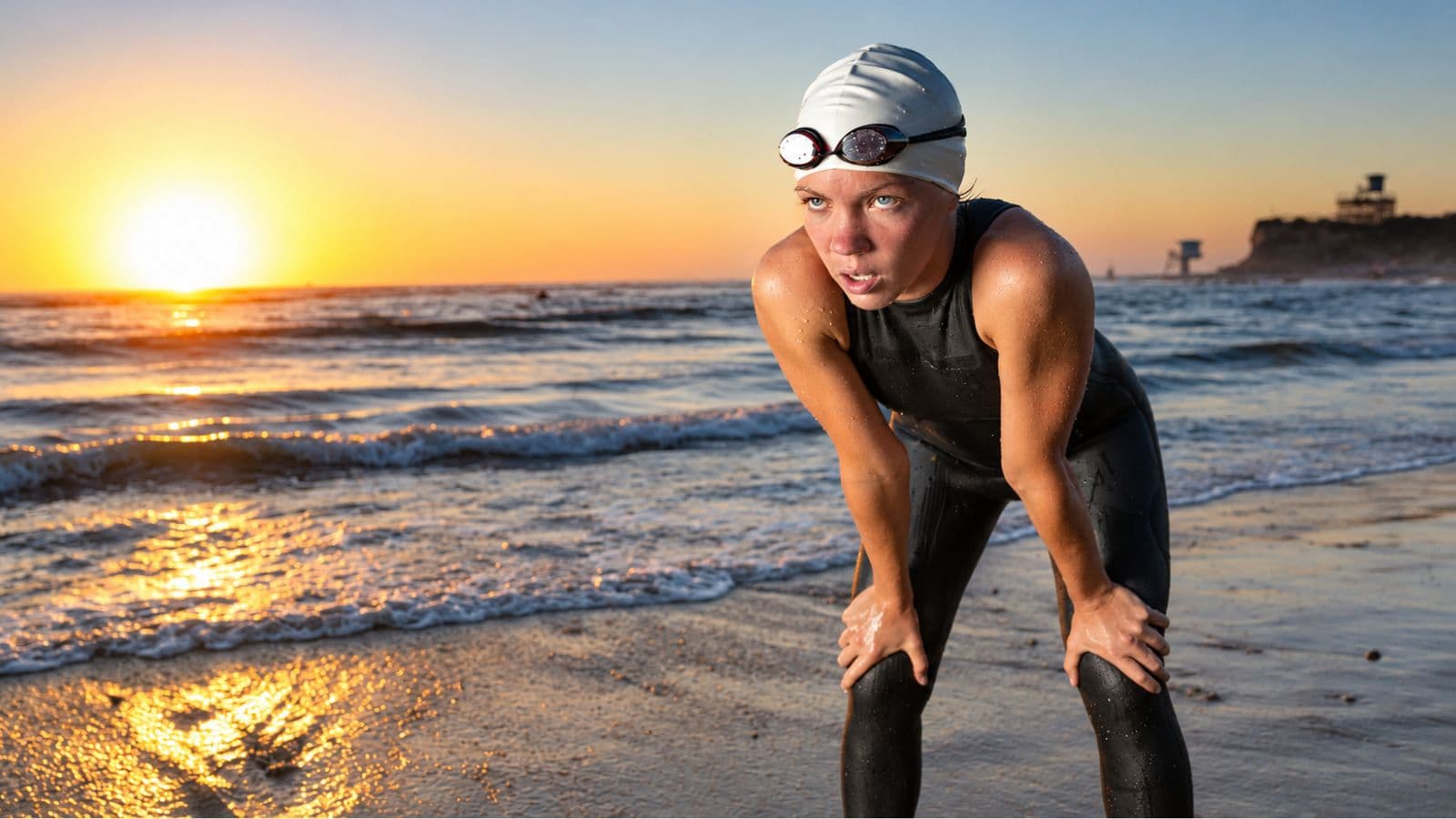


Breaststroker’s knee describes knee pain associated with repeated breaststroke kicking. It is generally considered an overuse problem rather than one single injury, and pain is most commonly felt around the medial, or inner, side of the knee. Although triathletes normally race using front crawl, some include breaststroke during pool training, warm-ups, recovery swimming, or technique sessions. A triathlete can therefore develop breaststroke related knee pain even if breaststroke is not their primary stroke. The breaststroke kick places the knee through a different movement pattern from the flutter kick used in front crawl. Knee pain should not automatically be labeled breaststroker’s knee simply because it occurs after swimming. Running, cycling, strength training, and other knee conditions can produce similar symptoms, making persistent or significant pain worth properly assessing.
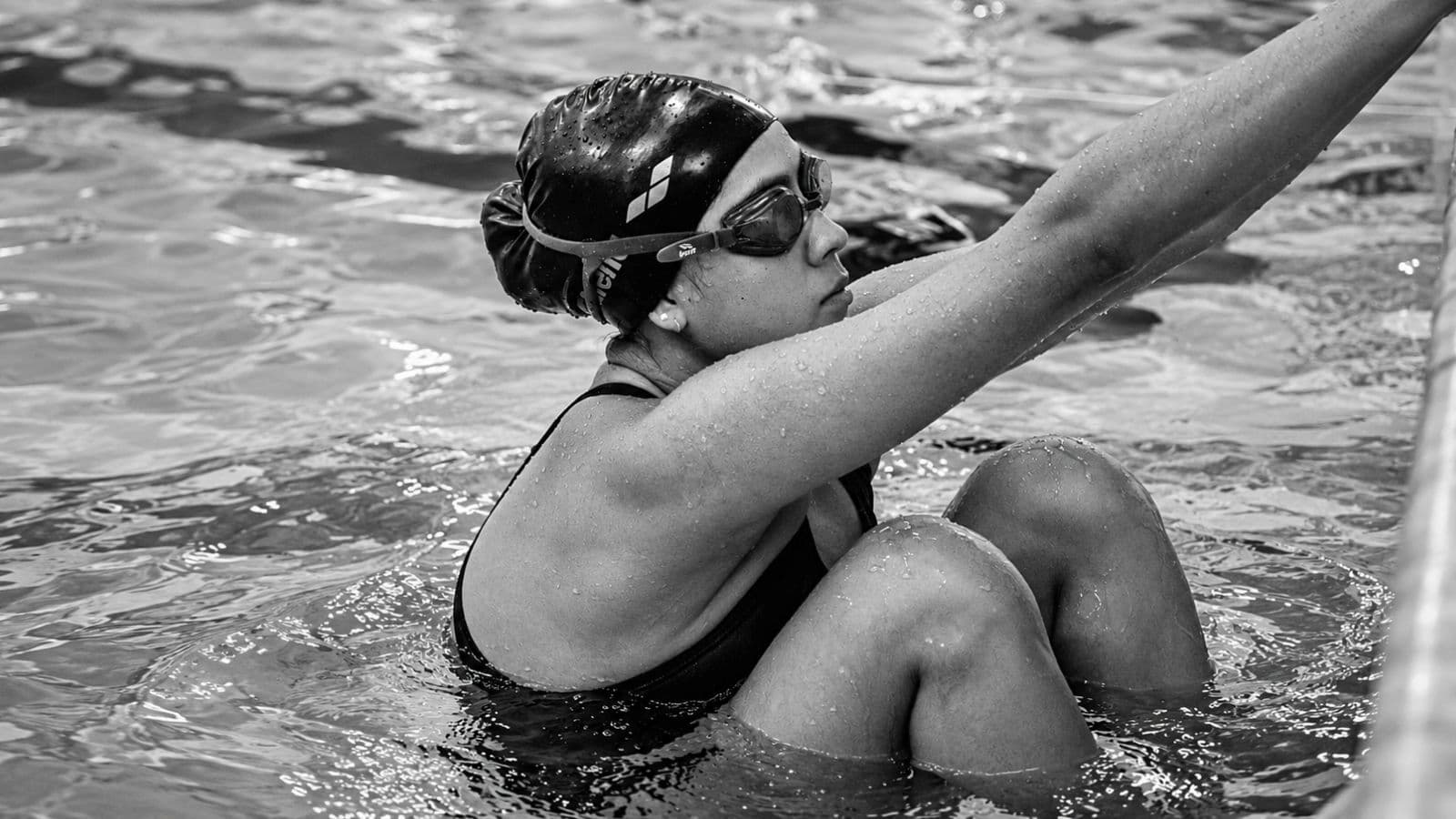
In Short
- Breaststroker’s knee is associated with repeated breaststroke kicking.
- Pain commonly occurs on the inner knee.
- It is usually considered an overuse problem.
- The whip kick creates rotational and valgus stress.
- Training volume can influence risk.
- Kick mechanics can contribute.
- Hip movement may affect knee loading.
- Pain may initially occur only during breaststroke.
- Reducing breaststroke load may help.
- Persistent knee pain deserves assessment.
Where Does Breaststroker’s Knee Hurt?
Pain is most commonly reported around the medial side of the knee.
Research has associated symptoms with areas around the:
- Medial collateral ligament.
- Medial patellar region.
- Medial synovial plica.
However, breaststroker’s knee does not describe one consistently identified structural injury. Different swimmers can have similar medial knee symptoms involving different tissues. This is one reason self diagnosis based only on pain location can be unreliable.
Why Does the Breaststroke Kick Stress the Knee?
The breaststroke kick is very different from the relatively straight flutter kick used during front crawl.
During the whip kick, the legs move through a combination of:
- Knee flexion.
- Knee extension.
- Hip movement.
- Tibial rotation.
- Valgus loading.
Repeated valgus and rotational forces can increase stress around the medial knee. Biomechanical research has specifically linked breaststroke kicking with medial knee loading and external rotation of the tibia relative to the femur. Triathletes who primarily use front crawl may benefit more from developing how to coordinate breathing with your swim strokes in a triathlon than adding large amounts of breaststroke simply to extend swim volume.
Technique Can Influence Knee Stress
How you perform the kick matters. Older biomechanical research found higher injury rates when hip abduction at kick initiation fell outside a relatively narrow range, suggesting that kick mechanics can alter medial knee stress. Problems may arise when a swimmer repeatedly uses an inefficient or excessively stressful movement. Rather than trying to correct the kick from written instructions alone, swimmers with recurring symptoms may benefit from having their technique observed by an experienced coach. Technique focused training, such as when should triathletes isolate swim technique skills, can be useful when a specific movement needs attention rather than simply increasing swimming distance.
Training Volume Can Contribute
Breaststroker’s knee is strongly associated with repetitive loading. Research in competitive swimmers has linked more frequent knee pain with greater breaststroke training distance and longer swimming history. For triathletes, risk may increase when breaststroke volume suddenly rises.
Be cautious when adding:
- Extra breaststroke lengths.
- High volume kick sets.
- Hard breaststroke intervals.
- Frequent breaststroke sessions.
Gradual progression gives your body more time to adapt.
Warm Up Before Hard Breaststroke Sets
One study of competitive breaststroke swimmers found that more frequent knee pain was associated with shorter warm-up distances. A practical swim warm-up can begin with comfortable movement before progressing into harder kicking.
You might include:
- Easy front crawl.
- Gentle technique work.
- Progressive swimming.
- Controlled breaststroke practice.
Avoid moving immediately from being cold and stiff into repeated maximal whip kicks.
Hip Mobility May Matter
The breaststroke kick requires coordinated movement through the hips as well as the knees. Limited or poorly controlled hip movement may change how forces are transferred through the leg. Research has found associations between hip rotation or hip abduction mechanics and breaststroke related knee symptoms, although breaststroker’s knee remains multifactorial. Do not force your knees outward simply to create a wider kick.
Why Triathletes Need to Consider Running and Cycling Too?
Triathletes place additional repetitive stress on their knees outside the pool.
A painful knee may be influenced by:
- Swimming.
- Cycling.
- Running.
- Strength training.
- Overall training load.
For example, cycling related discomfort can have different causes, which is why how to prevent your knees from hurting during long cycling should be considered when symptoms also occur on the bike. Likewise, increasing running load too quickly can create a separate problem. Following how to avoid running injuries as mileage increases in a triathlon helps reduce the temptation to blame every knee symptom on swimming.
Should You Keep Swimming Breaststroke With Knee Pain?
Do not repeatedly push through increasing pain. In earlier research, symptoms sometimes initially occurred only during the breaststroke kick and later appeared during other sporting or everyday activities when swimmers continued despite discomfort. Depending on the problem, modifying or temporarily reducing breaststroke may be appropriate. You may still be able to perform other swimming that does not reproduce symptoms, but this depends on the individual and the cause of the pain. Using what swim workouts improve triathlon performance can help maintain purposeful swim training without making breaststroke an essential part of every session.
Can Front Crawl Be Used Instead?
Front crawl does not use the same whip kick mechanics as breaststroke. For most triathletes, it is also the primary race stroke. If breaststroke kicking irritates your knee, front crawl may sometimes allow swimming to continue without reproducing the same stress, depending on the underlying problem. Developing how to increase triathlon swim speed through front crawl technique and appropriate training is generally more race specific for triathletes anyway.
Strength Training Can Support the Knee
Strength work cannot guarantee that breaststroker’s knee will never develop, but general lower body strength can support training resilience.
Useful areas to develop include:
- Glutes.
- Quadriceps.
- Hamstrings.
- Calves.
- Trunk.
Strength exercises should be appropriate for your current ability and should not reproduce significant knee pain. The broader principles in what strength routine should triathlete runners do to stay injury free can help integrate strength without unnecessarily increasing overall training stress.
Do Not Ignore Persistent Pain
Seek appropriate assessment if knee pain is:
- Persistent.
- Increasing.
- Associated with swelling.
- Affecting walking.
- Present during several sports.
- Changing your movement.
Not every medial knee problem in a swimmer is breaststroker’s knee. Other possible causes require different management. If pain begins affecting multiple parts of training, reviewing what training habits increase injury risk in runners can also help identify whether total workload and recovery are contributing.
Returning to Breaststroke
Return gradually once symptoms have settled and the cause has been appropriately addressed.
Start with:
- Low volume.
- Comfortable effort.
- Good technique.
- Adequate recovery.
Do not immediately return to the training volume that originally triggered symptoms. If breaststroke is only a secondary stroke for you, there may be little reason to prioritize large amounts of it over race specific front crawl.
Common Mistakes
- Continuing to kick through increasing pain.
- Assuming all knee pain has the same cause.
- Suddenly increasing breaststroke volume.
- Forcing a very wide kick.
- Ignoring hip movement.
- Skipping an appropriate warm-up.
- Blaming swimming when running or cycling also hurts.
- Returning immediately to full breaststroke volume.
- Using painkillers simply to continue training.
Practical Tips
- Monitor where and when pain occurs.
- Reduce movements that clearly reproduce symptoms.
- Review breaststroke kick technique.
- Increase swim volume gradually.
- Warm up before harder breaststroke work.
- Keep front crawl as the main race specific stroke.
- Consider total swim, bike, and run load.
- Maintain appropriate strength training.
- Seek assessment for persistent symptoms.
Actionable Takeaways
- Breaststroker’s knee usually involves medial knee pain related to repeated whip kicking.
- Technique and breaststroke volume can influence knee stress.
- Do not repeatedly swim through worsening pain.
- Consider your total triathlon workload, not swimming alone.
When knee pain affects several disciplines, what is cyclist’s knee and how can you prevent it can also help distinguish cycling related loading from symptoms specifically triggered by breaststroke.