

The most useful swim workouts for triathletes develop efficient technique, aerobic endurance, sustainable speed, and skills that transfer to open water racing. Simply swimming the same continuous distance every session can improve basic fitness, but it may eventually limit progress because technique and pace are rarely challenged in a structured way. A balanced triathlon swim program can include easy aerobic swimming, technique drills, longer endurance intervals, threshold sets, shorter faster repetitions, and open water practice. Beginners should prioritize efficient movement and consistent swimming before adding large amounts of intensity. Experienced swimmers can use more specific pacing and race simulation. Whatever your level, each workout should have a clear purpose rather than becoming another session where you simply accumulate pool distance.
In Short
- Technique should remain part of regular swim training.
- Aerobic intervals develop sustainable endurance.
- Threshold sets improve your ability to hold a strong pace.
- Short faster repetitions can develop speed and technique under pressure.
- Open water practice develops skills the pool cannot fully reproduce.
- Race specific sessions become more important closer to competition.
- Consistent swimming is more valuable than occasional very large sessions.
Start With Technique Focused Swimming
Swimming is highly dependent on technique. Increasing effort without efficient movement can simply make poor mechanics happen faster. Technique sessions can focus on body position, breathing, catch, rotation, and maintaining a controlled stroke.
Useful drills might include:
- Sculling.
- Single arm swimming.
- Fingertip drag.
- Catch focused drills.
- Side kicking.
- Controlled breathing patterns.
The goal is to transfer the movement into normal freestyle, so follow drill repetitions with regular swimming. Improving mechanics is central to how to increase triathlon swim speed because greater speed should come from both fitness and more effective movement through the water.
Use Aerobic Intervals to Build Endurance
Aerobic swimming should form a substantial part of training for many triathletes. Instead of always swimming one long continuous effort, divide the distance into repeatable intervals.
For example:
- 10 × 100 meters.
- 5 × 200 meters.
- 4 × 400 meters.
- 3 × 600 meters.
The exact distance is less important than maintaining controlled effort and consistent technique. Short recovery periods allow you to reset your form without turning the session into repeated hard efforts. This style of training can make endurance work easier to monitor, particularly when how can you improve your swim stamina for a triathlon is the main goal.
Include Longer Steady Swimming
Continuous swimming still has value. Longer uninterrupted efforts help you become comfortable swimming without frequent wall breaks. This is particularly useful for athletes preparing for open water events where there are no pool walls every 25 or 50 meters. However, continuous swimming should remain controlled. If technique deteriorates significantly halfway through the session, repeatedly practicing poor movement provides limited benefit. Beginners can gradually extend continuous swimming from shorter manageable durations instead of immediately trying to cover race distance without stopping.
Use Short Repetitions for Speed
Triathletes do not need to become sprint swimmers, but some faster swimming can still be useful.
Short repetitions can improve:
- Stroke rate.
- Coordination at higher speeds.
- Ability to accelerate.
- Confidence during race starts.
- Ability to respond to changes in pace.
Examples include short 25 or 50 meter efforts with enough recovery to preserve technique. These sessions should not become uncontrolled thrashing. Fast swimming is most valuable when you can maintain effective mechanics while increasing effort.
Practice Race Starts
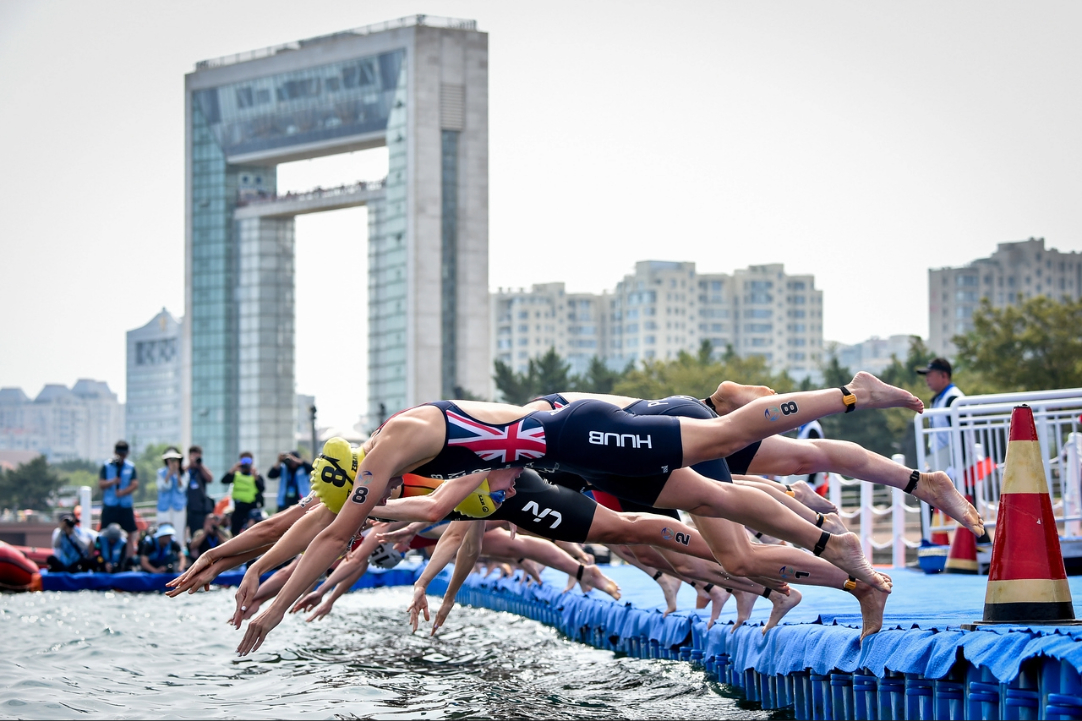
Open water triathlon starts can be considerably more demanding than beginning a normal pool interval. You may need to accelerate to create space, respond to other swimmers, and then settle into a sustainable rhythm. Race start practice can reproduce this pattern. For example, begin an interval with a short hard effort before settling into controlled race pace for the remainder.
Confidence during crowded starts also matters, and how can you avoid getting swum over at the start of a triathlon becomes relevant when physical positioning and awareness need to complement swimming fitness.
Practice Sighting
Pool swimming usually provides a line on the bottom to keep you moving straight. Open water does not. Triathletes need to lift their eyes briefly to identify buoys and confirm direction without significantly disrupting body position. Practice sighting periodically during normal freestyle. For example, sight every several strokes during selected repetitions while maintaining your normal breathing rhythm. Frequent unnecessary sighting can increase fatigue, but not sighting enough can result in swimming significantly farther than required. This is why swimming straight matters in open water triathlon and it connects directly with practical sighting training.
Learn to Swim Around Buoys
Open water sessions provide the most realistic opportunity, but some turning skills can also be rehearsed in a suitable pool environment when permitted. Practice approaching the turn, changing direction, and quickly returning to normal stroke rhythm. Do not focus only on the turn itself. Learn to sight early enough to approach the correct side and anticipate other swimmers. Race specific practice of how do you turn around a buoy in open water swimming can reduce hesitation when several athletes arrive at the same turn together.
Practice Drafting Safely
Swimming behind or near another athlete can reduce the effort required to maintain a given speed when positioning is effective. Drafting is also a skill.
You need to maintain a suitable distance without:
- Repeatedly touching the swimmer ahead
- Becoming so focused on their feet that you stop checking direction.
Learn how different positions feel and continue sighting independently. The swimmer you follow may also be heading in the wrong direction. Drafting should complement navigation rather than replace it.
Work on Bilateral Breathing Without Forcing It
Being comfortable breathing to either side can be useful in open water. Waves, sunlight, nearby competitors, and buoy position may make one side preferable during a race. That does not mean every triathlete must breathe every three strokes throughout the entire swim. Practice breathing on both sides so you have options. Your normal race rhythm can still use the breathing pattern that feels most sustainable. Learning how to coordinate breathing with your swim strokes in a triathlon helps keep breathing connected to rhythm instead of turning it into a rigid stroke counting exercise.
Include Pull Work When Appropriate
Pull buoys can help swimmers focus on upper body mechanics and body position. Pull sets may also provide useful endurance work, but they should not replace normal swimming. Paddles can increase resistance and may help develop swim specific strength, but larger paddles also increase load on the shoulders. Introduce resistance gradually and prioritize good technique.
If you have shoulder pain or a history of shoulder problems, seek appropriate guidance and understand what is swimmer’s shoulder rather than assuming more pulling will solve the issue.
Practice Race Pace
As competition approaches, include some swimming at the pace or effort you expect to use during the race.
It can be performed as:
- Repeated 100s.
- Repeated 200s.
- Longer intervals.
- Continuous swimming.
- Open water efforts.
Start controlled. Triathletes often lose time by beginning the swim harder than they can sustain. The goal is to find an effort that allows you to swim effectively without creating unnecessary fatigue for the bike and run.
Use Open Water Sessions
Pool fitness does not automatically create open water confidence.
When safe and practical, open water sessions can develop:
- Sighting.
- Navigation.
- Buoy turns.
- Drafting.
- Group swimming.
- Wetsuit familiarity.
- Race starts.
- Comfort without pool walls.
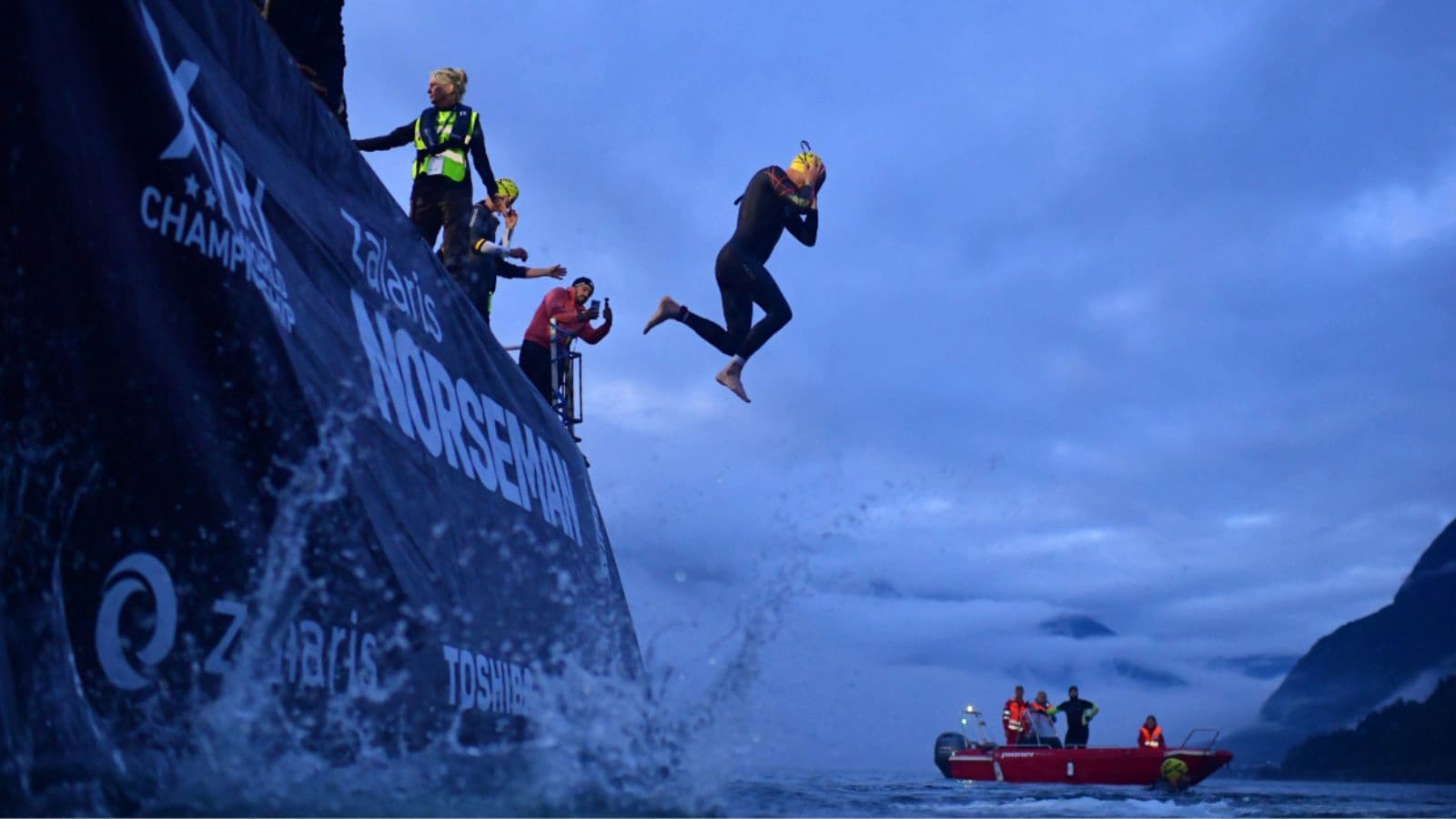
Athletes new to open water should progress gradually and follow appropriate safety practices. Starting calmly is particularly important, and how do you start an open water swim in a triathlon fits naturally into these sessions because entry technique and early pacing can determine how quickly you establish a comfortable rhythm.
Never swim alone in unsafe open water conditions.
Swim When Slightly Fatigued Occasionally
Triathletes need to combine swimming with cycling and running. Most important technique sessions should not always be completed when severely fatigued, but occasionally swimming after another appropriate workout can teach you to maintain mechanics when the body is not completely fresh. If fatigue causes major technique breakdown, the session may become less useful. The complete weekly schedule matters, particularly when adaptations in triathlon training requires combining sessions without turning every day into excessive training.
Keep Workouts Specific to Your Race Distance
- Sprint triathletes and Ironman athletes do not require identical swim programs.
- Short course athletes may benefit from more emphasis on speed and higher sustainable intensity.
- Long course athletes need enough endurance to complete the swim efficiently without compromising the bike and run.
Both still need technique. Race distance changes the balance between speed, endurance, and race specific work rather than eliminating any one component completely.
Do Not Ignore the Bike After the Swim
The fastest possible swim is not necessarily the best triathlon swim. Swimming too hard can create unnecessary fatigue before the longest portion of many triathlons. Practice finishing some race specific swim sets at an effort that leaves you capable of transitioning into productive cycling. This becomes especially important when how can you bike smarter to improve your triathlon run is considered as part of the full race: every discipline should support what follows rather than being treated as an isolated time trial.
Triathlon performance is about the complete event.
Example Triathlon Swim Workout
A simple balanced session might look like this:
| Section | Example | Purpose |
|---|---|---|
| Warm up | 300m easy | Prepare gradually |
| Technique | 6 × 50m drill/swim | Improve mechanics |
| Aerobic | 4 × 200m controlled | Build endurance |
| Race pace | 6 × 100m | Practice sustainable speed |
| Fast swimming | 6 × 25m | Develop speed and coordination |
| Cool down | 200m easy | Finish controlled |
Distances and rest periods should be adjusted to swimming ability. Beginners can reduce total distance, while experienced swimmers can extend the main sets.
Common Mistakes
- Swimming the same continuous workout every session.
- Adding speed before developing basic technique.
- Starting every interval too fast.
- Ignoring open water skills.
- Never practicing sighting.
- Using paddles that are too demanding.
- Swimming hard when technique is already deteriorating.
- Copying workouts designed for much faster swimmers.
- Treating swim performance separately from the bike and run.
Practical Tips
- Give every swim session a clear purpose.
- Include technique regularly.
- Build endurance through repeatable intervals.
- Add threshold work progressively.
- Practice short faster efforts with good form.
- Test your wetsuit before race day.
- Adjust workout distance to your current ability.
Actionable Takeaways
The best triathlon swim training combines technique, aerobic endurance, sustainable speed, and race specific skills. Avoid relying entirely on continuous swimming or trying to make every pool session hard. Use aerobic intervals to develop endurance, threshold sets to improve sustainable pace, and short faster repetitions to practice speed without sacrificing technique. As race day approaches, include more sighting, race starts, buoy turns, drafting, wetsuit swimming, and race pace work.
Most importantly, swim consistently. A manageable program repeated across many weeks will usually provide more useful progress than occasional very large workouts followed by long gaps away from the pool.