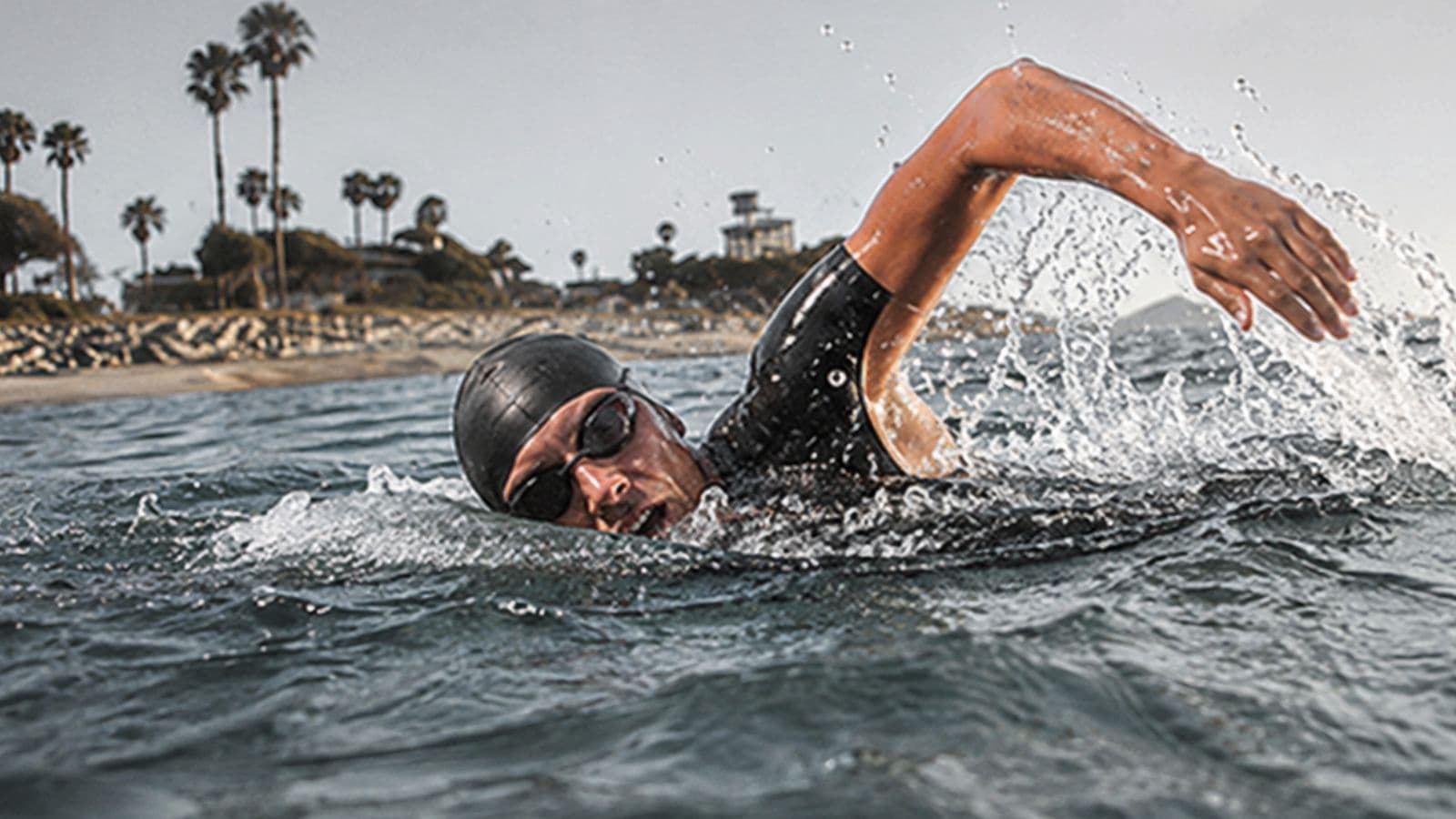


Every triathlete wants to exit the water sooner, but swimming faster isn’t simply a matter of putting in more effort. Unlike cycling and running, swimming is highly technical, meaning improvements often come from becoming more efficient rather than dramatically fitter. A smoother stroke, better body position and smarter pacing can significantly reduce the energy required to maintain a given speed. When combined with improved aerobic fitness and structured training, these gains help you swim faster while arriving at T1 fresher for the bike. Whether you’re preparing for your first sprint triathlon or aiming for an Ironman personal best, focusing on the right aspects of swim training will help you make consistent progress.
Technique Comes Before Fitness
Many triathletes try to swim faster by simply increasing effort. Unfortunately, poor technique means extra effort often creates more drag rather than more speed.
Good technique helps you:
- Move efficiently through the water.
- Reduce unnecessary resistance.
- Maintain speed with less energy.
- Delay fatigue.
- Improve overall swim economy.
Most athletes will gain more speed from improving technique than from dramatically increasing fitness.
Improve Your Body Position
Water creates far more resistance than air. Small improvements in body position can produce surprisingly large gains.
Aim to:
- Keep your body horizontal.
- Maintain a neutral head position.
- Engage your core.
- Keep your hips close to the surface.
- Minimise unnecessary movement.
Reducing drag is often the quickest way to increase swimming speed.
Develop an Efficient Catch
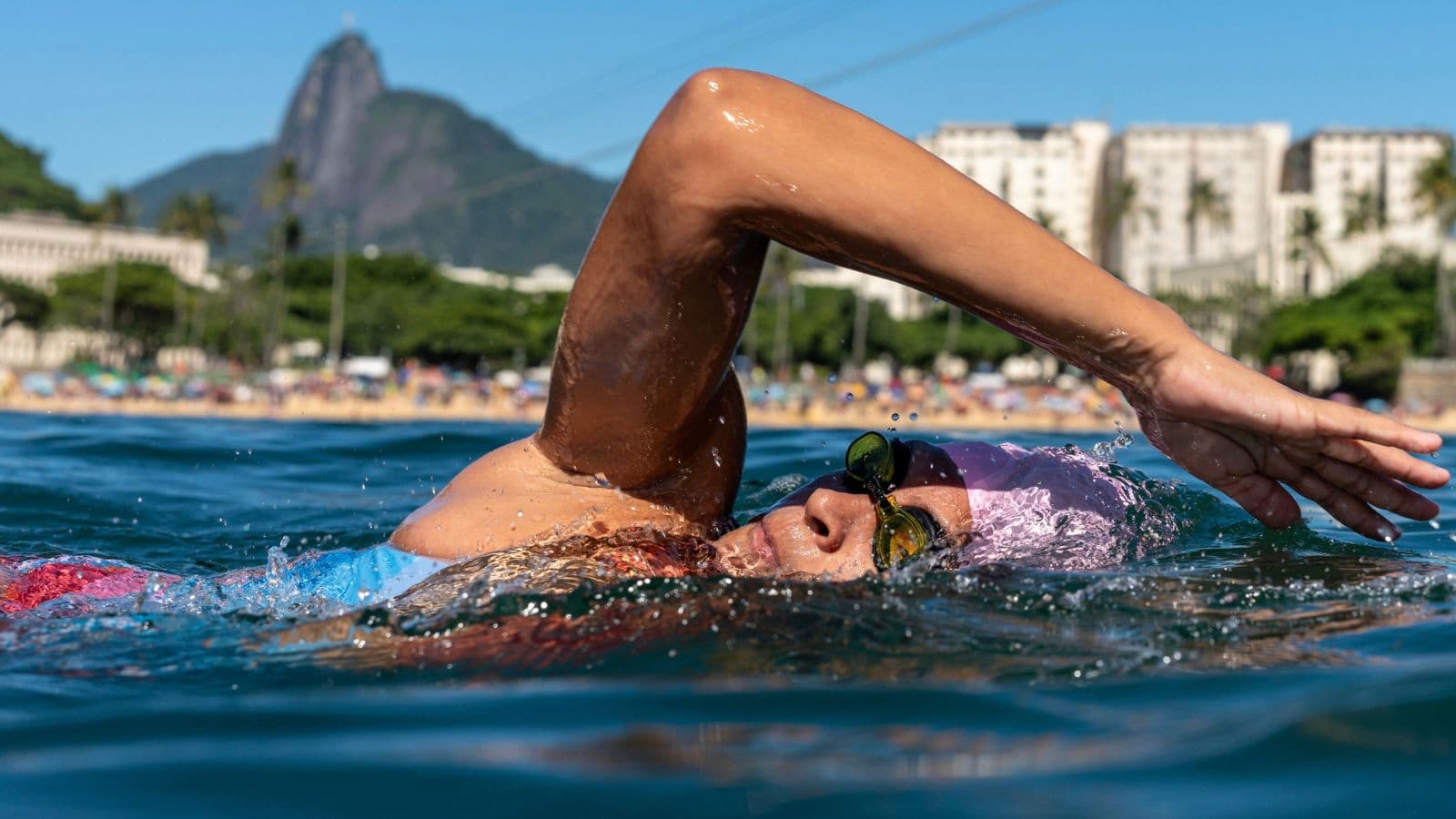
The catch is where propulsion begins. A strong catch allows you to hold more water and generate greater forward movement with each stroke.
Focus on:
- High elbow position.
- Early forearm engagement.
- Smooth pull.
- Continuous pressure on the water.
- Controlled recovery.
Rather than pulling harder, aim to pull more effectively.
Increase Stroke Efficiency
Swimming faster doesn’t always require taking more strokes.
Efficient swimmers often travel farther with each stroke by:
- Maintaining good balance.
- Applying force consistently.
- Avoiding excessive kicking.
- Finishing each stroke completely.
Improved stroke efficiency conserves energy for the later stages of the race.
Build Aerobic Endurance
Endurance remains essential for triathlon swimming.
Regular aerobic sessions improve your ability to:
- Maintain pace.
- Recover between efforts.
- Resist fatigue.
- Swim comfortably over longer distances.
Easy endurance swims should make up a significant portion of your weekly training. For athletes balancing all three disciplines, how to combine swimming, cycling and running training explains how swim sessions fit within an effective triathlon program.
Add Structured Speed Work
Swimming faster requires practising faster swimming.
Include interval sessions such as:
- 10 × 100 metres.
- 20 × 50 metres.
- Descending pace sets.
- Threshold repeats.
- Race-pace intervals.
These workouts improve both speed and your ability to sustain faster efforts.
Strength Supports Swim Speed
Swimming is a full-body movement.
Strength training improves:
- Pulling power.
- Core stability.
- Shoulder durability.
- Hip control.
- Overall efficiency.
Useful exercises include:
- Pull-ups.
- Lat pulldowns.
- Rows.
- Planks.
- Medicine ball rotations.
Strength should complement your swim training rather than replace time in the pool.
Improve Your Breathing
Poor breathing often disrupts body position and rhythm.
Aim to:
- Exhale continuously underwater.
- Rotate your body naturally.
- Keep one goggle in the water while breathing.
- Return your head smoothly.
Efficient breathing helps you maintain rhythm throughout the swim. For breathing-specific advice, how to acclimate to cold water for open water swimming explains how timing and body rotation improve efficiency.
Increase Stroke Rate Carefully
Elite swimmers often combine efficient strokes with an appropriate stroke rate.
Rather than dramatically increasing turnover:
- Maintain good technique.
- Gradually increase cadence.
- Avoid shortening your stroke excessively.
- Stay relaxed.
The objective is to find the stroke rate that maximises speed without sacrificing efficiency.
Practise Open-Water Swimming
Pool swimming doesn’t fully prepare you for race day.
Open-water practice teaches you how to:
- Sight efficiently.
- Swim in groups.
- Navigate turns.
- Manage race anxiety.
- Adapt to changing conditions.
Confidence in open water often translates into faster overall swim performances. This is helpful when it comes to reducing the risk of swim cancellation on race day.
Don’t Neglect Recovery
Swimming creates less impact than running but still generates fatigue. Triathletes should follow the strategies for better recovery.
Support recovery through:
- Quality sleep.
- Good nutrition.
- Hydration.
- Mobility work.
- Easy recovery sessions.
Recovering well allows you to maintain consistent training throughout the season. If you’re managing multiple hard sessions each week, how to fix breathing issues during open water swimming explains how recovery accelerates long-term improvement.
Focus on Consistency
Swimming once every couple of weeks rarely produces meaningful improvements. Most triathletes improve fastest by swimming regularly.
Even shorter sessions performed consistently help reinforce:
- Technique.
- Endurance.
- Feel for the water.
- Confidence.
- Efficiency.
Frequent exposure matters more than occasional marathon swim sessions.
Use Video Feedback
Many technique errors are difficult to feel while swimming.
Recording your stroke or working with a coach allows you to identify issues such as:
- Dropping elbows.
- Crossing over.
- Poor body alignment.
- Inefficient kicking.
- Breathing errors.
Small technical adjustments often produce immediate gains.
Swim with a Purpose
Every session should have a clear objective.
Examples include:
- Technique development.
- Aerobic endurance.
- Threshold pace.
- Speed.
- Recovery.
Purposeful training produces better results than simply accumulating distance. Understanding your overall training structure is just as important as individual workouts. Good one hour off season endurance swim workout guide demonstrates how structured planning benefits endurance performance across all three disciplines.
Build Swim-Specific Endurance
Swimming fast over race distance requires more than short bursts of speed.
Develop endurance with sessions that gradually increase continuous swimming time, such as:
- Long aerobic repeats.
- Pull buoy endurance sets.
- Progressive pace swims.
- Race-distance simulations.
- Mixed-pace intervals.
These workouts improve your ability to maintain strong technique even as fatigue develops. If you’re preparing for longer events, balancing endurance across all three disciplines is equally important. How to improve swim strokes explains why aerobic development is the foundation of successful endurance racing.
Learn to Pace Your Swim
Many triathletes start the swim too aggressively.
The result is:
- Elevated heart rate.
- Poor breathing control.
- Early fatigue.
- Slower overall swim time.
Instead:
- Start under control.
- Find a sustainable rhythm.
- Gradually build effort if possible.
- Finish strongly.
This strategy leaves more energy available for the bike and run. For race-day pacing strategies, what is a negative split in triathlon running demonstrates why controlled pacing often leads to better overall performances.
Improve Your Core Stability
A strong core connects your upper and lower body during every stroke.
Good core stability helps you:
- Maintain body alignment.
- Transfer power efficiently.
- Reduce unnecessary rotation.
- Improve balance.
- Swim with less wasted energy.
Exercises such as planks, side planks and dead bugs can significantly improve swimming posture over time.
Don’t Overlook Flexibility
Good shoulder and thoracic mobility allow you to achieve a longer, more efficient stroke.
Focus on improving mobility in:
- Shoulders.
- Chest.
- Upper back.
- Hips.
- Ankles.
Consistent mobility work can help reduce injury risk while improving stroke mechanics.
Train at Race Pace
Race-pace swimming teaches your body what competition speed feels like.
Examples include:
- 8 × 100 metres at target race pace.
- 5 × 200 metres with short recovery.
- Broken race simulations.
- Pace-change intervals.
These sessions develop confidence and help you maintain consistent speed under fatigue.
Swim in Groups Occasionally
Swimming with others provides valuable race-specific practice.
Group sessions help you learn to:
- Draft effectively.
- Hold your line.
- Swim confidently in close proximity.
- Maintain pace despite external distractions.
These skills can save both time and energy on race day.
Common Mistakes
- Swimming every session at the same pace.
- Ignoring technique work.
- Overkicking.
- Lifting the head too high when breathing.
- Skipping strength training.
- Swimming infrequently.
- Avoiding open-water practice.
- Starting races too fast.
Practical Tips
- Prioritise technique before speed.
- Include one structured interval session each week.
- Swim consistently throughout the year.
- Record your stroke periodically.
- Build aerobic endurance gradually.
- Practise race-pace intervals.
- Strengthen your shoulders and core.
- Train occasionally in open water.
Actionable Takeaways
Improving triathlon swim speed is about becoming more efficient before becoming more powerful. Better body position, smoother technique and consistent training reduce drag and allow you to move through the water with less effort. Once these fundamentals are established, structured interval sessions and targeted strength work help increase sustainable speed.
The biggest gains usually come from combining technical improvements with regular swim-specific training rather than simply swimming harder. By focusing on quality, consistency and purposeful practice, you’ll leave the water faster while conserving valuable energy for the bike and run.