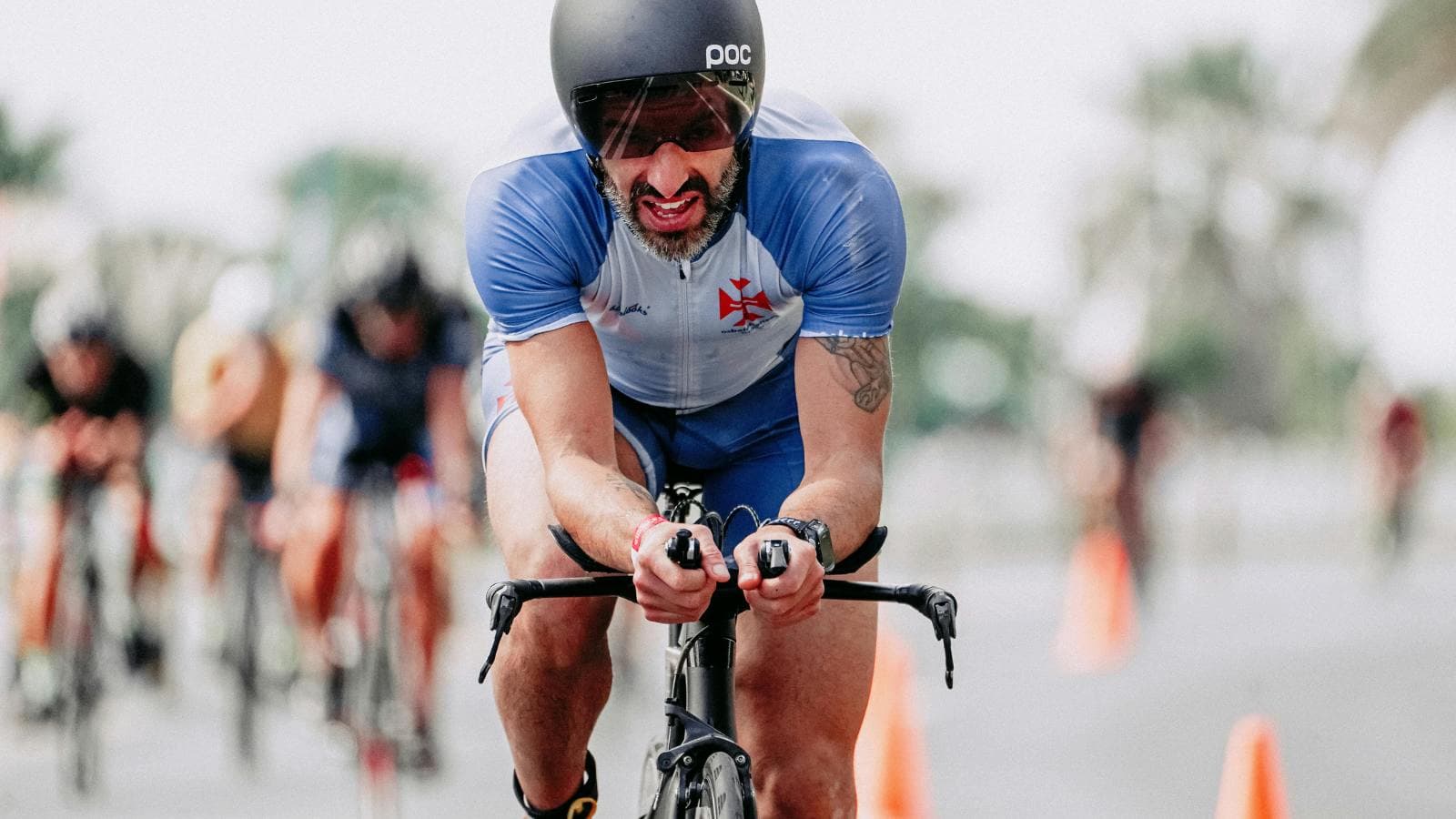


Cadence is one of the most important variables in triathlon cycling, yet it’s often misunderstood. Many athletes either spin too slowly and fatigue their legs, or push cadence too high and spike their heart rate. The ideal cadence for long-distance cycling isn’t a fixed number, it’s a range that balances efficiency, endurance, and energy conservation over time.

For triathletes, cadence matters even more because what you do on the bike directly affects how well you run afterward.
What Cadence Means in Cycling?
Cadence refers to how fast you pedal, measured in revolutions per minute (RPM). It determines how your muscles and cardiovascular system share the workload.
You can produce the same power in two ways:
- Low cadence → higher force per pedal stroke
- High cadence → lower force but more repetitions
The goal is to find the most efficient balance for long-duration efforts.
Typical Cadence Range for Long Distance Cycling
For most triathletes, the ideal cadence falls between 80 and 95 RPM, with some variation depending on fitness, terrain, and experience.
Some athletes may prefer slightly lower (75–85 RPM), while others perform better closer to 90 to 95 RPM. The key is not the exact number, but finding a cadence that feels smooth and sustainable over long distances.
Why Cadence Matters in Triathlon?
In triathlon, cycling is not just about speed, it’s about preserving energy for the run. A cadence that is too low increases muscular fatigue, especially in the quadriceps. A cadence that is too high increases cardiovascular strain.
Finding the right balance helps you:
- Maintain consistent power
- Reduce muscle fatigue
- Transition more effectively into the run
This becomes especially important in longer races, as highlighted in training for a 70.3 and half ironman triathlon, where efficiency across disciplines determines overall performance.
Low vs High Cadence for Long Distance
Lower Cadence
- Lower cadence (around 70 to 80 RPM) means pushing harder gears.
- This increases muscular strain and can lead to early fatigue over long rides.
- While it may feel strong initially, it often makes running afterward more difficult.
Higher Cadence
- Higher cadence (90 to 100 RPM) reduces force per pedal stroke.
- This shifts the workload toward your cardiovascular system, which is more sustainable over long distances.
- Research and coaching consensus show most endurance cyclists benefit from this moderate-to-high cadence approach.
Cadence and Running Performance
One of the biggest mistakes in triathlon is riding at a cadence that overloads the legs.
A slightly higher cadence helps:
- Reduce muscle fatigue
- Improve neuromuscular efficiency
- Prepare your legs for running
This is why cadence is closely tied to race execution, similar to strategies in pacing and fueling the bike leg in a triathlon, where energy distribution directly impacts the run.
Finding Your Ideal Cadence
Start With Your Natural Rhythm
- Your natural cadence during steady riding is a good starting point.
- Most riders naturally settle within an efficient range.
Experiment in Training
Try riding at slightly higher or lower cadences during sessions.
Pay attention to:
- Breathing
- Muscle fatigue
- Overall comfort
Focus on Feel, Not Just Numbers
- Cadence should feel smooth and controlled.
- If it feels forced, it’s likely not sustainable.
This process of refinement is similar to building consistency in beginners training for a sprint triathlon, where gradual adjustments lead to better performance.
Cadence and Terrain
Flat Roads
- This is where you can maintain your ideal cadence most easily.
- Focus on smooth, consistent pedalling.
Climbing
- Cadence naturally drops due to increased resistance.
- Using easier gears helps maintain a more efficient rhythm.
Managing cadence on climbs is a key skill, similar to techniques discussed in beginners training for gravel triathlon, where maintaining rhythm improves endurance.
Descending
Cadence becomes less critical, but staying engaged helps maintain flow.
Cadence and Fatigue Management
- Over long distances, fatigue builds gradually.
- Your cadence choice directly affects how quickly this happens.
- Low cadence → higher muscular fatigue
- High cadence → higher cardiovascular load
The ideal cadence minimizes both, allowing you to sustain effort for longer.
Training to Improve Cadence
Cadence Drills
Include sessions where you:
- Spin at higher cadence (90 to 100 RPM)
- Focus on smooth pedal strokes
- Maintain control without bouncing
These drills improve efficiency and coordination.
Consistency Over Time
- Cadence is a trainable skill.
- Regular practice helps your body adapt to more efficient pedalling patterns.
This structured approach aligns with the most important bike workouts for a 70.3 triathlon, where specific sessions improve overall performance.
Common Cadence Mistakes
Many cyclists ride at too low a cadence, increasing fatigue unnecessarily. Others try to force a high cadence that feels unnatural.
Other common mistakes include:
- Ignoring cadence completely
- Not adapting to terrain
- Failing to practice cadence in training
Avoiding these mistakes helps improve efficiency and endurance.
Practical Cadence Strategy
Aim to stay within the 80 to 95 RPM range for most of your ride. Adjust slightly based on terrain, fatigue, and conditions.
Focus on:
- Smooth pedalling
- Consistent rhythm
- Efficient gear use
This approach supports better long-term performance, similar to structured progression in choosing a free triathlon training plan for sprint olympic and ironman, where consistency leads to improvement.
How Cadence Fits Into Overall Performance?
- Cadence is just one part of a bigger system that includes pacing, fueling, and endurance.
- Balancing all these elements ensures sustainable performance.
- Ignoring cadence can lead to inefficiency, even if fitness is high.
What You Should Do?
- Start by identifying your natural cadence during steady rides.
- Gradually adjust toward a range that feels efficient and sustainable.
- Practice maintaining this cadence across different terrains and conditions.
- Focus on smooth, controlled pedalling rather than chasing a specific number.
- Over time, your ideal cadence becomes automatic, helping you ride more efficiently and transition better into the run.