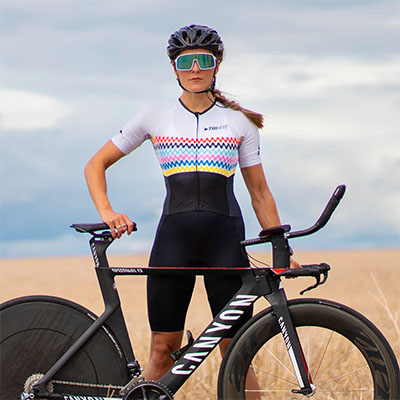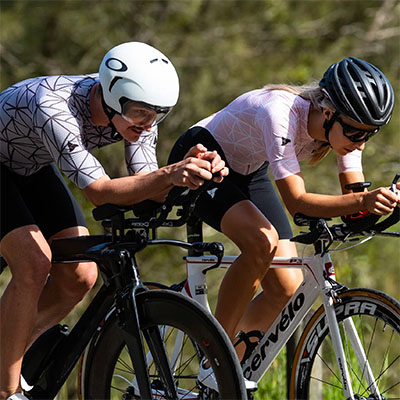


Bike handling is one of the most overlooked skills in triathlon cycling. Many athletes spend hours building fitness but very little time improving technical control on the bike. As a result, they lose confidence in corners, brake too much on descents, and waste energy on technical sections of the course.
Good bike handling is not about taking risks or cornering aggressively. It is about riding smoothly, staying relaxed, and maintaining control in different situations. Better handling skills help you conserve momentum, improve efficiency, and feel more confident throughout the race.
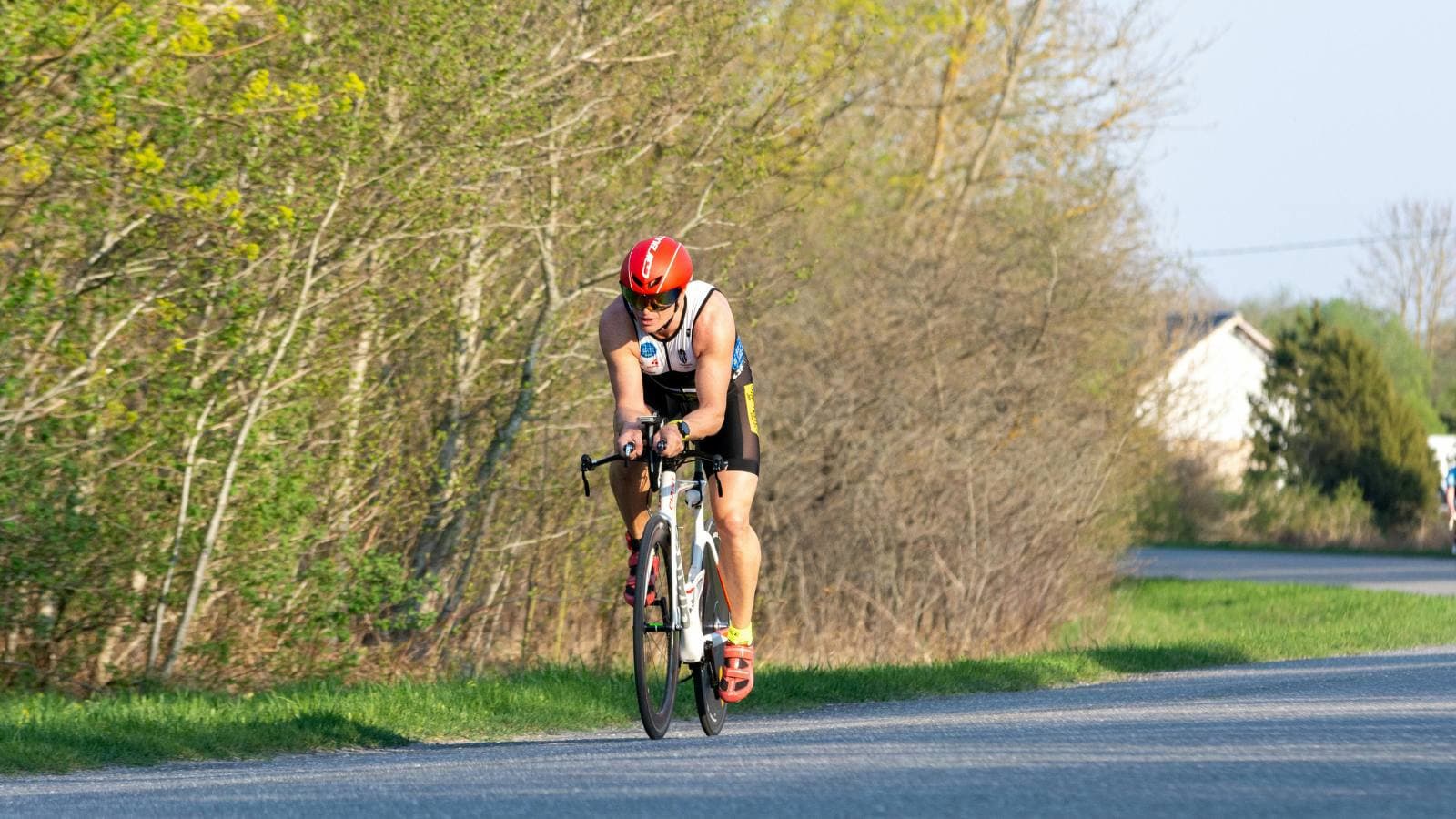
Why Bike Handling Matters in Triathlon?
Triathlon bike courses are rarely perfectly straight and predictable. Riders often face:
- Tight corners
- Technical descents
- Roundabouts
- Wet roads
- Crowded race conditions
Athletes who lack handling confidence tend to slow down excessively before corners, lose momentum, and use more energy accelerating afterward. Strong bike handling skills allow you to move through these sections more efficiently and safely. This becomes especially important in long races where energy conservation matters, similar to pacing strategies used in pacing and fueling the bike leg in a triathlon, where smooth effort improves overall performance.
Why Many Triathletes Struggle With Cornering?
Most handling issues are caused by tension and lack of practice rather than lack of ability. Many triathletes spend most of their time riding steady indoor sessions or straight roads without practicing technical skills.
Common problems include:
- Braking too late
- Looking down instead of ahead
- Holding too much upper-body tension
- Entering corners with poor positioning
- Fear of leaning the bike
The good news is that handling confidence improves quickly with consistent practice.
Start With Basic Bike Control
Before focusing on faster cornering, you should feel comfortable controlling the bike at different speeds.
Practice simple skills such as:
- Riding one-handed
- Looking behind while maintaining a straight line
- Controlled braking
- Slow-speed turns
These exercises improve overall coordination and confidence on the bike.
Look Through the Corner
One of the biggest mistakes cyclists make is looking directly in front of the wheel or focusing on obstacles. Your body and bike naturally follow your vision.
Instead:
- Keep your head up
- Look toward the exit of the corner
- Focus on where you want to go
This simple adjustment immediately improves smoothness and confidence through turns.
Brake Before Entering the Corner
Heavy braking during a corner is one of the biggest causes of instability and loss of confidence.
The safest and most efficient approach is to:
- Reduce speed before the turn
- Release the brakes as you lean
- Maintain smooth momentum through the corner
This keeps the bike more stable and allows the tires to maintain grip more effectively. Smooth riding also supports better pacing and energy management, similar to approaches discussed in ideal cadence for long distance cycling, where controlled execution matters more than aggressive effort.
Use Proper Cornering Position
Body positioning plays a major role in handling confidence.
Key techniques include:
- Keeping your outside pedal down
- Applying pressure through the outside foot
- Keeping elbows slightly bent
- Relaxing your shoulders and hands
These adjustments improve balance and help the bike corner more naturally.
Stay Relaxed Instead of Fighting the Bike
Tension reduces control. Riders who grip the handlebars too tightly or stiffen their upper body often struggle more with handling.
Relaxation allows the bike to move naturally underneath you. Keeping your shoulders loose and breathing steadily improves confidence and responsiveness.
Practice Cornering Regularly
Handling skills improve through repetition, not theory.
A quiet parking lot or empty road is perfect for practicing:
- Wide turns
- Figure-eight drills
- Gradual speed increases
- Controlled leaning
Repeated practice builds muscle memory and trust in your bike handling ability.
Improve Confidence on Descents
Descending confidence and cornering confidence are closely connected. Riders who are uncomfortable at speed often brake excessively and lose control of momentum.
To improve descending:
- Keep your eyes ahead
- Stay relaxed
- Use smooth braking
- Choose clean lines through corners
This helps you stay controlled without unnecessary tension. Descending skills are particularly important during hilly races, similar to climbing efficiency strategies in getting better at climbing on the bike in triathlon, where control and pacing improve overall performance.
Understand Tire Grip Better
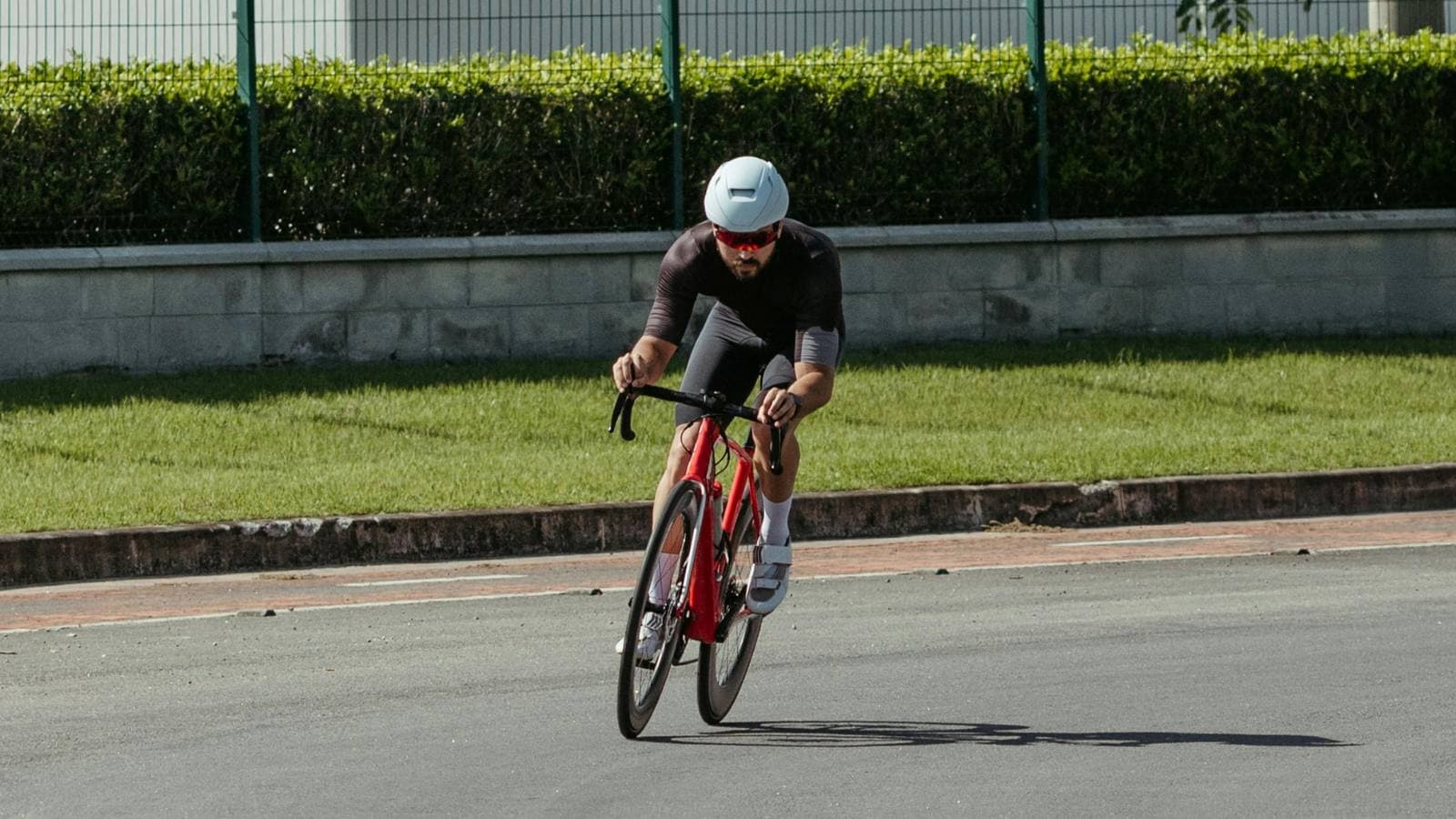
Modern road bike tires offer more grip than most athletes realise. Many riders are capable of cornering much more effectively than they think.
Most problems happen because of sudden braking or poor positioning, not lack of traction. Learning to trust gradual lean angles and smooth movement improves confidence significantly.
Practice in Different Conditions
Handling skills improve faster when you expose yourself to different environments.
Practice riding in:
- Windy conditions
- Light rain
- Different road surfaces
- Technical routes
This builds adaptability and confidence in race situations. Managing difficult conditions is also important in tapering before a triathlon, where bike control becomes essential.
Build Core Strength for Better Stability
A strong core improves bike handling by stabilising your upper body and reducing unnecessary movement.
Better stability allows you to:
- Corner more smoothly
- Maintain posture under fatigue
- Control the bike more efficiently
This becomes especially important during longer rides and races.
Use Group Riding to Improve Awareness
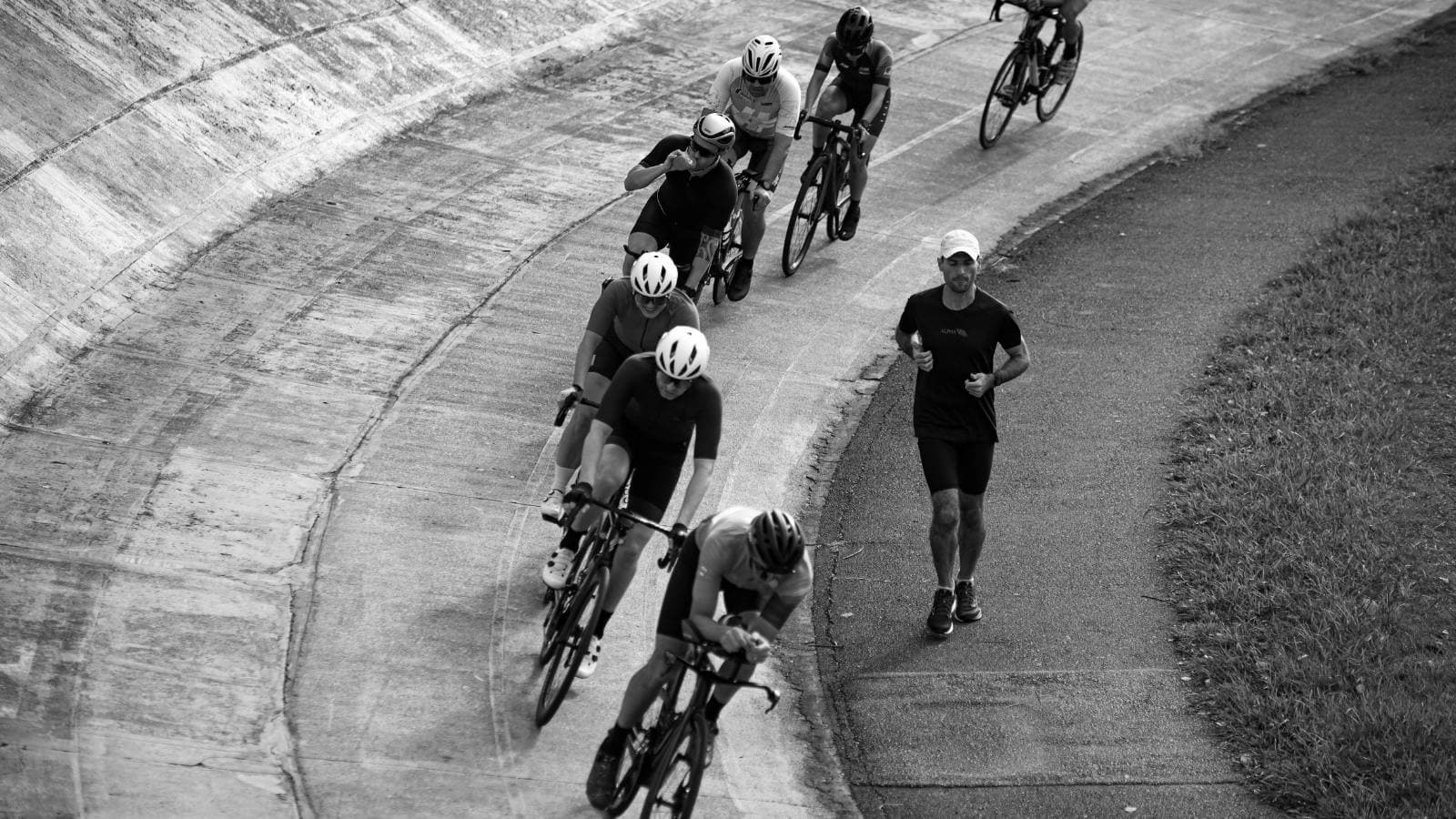
Group riding helps develop awareness, positioning, and confidence around other cyclists. Learning to hold a straight line and move predictably improves overall handling ability. This is particularly useful for triathlon race environments and supports safer riding, much like the skills discussed in riding safely in a cycling group, where awareness and control are critical.
Avoid Common Cornering Mistakes
- Braking too hard mid-corner
- Looking down instead of ahead
- Entering turns too aggressively
- Holding excessive tension in the upper body
- Trying to force speed instead of focusing on smoothness
Avoiding these mistakes improves both confidence and efficiency.
Practical Tips to Improve Bike Handling
- Practice cornering drills regularly
- Look through the turn rather than at the road
- Brake before entering corners
- Keep your upper body relaxed
- Build confidence progressively
- Ride different terrain and conditions
What You Should Do
Start with simple handling drills and focus on smoothness rather than speed. Practice looking through corners, controlling braking, and maintaining relaxed posture on the bike. Gradually expose yourself to more technical situations and different road conditions to build confidence over time. Supporting your technical skills with structured endurance training, like approaches used in how to train for a winter triathlon, helps you stay composed even under fatigue.
Strong bike handling is not about being aggressive, it is about being controlled, efficient, and confident in every situation on the bike.