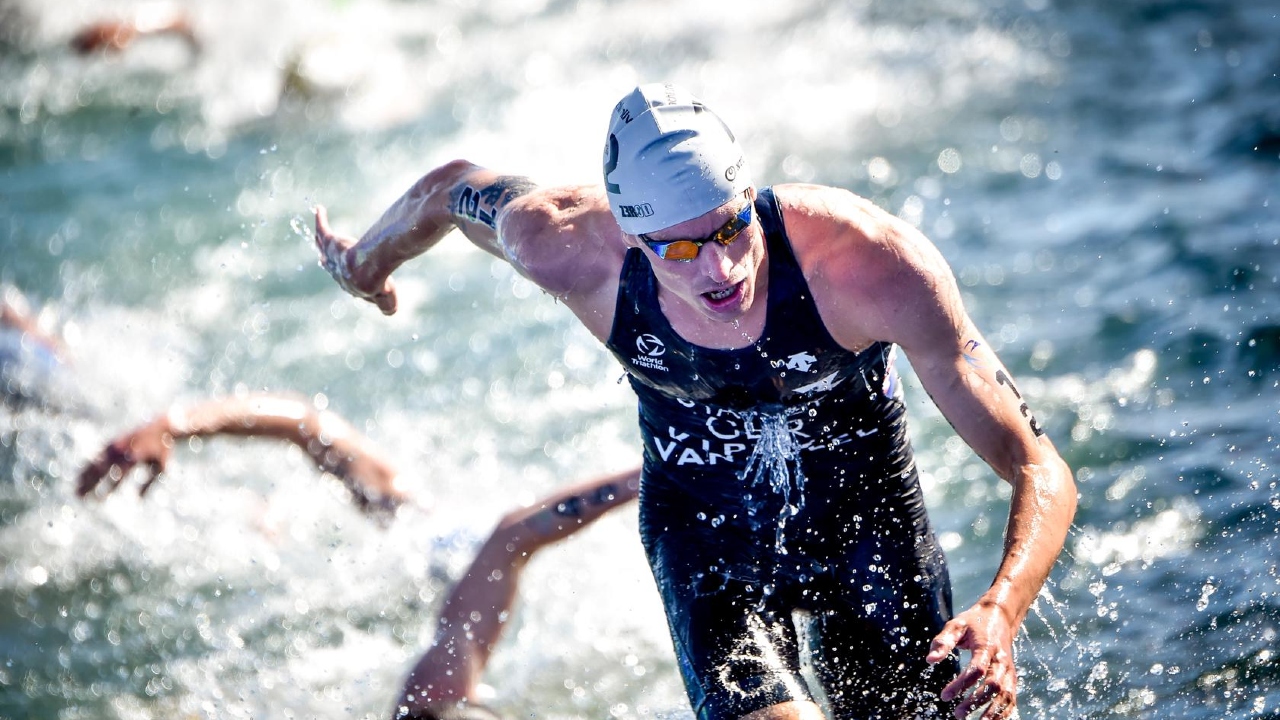


Open water swimming becomes more challenging when tides are involved. Unlike lakes or swimming pools, coastal waters are constantly changing as the tide rises and falls, affecting water depth, swimming speed and the direction of the current. Understanding how tides work won’t eliminate the challenge, but it will help you make safer decisions and swim more efficiently. Whether you’re training in the sea or racing in a coastal triathlon, learning to work with the water instead of fighting it is an essential skill. Preparation begins before you even enter the water.
Understand the Difference Between Tides and Currents
Although often confused, tides and currents are not the same.
- Tides are the regular rise and fall of sea levels caused by the gravitational pull of the moon and sun.
- Currents are the horizontal movement of water, often influenced by tides, wind and local geography.
Both can affect your swim, but tidal currents are usually what change your speed and direction during a race.
Check Tide Times Before Swimming
Never assume the conditions will be the same every day.
Before entering the water, check:
- Tide times.
- Tide height.
- Current direction.
- Weather forecast.
- Wind strength.
- Water temperature.
Many coastal races schedule swim starts around favourable tidal conditions, but training sessions require you to make those decisions yourself.
Learn the Course Before Race Day
If you’re racing in open water, study the swim course carefully.
Pay attention to:
- Direction of the tide.
- Turning buoys.
- Entry and exit points.
- Areas of stronger current.
- Sheltered sections.
Knowing where the tide may help or challenge you reduces surprises during the swim. Many athletes improve their preparation through how to train for open water swimming in 8 weeks, building confidence before race day.
Don’t Fight the Current
One of the biggest mistakes is trying to overpower a strong tidal current.
Instead:
- Stay relaxed.
- Maintain good technique.
- Swim efficiently.
- Adjust your line if necessary.
Swimming harder doesn’t always mean swimming faster if the current is working against you.
Improve Your Sighting
Tidal movement can gradually push you off course.
Sight regularly by:
- Looking forward every six to ten strokes.
- Identifying large landmarks.
- Confirming buoy positions.
- Adjusting your direction gradually.
Frequent sighting prevents unnecessary zigzagging, which wastes valuable energy. Many triathletes develop this skill through how to sight properly in open water, reducing distance swum even in moving water.
Expect Your Pace to Change
Swimming with the tide often feels effortless. Swimming against it can feel significantly harder.
Instead of worrying about pace:
- Focus on effort.
- Maintain good stroke mechanics.
- Control your breathing.
- Stay patient.
Effort is a much better guide than speed when tides are involved.
Swim With Good Technique
Efficient swimmers are affected less by tidal conditions than inefficient swimmers.
Focus on:
- A high elbow catch.
- Strong body position.
- Smooth body rotation.
- Consistent stroke rhythm.
- Relaxed breathing.
Many athletes improve efficiency through how can you improve your swim pull for triathlon, allowing every stroke to produce more forward movement.
Stay Calm if You Drift
Even experienced swimmers are occasionally moved off course.
If this happens:
- Stop briefly if necessary.
- Reassess your direction.
- Sight again.
- Resume swimming calmly.
Panicking wastes energy and often makes navigation less accurate. Many athletes prepare mentally through how can triathletes manage pre-race nerves before the swim start, helping them stay composed when conditions become challenging.
Train in Different Conditions
Don’t wait until race day to experience tidal water.
Practise swimming during:
- Incoming tides.
- Outgoing tides.
- Calm mornings.
- Moderate chop.
- Different water temperatures.
Experience builds confidence more effectively than theory alone.
Never Swim Alone
Sea conditions can change rapidly.
Whenever possible:
- Swim with others.
- Join an organised group.
- Use a brightly coloured tow float.
- Tell someone your planned route.
- Stay within designated swimming areas.
Safety should always take priority over completing a planned workout.
Respect Local Advice
Local lifeguards and experienced open water swimmers understand their coastline.
Pay attention to:
- Safety flags.
- Local warnings.
- Restricted areas.
- Dangerous currents.
- Marine conditions.
Ignoring local knowledge is one of the easiest ways to create unnecessary risk.
Know When Not to Swim
Cancel or postpone your swim if conditions include:
- Strong tidal currents.
- Storms.
- Poor visibility.
- Large surf.
- Lightning.
- Safety warnings.
Missing one training session is far better than taking unnecessary risks.
Common Mistakes
Avoid these common errors:
- Ignoring tide times.
- Swimming alone.
- Fighting strong currents.
- Poor sighting.
- Panicking after drifting.
- Overestimating swimming ability.
- Skipping safety equipment.
- Entering unfamiliar water without local knowledge.
Most open water problems can be avoided through good preparation.
Practical Tips
Manage tides more effectively by:
- Checking tide tables before every swim.
- Learning the course.
- Swimming to effort rather than pace.
- Sighting regularly.
- Respecting local conditions.
- Training in different environments.
- Prioritising safety over completing a workout.
Many athletes also improve race-day confidence through what should beginners know before racing their first half ironman, where open water preparation forms an important part of long-course success. Finally, combining safe open water skills with how to transition faster in a triathlon helps you leave the swim efficiently while remaining calm and composed after challenging conditions.
The Bottom Line
Tides are a natural part of open water swimming and shouldn’t be feared, but they should always be respected. Understanding tide times, improving your sighting, maintaining efficient technique and making smart safety decisions will help you swim more confidently and efficiently in coastal waters.
Rather than trying to overpower the sea, learn to adapt to it. Good preparation, calm decision-making and consistent open water practice will make you a stronger and safer triathlete in every tidal swim.