

The start of an open water swim can feel chaotic. Athletes are accelerating towards the first buoy, arms and legs are moving in every direction, your heart rate is rising and there are no lane ropes to provide space or direction. For beginners, those first few minutes can easily become the most stressful part of the entire triathlon. A successful swim start isn’t about sprinting away from everyone else. Your priority should be finding clear water, establishing controlled breathing and settling into a sustainable rhythm as quickly as possible. Good positioning, regular open water practice and sensible pacing can make the difference between beginning the race confidently and spending the opening minutes fighting unnecessary fatigue.
In Short
- Understand the type of swim start beforehand.
- Warm up when race rules allow.
- Choose your starting position carefully.
- Don’t automatically start at the front.
- Begin at a controlled effort.
- Establish your breathing early.
Understand the Type of Swim Start
Triathlons can use several different starting formats.
Common options include:
- Mass starts.
- Wave starts.
- Rolling starts.
- Beach starts.
- In-water starts.
Check the athlete information before race morning so you know exactly how your event begins. For athletes still learning the basics of racing, first triathlon: complete beginner guide provides useful preparation for understanding the wider demands of your first event.
Arrive at the Swim Start Early
Rushing into the water increases unnecessary stress.
Arriving early gives you time to:
- Locate the start.
- Identify the first buoy.
- Understand the course direction.
- Check water conditions.
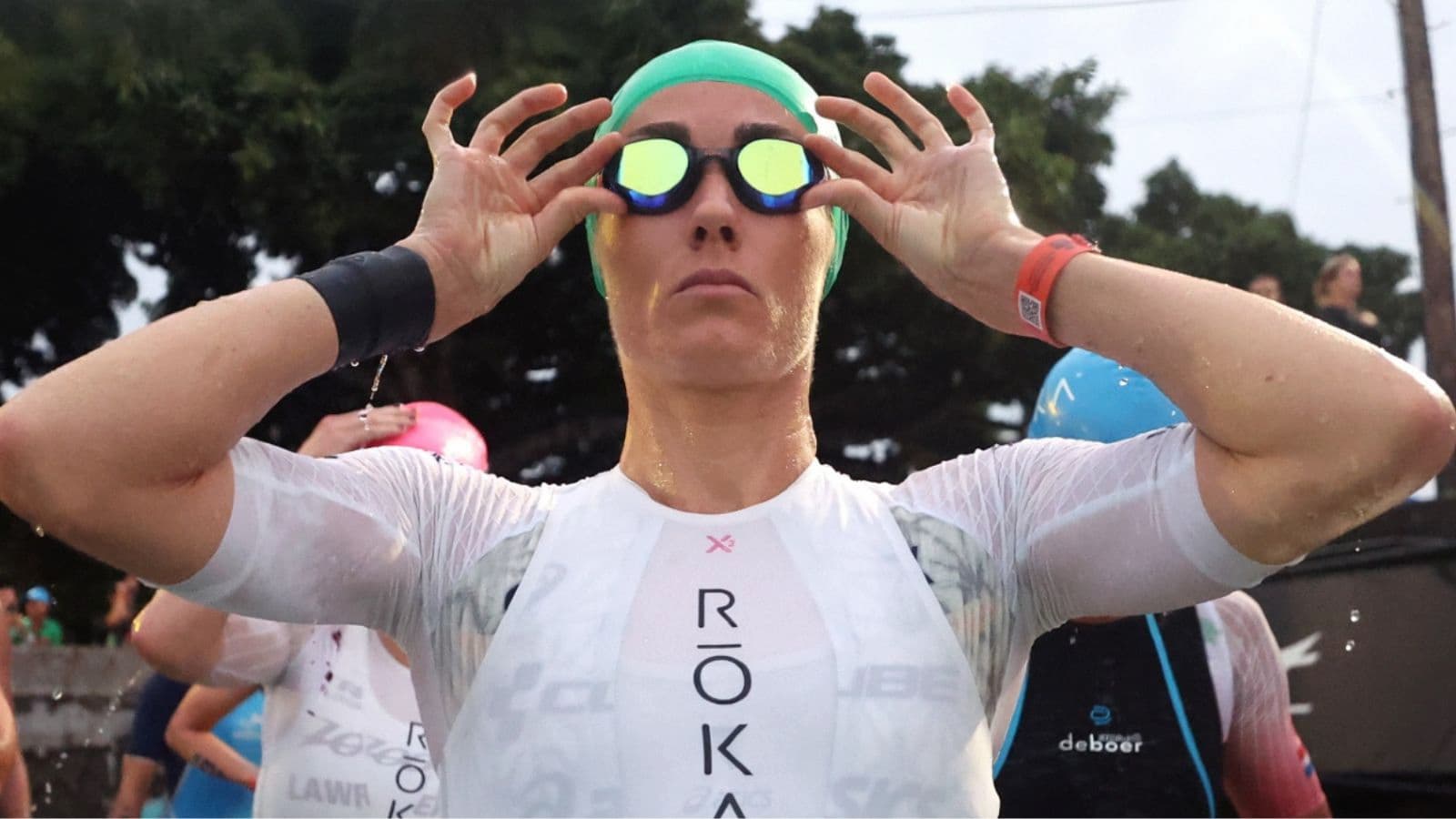
- Adjust your goggles and wetsuit.
- Complete a warm-up if permitted.
Being organised helps keep your attention on swimming rather than last-minute problems.
Study the Course Before Entering the Water
Don’t wait until the race begins to work out where you’re going.
Identify:
- The first turning buoy.
- The direction of the course.
- Large landmarks behind important buoys.
- The location of the swim exit.
Knowing the route reduces how much information you need to process once the start becomes crowded. Improving sighting properly in open water swimming can help you navigate accurately without repeatedly disrupting your stroke.
Choose Your Starting Position Carefully
Your ideal position depends on your swimming ability and confidence.
Faster, experienced swimmers may position themselves closer to the front. Beginners are often better starting:
- Further back.
- Towards one side.
- Away from the busiest line.
- With swimmers of similar ability.
Starting slightly wider may add a small amount of distance, but the extra space can be worthwhile if it helps you swim calmly.
Don’t Seed Yourself Too Far Forward
Starting alongside swimmers who are considerably faster can create unnecessary contact. You’ll quickly have athletes swimming around or over you, which can disrupt your stroke and breathing. Be realistic about your swimming ability. Correct self-seeding makes the start smoother for both you and the athletes around you.
Manage Pre-Race Anxiety
Feeling nervous before an open-water start is normal, particularly for inexperienced triathletes.
Control what you can:
- Slow your breathing.
- Relax your shoulders.
- Review your first few minutes.
- Avoid comparing yourself with other athletes.
- Focus on your own race.
Using strategies from how can triathletes manage pre-race nerves before the swim start can help prevent nervousness from turning into panic once you enter the water.
Acclimatise to the Water
If organisers permit a warm-up, entering the water before the start can be extremely useful.
Use the opportunity to:
- Feel the water temperature.
- Put your face underwater.
- Check your goggles.
- Practise several strokes.
- Establish comfortable breathing.
Cold water can make breathing feel unusually difficult when you first enter. Understanding how does water temperature affect triathlon swim performance helps explain why acclimatization can be important before the race begins.
Start at a Controlled Effort
The excitement of race morning makes it easy to sprint immediately. Unless your race strategy specifically requires an aggressive start, beginners should avoid going significantly harder than they can sustain.
Starting too fast can cause:
- Rapid breathing.
- Elevated heart rate.
- Tight shoulders.
- Early fatigue.
- Panic.
The objective is to reach your sustainable swimming rhythm quickly.
Establish Your Breathing Rhythm
Your breathing should be one of your first priorities.
During the opening minutes:
- Exhale underwater.
- Avoid holding your breath.
- Keep your head movement controlled.
- Breathe as frequently as necessary.
- Focus on a smooth rhythm.
If breathing becomes difficult, reduce your effort rather than continuing to push harder. Learning how to fix breathing issues during open water swimming can make crowded race starts much easier to manage.
Expect Physical Contact
Some contact is normal during crowded triathlon swims.
You may experience:
- Hands touching your feet.
- Arms making contact.
- Swimmers crossing your path.
- Accidental kicks.
- Crowding around buoys.
Try not to react aggressively or panic. Maintain your direction, protect your space sensibly and continue swimming.
Find Clear Water
Once the opening rush settles, look for enough space to establish your normal stroke.
Clear water allows you to:
- Relax.
- Improve technique.
- Control breathing.
- Sight more effectively.
- Maintain your preferred pace.
Sometimes moving slightly to one side is better than fighting continuously for the shortest possible line.
Sight Towards the First Buoy
The first buoy is often where swimmers become heavily congested. Sight frequently enough to maintain your direction while avoiding excessive head lifting.
Good sighting helps prevent:
- Swimming off course.
- Sudden corrections.
- Collisions.
- Unnecessary distance.
Once you’re moving accurately towards the buoy, you can focus more attention on settling into your stroke.
Maintain Efficient Body Position
Anxiety often causes swimmers to lift their heads and lose their normal body position.
Try to remain:
- Long through the body.
- Relaxed through the shoulders.
- Balanced in the water.
- Controlled with your kick.
Understanding why is level body positioning important for triathlon swimming can help reduce drag and conserve energy during the opening section.
Settle Into Your Normal Stroke
After the initial congestion clears, transition from starting mode into sustainable race swimming.
Focus on:
- Smooth strokes.
- Controlled breathing.
- Relaxed kicking.
- Consistent effort.
- Regular sighting.
Practising how do triathletes improve freestyle efficiency in open water can help you maintain speed without wasting energy once the race settles.
Practise Starts Before Race Day
Your first crowded open-water start shouldn’t happen during your first triathlon.
During training, safely practise:
- Entering the water quickly.
- Swimming immediately after entry.
- Short harder efforts followed by steady swimming.
- Sighting while breathing heavily.
- Swimming near training partners.
More open-water experience makes race-day conditions feel familiar rather than threatening. How to get more open water swimming experience before a triathlon is particularly useful for athletes who mainly train in pools.
Remember the Swim Is Only the Beginning
Even an Ironman swim represents only the opening portion of a very long race. Don’t waste unnecessary energy fighting for position or chasing swimmers who are too fast.
Your objective is to exit the water:
- Calm.
- Fuelled.
- Mentally composed.
- Ready to cycle.
A controlled swim start creates a much stronger foundation for everything that follows.
Common Mistakes
- Starting too far forward.
- Sprinting immediately.
- Holding your breath.
- Ignoring the course beforehand.
- Following other swimmers blindly.
- Panicking after physical contact.
- Forgetting to sight.
- Using excessive energy fighting for position.
Practical Tips
- Check the start format beforehand.
- Arrive early.
- Identify the first buoy.
- Seed yourself realistically.
- Warm up when permitted.
- Start conservatively.
- Establish breathing immediately.
- Practise open-water starts in training.
Actionable Takeaways
Starting an open water swim successfully is less about being aggressive and more about remaining controlled. Choose a position that matches your ability, understand the course beforehand and begin at an effort that allows you to establish comfortable breathing quickly.
Most importantly, practise these skills before race day. The more familiar you become with open water, sighting, other swimmers and different starting formats, the less intimidating those opening minutes will feel.