

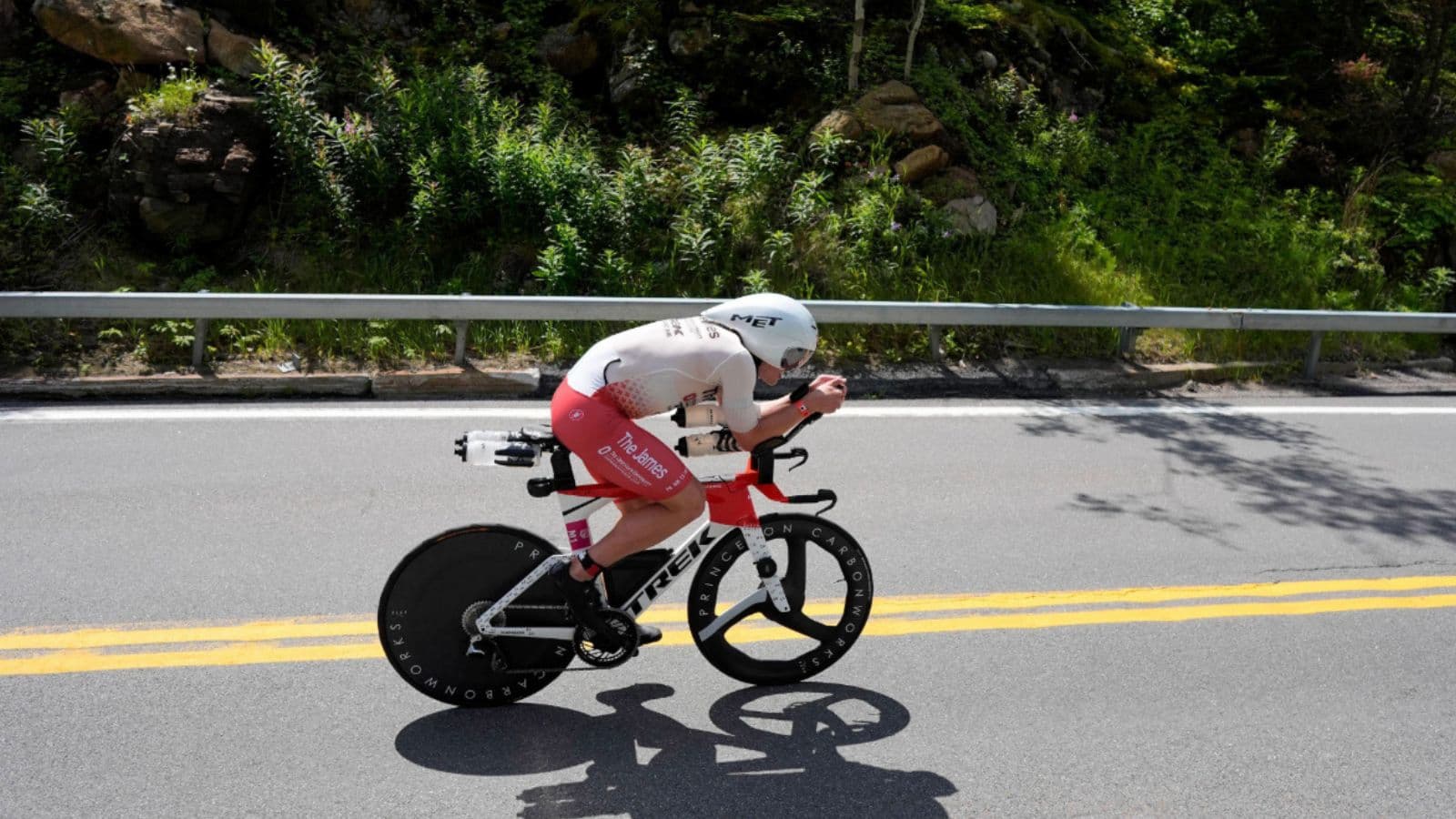
The best bike split is not always the fastest bike split you are capable of producing. In triathlon, the bike has to be paced as part of the whole race because every extra effort can influence how well you run after T2. The goal is to find the highest sustainable bike effort that still allows you to begin the run under control. Good pacing depends on race distance, terrain, fitness, weather, fueling, and experience. It also requires discipline because the first part of the bike often feels easier than the same effort will feel later.
In Short
- Pace the bike for the entire race, not just the bike split.
- Avoid large surges in effort when possible.
- Start slightly more controlled than feels necessary.
- Longer races require more conservative pacing.
- Use power, heart rate, or perceived effort as guides.
- Climb without creating unnecessary spikes in intensity.
- Fuel consistently during the bike.
- Practice race effort in training.
- Judge a good bike leg partly by how well you can run afterward.
Think Beyond the Bike Split
A strong bike leg should set up the run. This is why you should bike smarter to improve your triathlon run matters more than chasing the fastest possible cycling time. A rider who gains two minutes on the bike but loses ten minutes on the run has not paced well. The bike leg should leave you tired, but not destroyed. Your breathing, muscular fatigue, and energy levels should still feel manageable as you approach T2.
Start More Controlled Than You Feel
The opening section of the bike often feels deceptively easy. You have fresh cycling muscles, race adrenaline, and athletes around you pushing the pace. This is when many triathletes make their first mistake. Instead of immediately riding at the highest effort you think you can sustain, settle into your target intensity gradually. Give your breathing and heart rate time to stabilize. A controlled opening also helps prevent early carbohydrate use from becoming unnecessarily high.
Match the Effort to Race Distance
Race distance should strongly influence bike pacing. A sprint triathlon allows a much harder relative effort than an Ironman.
In general:
- Sprint: hard but controlled.
- Olympic: strong and sustainable.
- 70.3: moderately hard and disciplined.
- Ironman: controlled and aerobic for long periods.
Understanding how should cycling workouts change for different race distances helps connect training intensity with the effort you should expect to sustain on race day. The longer the race, the more costly early overpacing becomes.
Use Power Carefully
A power meter can make pacing more objective because it measures the work you are producing directly. If you know your sustainable race power from training, it can help prevent you from responding emotionally to other riders. However, power is still only one piece of information.
- Wind
- Heat
- Fatigue
- Altitude
- Illness
can all change how a given number feels. Understanding what is ftp in triathlon cycling can help athletes set training and racing zones, but race pacing should not be reduced to blindly following one percentage.
Use power alongside perceived effort and other feedback.
Heart Rate Can Add Context
Heart rate can help show how your body is responding to the workload. It may rise gradually during a long event even when power stays stable. Temperature, hydration, caffeine, stress, and fatigue can also influence it. For this reason, heart rate works best as a supporting measure rather than a single pacing rule. Learning how can heart rate zones improve triathlon cycling speed and fitness can help athletes interpret heart rate more effectively across training and racing. Pay attention when heart rate is unusually high for your normal race effort.
Keep Hills Under Control
Climbing is one of the easiest places to overpace. Many athletes respond to a hill by maintaining speed rather than controlling effort. That can produce a large spike in power and increase fatigue quickly. On longer races, allow speed to fall as the gradient increases. Use a suitable gear and keep the effort controlled. Knowing when should you climb seated vs standing on a bike can help you manage body position and muscular demand more efficiently on changing gradients.
You can ride slightly harder uphill, but avoid turning every climb into an interval.
Do Not Chase Speed Into Headwinds
Strong headwinds can tempt athletes to push harder because the speed shown on the bike computer looks disappointing. That is usually the wrong response. Wind resistance rises sharply with speed, so trying to force your usual pace into a headwind can require much more power. Instead, maintain a sustainable effort and accept a slower speed.
Understanding how to ride in headwinds and crosswinds on a bike helps triathletes separate good pacing from speed chasing.
Race the effort, not the number on the speed display.
Avoid Unnecessary Power Surges
Repeated accelerations can increase fatigue even if your average power looks reasonable.
Surges often happen when:
- Passing other riders.
- Climbing.
- Leaving corners.
- Riding into wind.
- Reacting to competitors.
- Accelerating after slowing.
Try to keep power as steady as the course allows. This is especially important in long course triathlon. Smooth pacing reduces the number of times you move significantly above your sustainable effort.
Cadence Can Help Manage Muscular Fatigue
Gear selection affects how the effort feels in your legs. Grinding a very large gear at low cadence can create substantial muscular strain, while an extremely high cadence may also feel inefficient for some riders. There is no single ideal number. Understanding what is cycling cadence in a triathlon helps you choose a rhythm that feels smooth and sustainable rather than forcing one fixed target.
Use gearing to avoid unnecessarily heavy pedal strokes, particularly late in the bike leg.
Fuel Early and Consistently
Pacing and fueling cannot be separated in longer triathlons. Even an appropriate bike effort can lead to a poor run if energy intake is inadequate. Start fueling before you feel depleted. For longer events, the bike is usually the best opportunity to take in substantial carbohydrate because eating and drinking can become harder on the run. Understanding how to fuel for a 2 hour cycling ride in a triathlon provides a useful foundation for shorter events, while 70.3 and Ironman athletes will need a more detailed race specific strategy.
Practice everything in training.
Hydration Affects Pacing Too
Heat and dehydration can make a normal bike effort feel progressively harder. Fluid needs depend on conditions and the individual. Hot races often require more careful planning. Learning how much should you drink per hour when cycling in hot weather can help athletes avoid using one fixed hydration strategy in every environment.
Do not wait until the run to address a problem that began on the bike.
Save Your Legs for T2
The final part of the bike should not feel like a finishing sprint. As you approach transition, focus on staying smooth. Some athletes slightly reduce effort in the final minutes to prepare mentally and physically for running. You do not need to coast excessively, but entering T2 under control can make the first part of the run less chaotic. The goal is to arrive ready to run rather than celebrating the bike split before the race is finished.
Practice Pacing During Brick Sessions
Brick sessions are one of the best ways to determine whether your bike effort is realistic. Ride at your intended race intensity and then complete a short run.
Pay attention to:
- Breathing.
- Leg heaviness.
- Ability to settle into pace.
- Heart rate.
- Perceived effort.
- Running form.
If every brick run feels far harder than expected, the bike may be too aggressive.
The solution could also involve fueling, fitness, or position, so assess the whole session.
Watch for Signs You Rode Too Hard
Poor bike pacing often becomes obvious quickly on the run.
Common signs include:
- Extremely heavy legs.
- Rapid breathing despite slow pace.
- Difficulty holding planned running effort.
- Sudden loss of energy.
- Cramping or muscular fatigue.
- Needing to walk much earlier than expected.
Learning how can you reduce fatigue during the triathlon run leg can help identify whether pacing, fueling, bike fitness, or running preparation is the main issue. One poor run does not always mean the bike pacing was wrong, but repeated patterns deserve attention.
Fitness Determines Sustainable Pace
Your bike pacing target should be based on current fitness, not the performance you hope to have. Riding at a number that belongs to a stronger future version of yourself usually ends badly. Build fitness first. Work on how can triathletes increase the average cycling speed through consistent aerobic training, structured intervals, good positioning, and better technique rather than simply forcing a faster race pace. Race day should demonstrate your fitness, not test whether you can suddenly exceed it.
Common Mistakes
- Starting the bike too hard.
- Chasing other athletes.
- Forcing speed into headwinds.
- Producing large power spikes on hills.
- Ignoring fueling until late.
- Using one pacing strategy for every distance.
- Focusing only on average speed.
- Grinding an unnecessarily large gear.
- Forgetting that the run still matters.
Practical Tips
- Settle into effort gradually.
- Use power and perceived effort together.
- Keep hills controlled.
- Accept slower speeds in headwinds.
- Minimize unnecessary surges.
- Fuel from early in the bike.
- Practice race pacing in bricks.
- Review how you run after key bike sessions.
- Save enough energy to start the run smoothly.
Actionable Takeaways
Good triathlon bike pacing is about producing the strongest sustainable bike performance without compromising the run. Shorter races allow harder relative efforts, while 70.3 and Ironman require more discipline. Avoid aggressive starts, excessive surges, and chasing speed on hills or into headwinds. Use power, heart rate, perceived effort, cadence, and training experience together rather than depending on one number.
Most importantly, judge bike pacing by what happens after T2. If you can ride strongly, fuel consistently, enter transition under control, and begin the run close to your planned effort, your pacing strategy is probably working.