
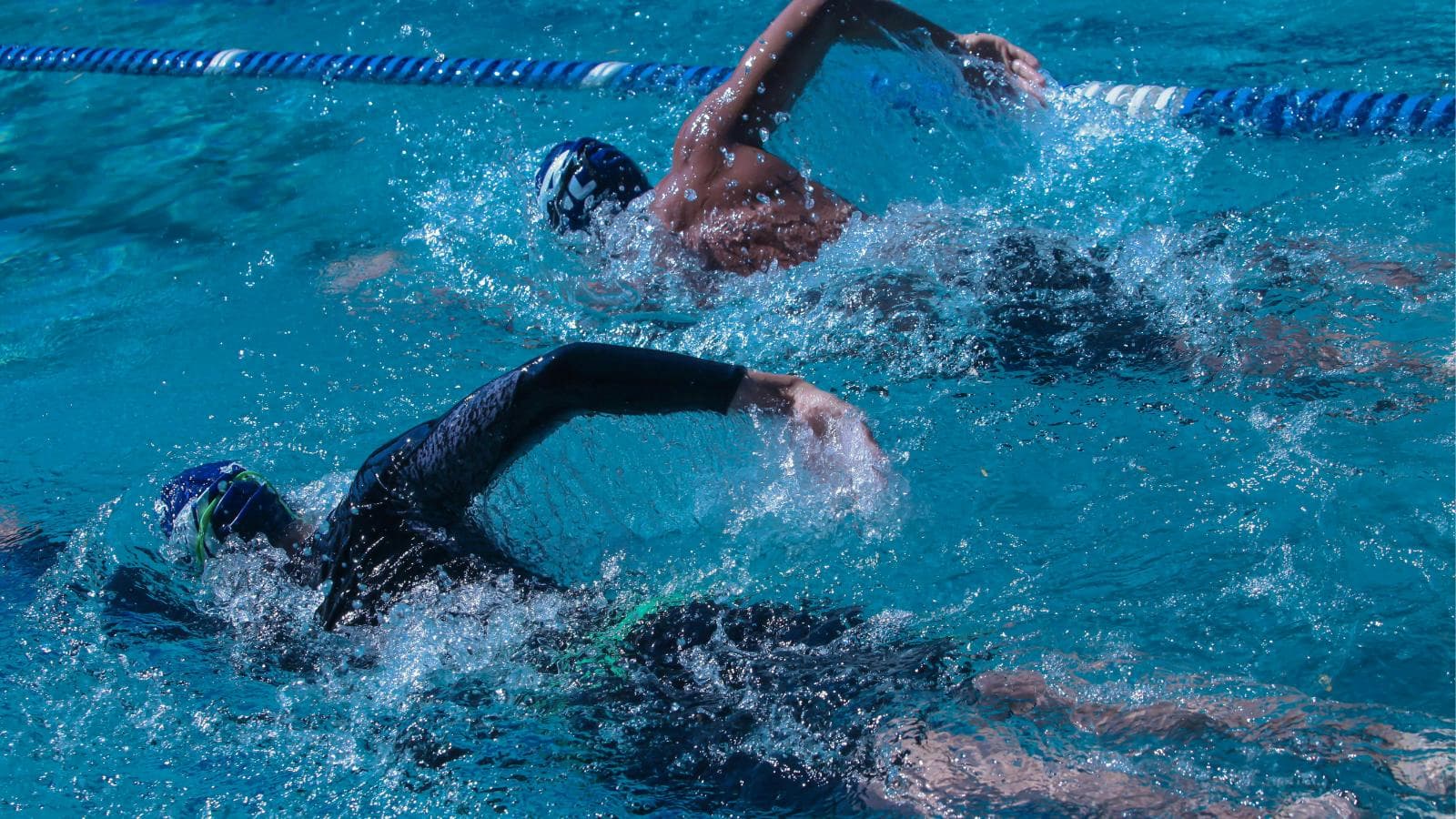
Front crawl drills can improve technique by isolating one part of the swimming stroke so you can concentrate on it without being overwhelmed by the entire movement. For triathletes, useful drills commonly target body position, the catch, rotation, breathing, arm recovery, and stroke timing. Drills work best when they have a clear purpose. Repeating a drill without understanding what you are trying to change can make a swim session more complicated without producing meaningful improvement. Most triathletes do not need an entire workout made up of drills. Short drill repetitions followed by normal front crawl allow you to practice a movement and then immediately try to integrate it into your regular stroke. Choose one or two technical priorities at a time. Improving the weakest part of your stroke can often be more useful than attempting to copy an ideal swimming style that does not account for your ability, mobility, or open water racing needs.
In Short
- Use drills to target specific technique problems.
- Keep drill repetitions controlled.
- Follow drills with normal swimming.
- Use sculling to develop your feel for the water.
- Try closed fist swimming for better forearm awareness.
- Use side kicking to practice body position.
- Single arm swimming can improve coordination.
- Fingertip drag can improve recovery awareness.
- Catch up drills can help stroke timing.
- Choose drills according to your actual weakness.
Catch Up Drill for Stroke Timing
The catch up drill separates each arm stroke. One arm remains extended in front while the other completes a full stroke. The next stroke begins when the recovering hand reaches the front.
This can help you focus on:
- Front arm position.
- Stroke timing.
- Body alignment.
- Controlled rotation.
Avoid creating an exaggerated pause at the front. The purpose is awareness rather than teaching yourself to glide excessively during normal swimming. Better timing can support the efficiency developed through how to increase triathlon swim speed, particularly when technique rather than fitness is limiting your pace.
Fingertip Drag for Arm Recovery
During fingertip drag, lightly skim your fingertips across the water during the recovery phase.
This encourages awareness of:
- Relaxed recovery.
- Elbow position.
- Hand path.
- Shoulder movement.
Do not force your elbow into an uncomfortable position. The drill should feel smooth and relaxed. Once you return to normal front crawl, keep the relaxed recovery without deliberately dragging your fingers through the water.
Sculling for a Better Feel for the Water
Sculling uses small controlled movements of the hands and forearms to help swimmers become more aware of how they apply pressure against the water. It can be performed in several positions depending on what part of the stroke you want to emphasize.
Focus on:
- Hand pressure.
- Forearm position.
- Smooth movement.
- Continuous connection with the water.
Sculling is particularly useful when developing the early part of the underwater stroke. It can complement when should triathletes isolate swim technique skills because it allows you to focus closely on one technical sensation before returning to the full stroke.
Closed Fist Drill for Catch Awareness
Swim front crawl with your hands gently closed into fists. Reducing the surface area of the hand encourages you to become more aware of the forearm during the underwater pull. When you reopen your hands, you may notice a stronger sensation of pressure against the water.
Keep the drill:
- Short.
- Controlled.
- Technically focused.
Do not simply increase your stroke rate to compensate for the reduced hand surface.
Single Arm Drill for Coordination
Single arm front crawl lets one arm perform the stroke while the other remains still. Depending on the variation, the inactive arm may stay extended in front or alongside the body.
This drill can highlight:
- Catch mechanics.
- Rotation.
- Breathing timing.
- Arm recovery.
- Stroke coordination.
Alternate arms so you can identify differences between sides. If breathing disrupts the movement, how to coordinate breathing with your swim strokes in a triathlon can help you connect inhalation with rotation rather than lifting the head unnecessarily.
Side Kick Drill for Body Position
Kick while lying on your side with your body long and streamlined. One arm can remain extended while the other rests alongside your body.
Focus on:
- Head position.
- Hip position.
- Balance.
- Rotation.
- Controlled kicking.
The goal is not to kick as hard as possible. Side kicking teaches you to become comfortable with the rotated position that appears naturally during front crawl.
Six Kick Switch for Rotation
The six kick switch drill develops balance and rotation. Begin on one side, perform approximately six kicks, take a stroke, and rotate onto the opposite side. Think about rotating your body as a connected unit rather than twisting only through the shoulders.
This drill can develop:
- Body control.
- Balance.
- Rotation timing.
- Stroke coordination.
If your hips sink significantly during the drill, reduce speed and focus on maintaining a long body position.
Head Position Drill
Poor head position can increase drag and affect the rest of your body. Practice easy front crawl while focusing on a neutral head position.
Try to:
- Keep the neck relaxed.
- Avoid looking too far forward.
- Keep the head stable.
- Rotate rather than lift to breathe.
A stable head can help the hips remain higher and make the stroke feel smoother. In open water, you will occasionally need to look forward for navigation, which makes why swimming straight matters in open water triathlon useful when learning how pool technique changes during racing.
Practice Breathing Without Lifting Your Head
Breathing is one of the most common technical problems for beginner triathletes. During easy swimming, focus on turning the head with body rotation rather than lifting it forward.
Try to:
- Exhale into the water.
- Keep one side of the head close to the surface.
- Take a quick relaxed breath.
- Return the head smoothly.
Avoid holding your breath for most of the stroke. Better breathing control can make longer swims feel considerably easier.
Use Sighting Drills for Open Water
Pool front crawl and open water front crawl are not identical. Triathletes need to look forward periodically to confirm direction. Practice swimming several normal strokes before briefly lifting your eyes forward and then returning to your normal breathing pattern.
Keep the sight:
- Brief.
- Controlled.
- Low.
Lifting the entire head too high can cause the hips to drop. Practicing sighting supports how do you start an open water swim in a triathlon because navigation is one of the key skills that makes pool swimmers more comfortable outside.
Use Buoy Turn Drills
Front crawl technique also needs to work around turns and other swimmers. If possible, practice approaching and turning around a buoy during open water sessions.
Work on:
- Looking ahead before the turn.
- Choosing your line.
- Maintaining momentum.
- Returning quickly to normal stroke rhythm.
Learning how do you turn around a buoy in open water swimming can make this skill more efficient and reduce unnecessary stopping during races.
Combine Drills With Normal Swimming
Do not perform a drill and immediately forget the movement it was teaching.
A simple structure might be:
- 25 meters drill.
- 25 meters normal front crawl.
- Repeat several times.
During the normal swimming section, concentrate on the same technical cue. For example, follow sculling with front crawl while thinking about the catch. This creates a connection between isolated practice and complete swimming.
Do Not Sacrifice Technique for Speed
Drills should generally be controlled enough that you can concentrate on movement. If you swim them too quickly, the original technical problem may return. Technique work can be especially useful early in a session when you are relatively fresh. As your technique improves, combine it with endurance work using how can you improve your swim stamina for a triathlon so efficient movement can be maintained for longer distances.
Take Technique Into Open Water
A technically good pool stroke still needs to work in race conditions.
Open water introduces:
- Waves.
- Current.
- Other swimmers.
- Navigation.
- Limited visibility.
Practice your normal stroke outside the pool once you have adequate open water safety arrangements. If you struggle to maintain direction, what swimming straight matters in open water races can help explain how unnecessary changes in direction add distance and waste energy.
Common Mistakes
- Using drills without knowing their purpose.
- Trying too many drills in one session.
- Performing drills too quickly.
- Creating an exaggerated pause during catch up.
- Lifting the head while breathing.
- Forcing uncomfortable shoulder positions.
- Forgetting to practice the full stroke afterward.
- Focusing only on the arms.
- Never transferring pool technique into open water.
Practical Tips
- Identify one technical weakness first.
- Choose drills that address that weakness.
- Keep repetitions short and controlled.
- Alternate drills with normal swimming.
- Use simple technical cues.
- Practice both sides where appropriate.
- Stop a drill if technique deteriorates.
- Include open water skills before racing.
- Reassess which drills you actually need.
Actionable Takeaways
- Give every drill a specific purpose.
- Use short drill repetitions followed by normal front crawl.
- Prioritize body position, catch, breathing, and timing.
- Practice race specific skills once basic technique improves.
Combining purposeful drills with what swim workouts improve triathlon performance can help turn better technique into swimming that remains efficient during longer triathlon sessions.