

Triathletes often focus on improving aerobic fitness, pacing, and race-day nutrition, but running performance is also heavily influenced by biomechanics. One of the most important yet frequently overlooked aspects of efficient running is hip extension. Hip extension plays a major role in stride power, running economy, and speed. When it is limited, runners may struggle to generate force efficiently, lose speed, and increase their risk of injury. Conversely, well-developed hip extension can help triathletes run faster while using less energy, an important advantage when the run follows a demanding swim and bike leg. Understanding how hip extension affects performance can help triathletes improve their running mechanics and become more efficient athletes.
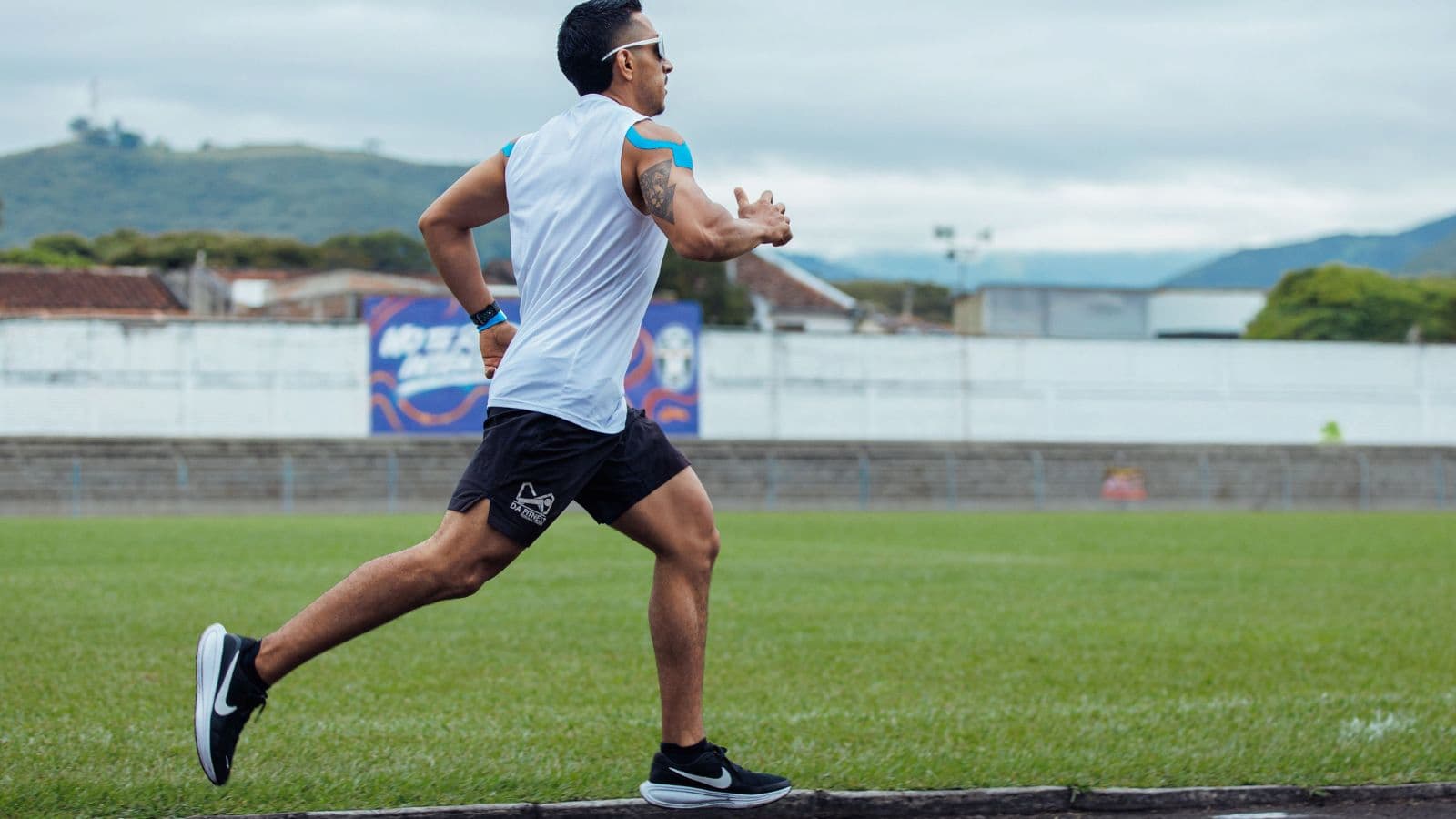
What Is Hip Extension?
Hip extension occurs when the thigh moves backward behind the body.
During running, hip extension is responsible for:
- Propelling the body forward
- Generating stride power
- Activating the posterior chain
- Maintaining running efficiency
The movement primarily involves:
- Glutes
- Hamstrings
- Hip stabilisers
Athletes who understand what causes knee pain during triathlon running often discover that efficient movement patterns are just as important as fitness.
Why Hip Extension Matters in Triathlon Running?
Unlike standalone running races, triathlon running begins after prolonged swimming and cycling.
By the time athletes start the run:
- Hip flexors may be tight from cycling
- Fatigue is accumulating
- Running form can deteriorate
Efficient hip extension helps maintain:
- Stride quality
- Forward momentum
- Running economy
Even late in a race when fatigue becomes a major factor.
Hip Extension Generates Forward Propulsion
One of the primary functions of hip extension is producing force that moves the body forward.
Strong hip extension allows runners to:
- Push effectively into the ground
- Generate more power
- Maintain speed with less effort
Athletes who understand how to transition from a single-sport athlete to a triathlete often learn that efficient movement becomes increasingly important as race distances increase.
Better Hip Extension Improves Running Economy
Running economy refers to how efficiently a runner uses energy at a given pace.
When hip extension is limited:
- Stride length may shorten
- Energy expenditure increases
- Compensation patterns develop
Improved hip extension can help athletes:
- Maintain speed more efficiently
- Reduce wasted movement
- Conserve energy for later stages of the race
This becomes especially valuable during middle- and long-distance triathlon events.
Cycling Can Limit Hip Mobility
Triathletes spend significant time in an aerodynamic cycling position.
Long periods on the bike can contribute to:
- Tight hip flexors
- Reduced mobility
- Restricted movement patterns

Athletes who understand how to adapt to a triathlon training plan while traveling often appreciate the importance of maintaining mobility when training routines are disrupted. Mobility work can help counter some of cycling’s repetitive demands. Triathletes should follow simple 10 minute mobility routine following prolonged cycling to prevent any discomfort and injury.
The Glutes Play a Critical Role
The glute muscles are among the body’s most powerful movement generators.
Strong glutes contribute to:
- Powerful hip extension
- Improved stability
- Better force transfer
Athletes with weak or underactive glutes often compensate using:
- Lower back muscles
- Hamstrings
- Hip flexors
This can reduce efficiency and increase injury risk.
Limited Hip Extension Can Affect Stride Length
Stride length is influenced by several factors, including:
- Strength
- Mobility
- Coordination
Restricted hip extension may prevent runners from fully utilising their natural stride. The goal is not artificially increasing stride length but allowing efficient movement through a healthy range of motion.
Running Off the Bike Requires Efficient Mechanics
Many triathletes notice that the first kilometres of a run feel awkward after cycling.
This sensation is partly related to:
- Fatigue
- Muscle recruitment changes
- Hip mobility limitations
Athletes who understand how can beginners progress from couch to triathlon often discover that proper movement mechanics become increasingly important as training volume increases.
Strength Training Supports Hip Extension
Several strength exercises can help improve hip extension capacity, including:
- Deadlifts
- Hip thrusts
- Glute bridges
- Split squats
- Romanian deadlifts
These movements develop the muscles responsible for generating force during running. Strength work is often one of the most effective ways to improve long-term running efficiency.
Mobility Work Can Help
Mobility training may improve:
- Hip range of motion
- Movement quality
- Running comfort
Areas worth addressing include:
- Hip flexors
- Glutes
- Hamstrings
Small improvements in mobility can sometimes produce noticeable changes in running mechanics.
Fatigue Often Reduces Hip Extension
Even athletes with good mechanics can experience reduced hip extension during long races.
As fatigue accumulates:
- Posture may deteriorate
- Stride mechanics may change
- Power production may decline
Athletes who understand what mindset helps triathletes perform at their best know that maintaining focus late in a race can help preserve technique under fatigue.
Efficient Hip Extension Helps Reduce Injury Risk
Poor hip extension can contribute to compensatory movement patterns that increase stress on:
- Knees
- Lower back
- Hamstrings
- Calves
Athletes who understand how can triathletes treat shin splints often realise that movement quality plays an important role in injury prevention.
Efficient mechanics help distribute forces more effectively.
Running Form and Hip Extension Work Together
Hip extension does not operate in isolation.
It interacts with:
- Posture
- Cadence
- Arm swing
- Foot strike
Athletes who understand how does screen time affect triathlon training performance often appreciate how lifestyle factors can influence mobility, posture, and movement quality. Good mechanics are supported by good habits.
Endurance Performance Depends on Efficiency
As race distances increase, efficiency becomes increasingly valuable. The ability to maintain pace while conserving energy often separates strong finishers from struggling athletes. Athletes who understand how do carbs affect fat burning during endurance training know that performance is influenced by both physiology and biomechanics. Efficient movement helps maximise available energy.
Common Hip Extension Mistakes
Many triathletes:
- Spend too much time sitting
- Neglect mobility work
- Ignore strength training
- Focus only on aerobic fitness
- Overlook running mechanics
- Train through poor movement patterns
- Fail to activate the glutes properly
- Assume speed is purely fitness-related
Most of these issues can be improved with targeted training.
How to Improve Hip Extension for Triathlon Running?
Triathletes can improve hip extension by:
- Strengthening the glutes
- Improving hip mobility
- Performing regular activation exercises
- Including running drills
- Maintaining good posture
- Monitoring fatigue
- Practicing brick sessions
- Prioritising movement quality
Strong, efficient hip extension helps triathletes generate more power, improve running economy, and maintain better form throughout the run leg. Over the course of a triathlon, those efficiency gains can translate into meaningful performance improvements.