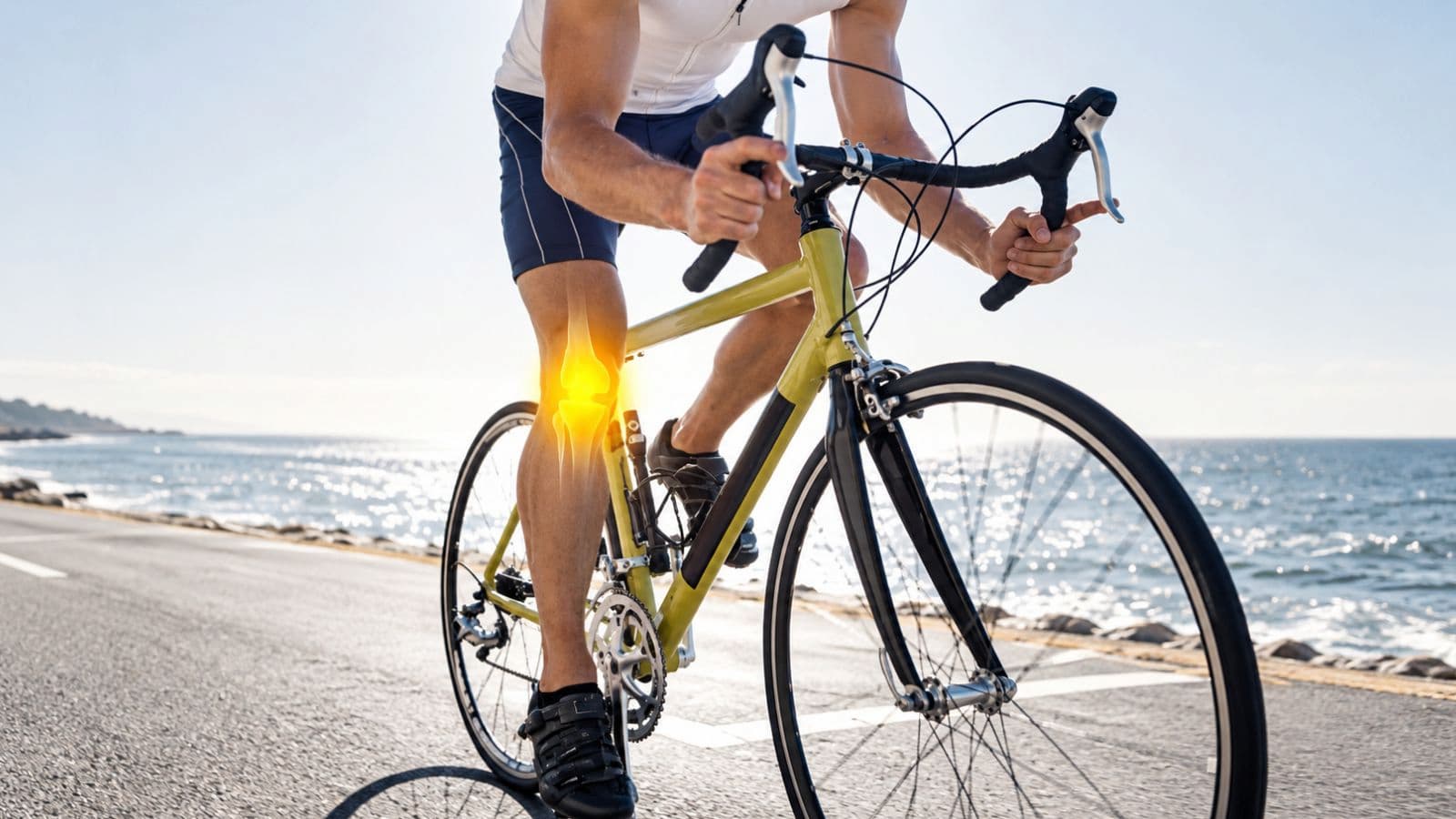


Cycling with mild tendinitis can be safe for some triathletes, provided symptoms remain manageable, movement is comfortable, and training does not aggravate the affected tendon. However, whether you should continue riding depends on the location of the pain, its severity, and how the tendon responds during and after exercise. Tendinitis describes inflammation or irritation of a tendon, the strong tissue connecting muscle to bone. Many persistent tendon problems are more accurately described as tendinopathy, which involves changes in tendon structure or function and does not always involve significant inflammation. Cyclists commonly experience tendon-related discomfort around the knees, Achilles tendons, hips, and occasionally the upper body. Repetitive pedaling, sudden increases in training intensity, and unsuitable bike positioning can contribute to these problems.
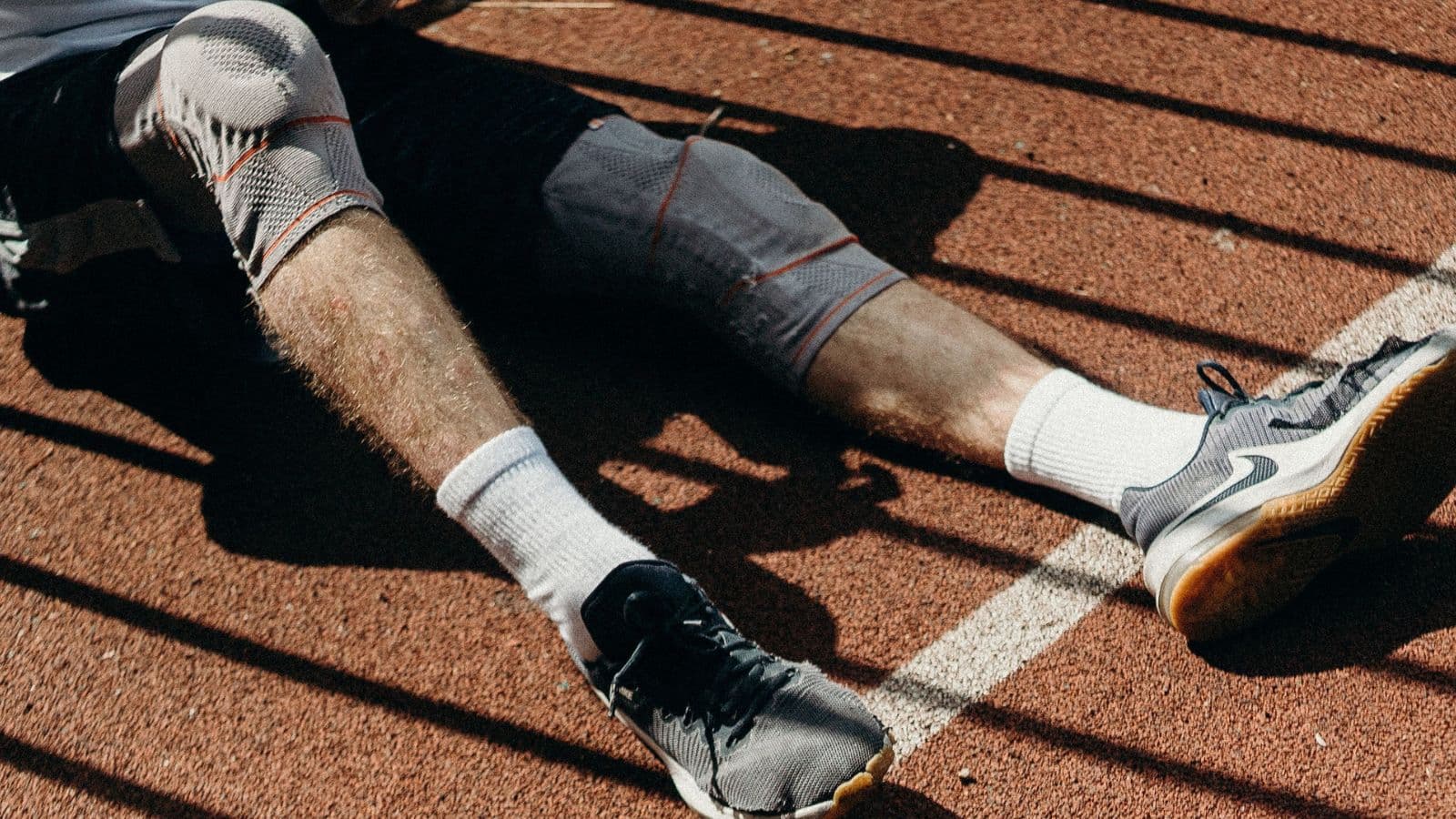
The goal is not necessarily complete inactivity. Appropriate load management, gradual rehabilitation, and professional assessment when needed can help triathletes maintain fitness without repeatedly aggravating symptoms.
In Short
- Mild tendon pain does not always require complete rest.
- Cycling may be possible if symptoms remain stable.
- Reduce intensity and duration when necessary.
- Avoid riding through increasing pain.
- Monitor symptoms the following morning.
- Check bike fit and pedaling mechanics.
- Avoid sudden increases in training volume.
- Strength rehabilitation supports tendon recovery.
- Stop riding if pain changes your movement.
- Seek medical advice for persistent or worsening symptoms.
What Causes Tendinitis in Cyclists?
Tendon problems often develop when repeated loading exceeds the tissue’s current capacity to recover. Cycling involves thousands of repeated pedal strokes, placing ongoing demands on the muscles and tendons around the lower body.
Common contributing factors include:
- Sudden increases in riding distance.
- Excessive high-intensity training.
- Repeated climbing in heavy gears.
- Inadequate recovery.
- Unsuitable saddle positioning.
- Abrupt changes in cycling equipment.
- Weakness or reduced capacity in surrounding muscles.
Understanding what training habits increase injury risk in triathletes can help identify training patterns that contribute to tendon overload. However, tendon pain is not always caused by cycling itself. Running, strength training, and daily activities may also contribute.
Which Tendons Are Commonly Affected?
Different cycling movements place stress on different tendons.
| Tendon or area | Common symptoms |
|---|---|
| Patellar tendon | Pain below the kneecap |
| Quadriceps tendon | Pain above the kneecap |
| Achilles tendon | Pain behind the ankle or heel |
| Hamstring tendons | Discomfort near the back of the knee or sitting bones |
| Hip tendons | Pain around the outside or front of the hip |
Symptoms can overlap with other conditions, so location alone cannot confirm a diagnosis. Understanding what is patellar tendonitis and how can triathletes treat it can help explain one common source of tendon related knee discomfort.
When Is Cycling With Mild Tendinitis Acceptable?
Some athletes can continue modified cycling while recovering from tendon pain. The important factor is how symptoms respond to loading.
Cycling may be tolerable when:
- Pain is mild and predictable.
- Discomfort does not increase during riding.
- Pedaling remains smooth and natural.
- Symptoms settle after exercise.
- Next-day pain and stiffness do not worsen.
- A clinician has not advised against cycling.
Pain scores can be useful for monitoring symptoms, but no single numerical threshold guarantees that exercise is safe. Understanding how should bike workouts change for different triathlon races can help athletes approach recovery without treating every missed workout as lost fitness.
When Should You Stop Cycling?
Continuing to ride through worsening symptoms can increase irritation and delay recovery.
Stop the session if you experience:
- Sharp or sudden pain.
- Increasing discomfort with each pedal stroke.
- Significant swelling.
- Weakness or loss of normal movement.
- Pain that forces you to change your pedaling technique.
- A sudden popping sensation.
A suspected tendon rupture, inability to bear weight, or sudden major loss of strength requires urgent medical assessment.
- Persistent pain
- Warmth
- Redness
- Unexplained swelling
- also warrants professional evaluation.
Adjusting Cycling Training With Tendinitis
Reducing tendon load is often more useful than trying to maintain your normal training schedule. Start by identifying which sessions aggravate symptoms.
Possible adjustments include:
- Shortening rides.
- Reducing resistance.
- Avoiding maximal sprints.
- Limiting steep climbs.
- Choosing flat routes.
- Allowing more recovery between sessions.
An easy ride may be tolerated better than repeated hard efforts, although even low-intensity cycling can aggravate some tendon conditions. Understanding why are slower training sessions important for triathletes can help explain how lower-intensity workouts fit into a sustainable training routine.
Does Cycling Cadence Affect Tendon Pain?
Cycling cadence is the number of pedal revolutions completed per minute. Grinding a heavy gear at low cadence generally requires greater force during each pedal stroke. For some cyclists, this may increase discomfort around an irritated knee tendon. A comfortable, moderately higher cadence with lower resistance may reduce peak pedal force. However, there is no universal cadence that prevents tendon pain. Understanding what is cycling cadence in a triathlon can help cyclists recognize how pedaling speed and resistance interact. Avoid forcing an unusually high cadence if it causes bouncing, poor control, or additional discomfort.
Can Bike Fit Contribute to Tendinitis?
Bike positioning affects how forces are distributed through the legs and joints. An unsuitable setup may increase repetitive stress.
Potential problems include:
- Saddle positioned too high or low.
- Excessive forward or backward saddle placement.
- Poor cleat alignment.
- Unsuitable crank length.
- Excessive reach to the handlebars.
Understanding how do you adjust your bike for a better fit in a triathlon can help identify adjustments that may improve comfort. A professional bike fit may be useful when symptoms repeatedly appear during cycling. However, changing equipment alone does not replace appropriate rehabilitation.
Should You Continue Running and Swimming?
Triathletes must consider total training load rather than cycling in isolation. Running often places substantial forces on the Achilles, patellar, and other lower-body tendons. If running aggravates symptoms, reducing running load may be necessary even when cycling remains comfortable. Swimming may provide an alternative, depending on the affected tendon and stroke technique. For example, swimming with a painful shoulder tendon may require modification rather than simply increasing swim volume. Understanding how to reduce injury risk when increasing triathlon volume can help athletes manage combined training stress across all three disciplines.
Does Strength Training Help Tendon Recovery?
Progressive strengthening is an important component of rehabilitation for many tendon conditions. Appropriate exercises help rebuild the tendon and surrounding muscles’ capacity to tolerate loading.
Depending on the diagnosis, rehabilitation may include:
- Isometric muscle contractions.
- Slow resistance exercises.
- Progressive strengthening.
- Balance and movement control.
- Gradual return to sport-specific loading.
Exercises should be selected according to the affected tendon, symptom severity, and individual response. Understanding what strength training should cyclists do to ride faster in a triathlon can help triathletes appreciate the broader value of strength development, although rehabilitation requires more specific programming.
Tendonitis Recovery
Recovery depends on the affected tendon, the duration of symptoms, and the severity of the condition. Some recently developed mild symptoms improve within days or weeks after suitable load adjustments. Established tendinopathy may require several months of progressive rehabilitation.
Factors influencing recovery include:
- Symptom duration.
- Training load.
- Tendon location.
- Strength and conditioning.
- Recovery habits.
- Consistency with rehabilitation.
A reduction in pain does not always mean the tendon is ready for maximal training. Understanding how can heart rate help detect overtraining can help monitor broader training strain, although heart rate cannot directly measure tendon healing.
How to Return to Normal Cycling Training?
Return to demanding cycling gradually rather than immediately repeating previous workouts.
A sensible progression may involve:
| Stage | Training approach |
|---|---|
| Initial adjustment | Reduce or temporarily stop aggravating activity |
| Early return | Short, comfortable rides |
| Building tolerance | Gradually increase easy riding duration |
| Moderate training | Reintroduce controlled resistance |
| Full training | Resume harder intervals when consistently tolerated |
Progress should depend on symptoms during exercise and over the following 24 hours. If pain or stiffness increases, reduce the load and reassess. Avoid progressing duration and intensity aggressively at the same time.
Common Mistakes
- Ignoring worsening tendon pain.
- Continuing maximal intervals.
- Increasing mileage too quickly.
- Assuming all tendon pain is inflammation.
- Changing multiple bike-fit settings simultaneously.
- Returning to hard training immediately after pain improves.
- Neglecting strength rehabilitation.
- Using painkillers to push through workouts.
- Ignoring symptoms the following morning.
Practical Tips
- Monitor symptoms during and after rides.
- Reduce resistance when necessary.
- Choose shorter, flatter routes.
- Maintain comfortable pedaling mechanics.
- Allow adequate recovery.
- Check saddle and cleat positioning.
- Follow an appropriate strengthening program.
- Reintroduce intensity gradually.
- Seek professional advice for persistent symptoms.
Actionable Takeaways
- Mild tendinitis may allow modified cycling, but pain response matters.
- Avoid increasing symptoms during or after riding.
- Combine load management with appropriate rehabilitation.
- Return to demanding workouts progressively.