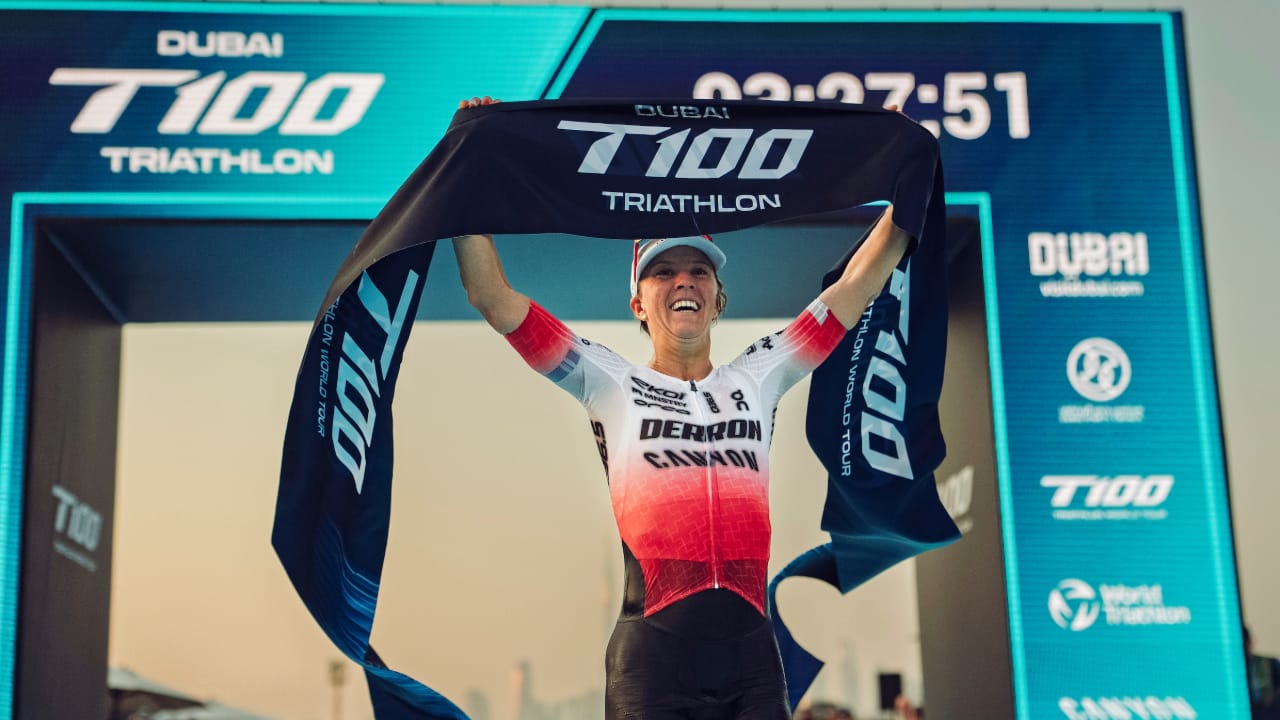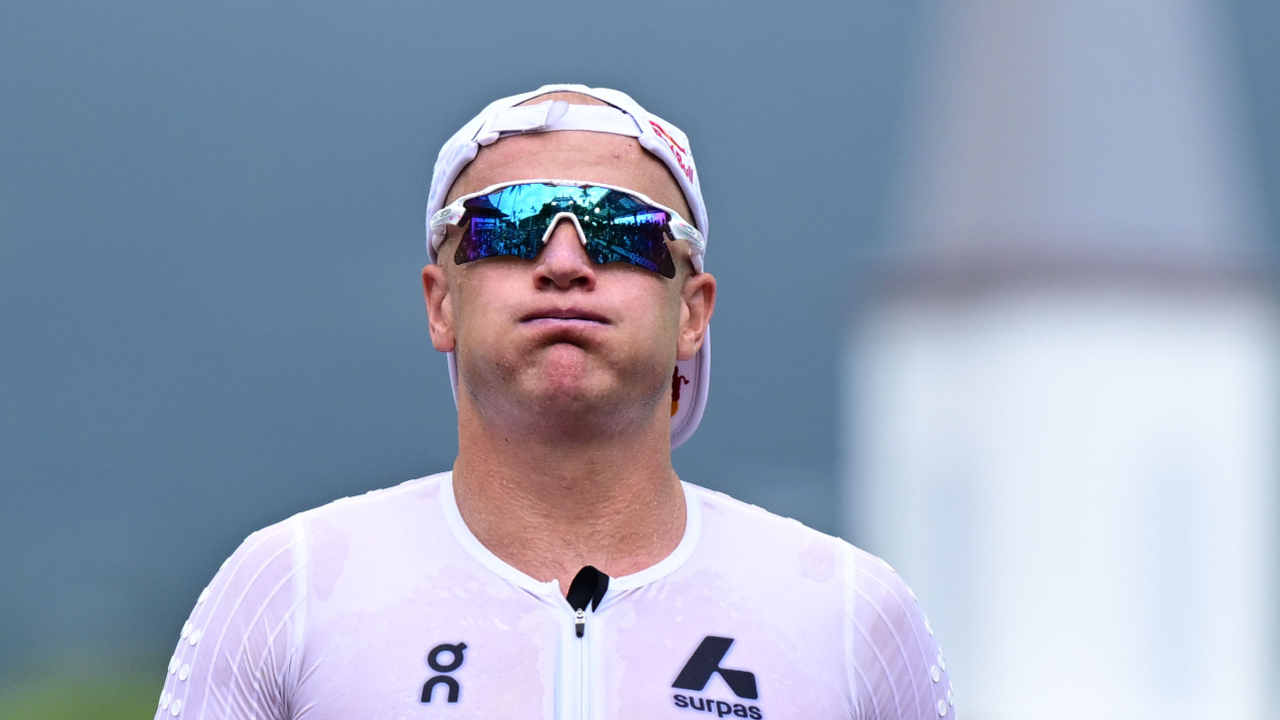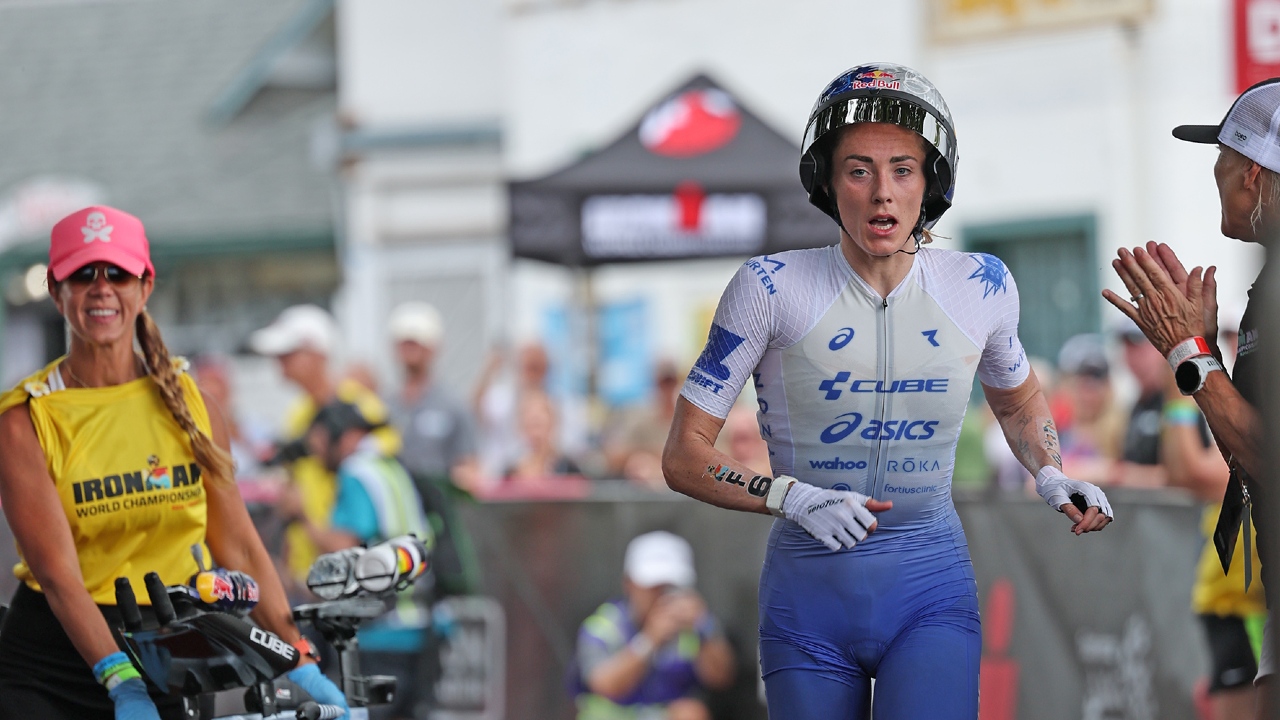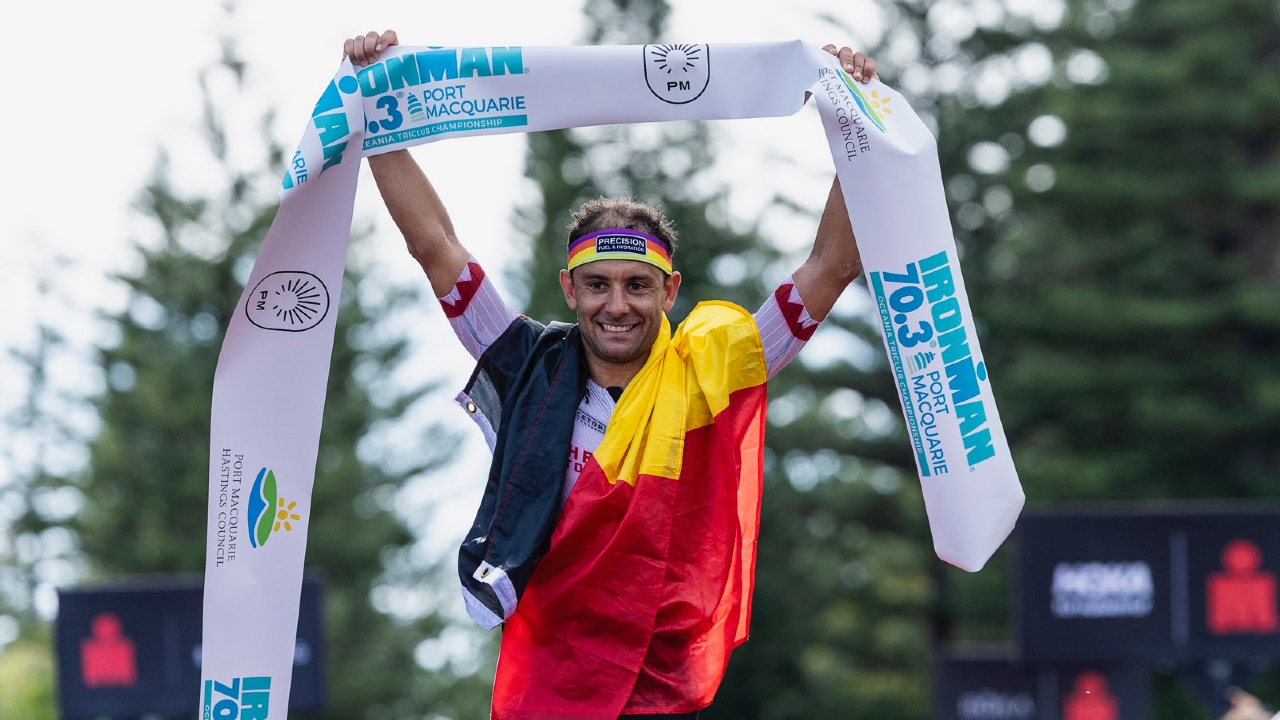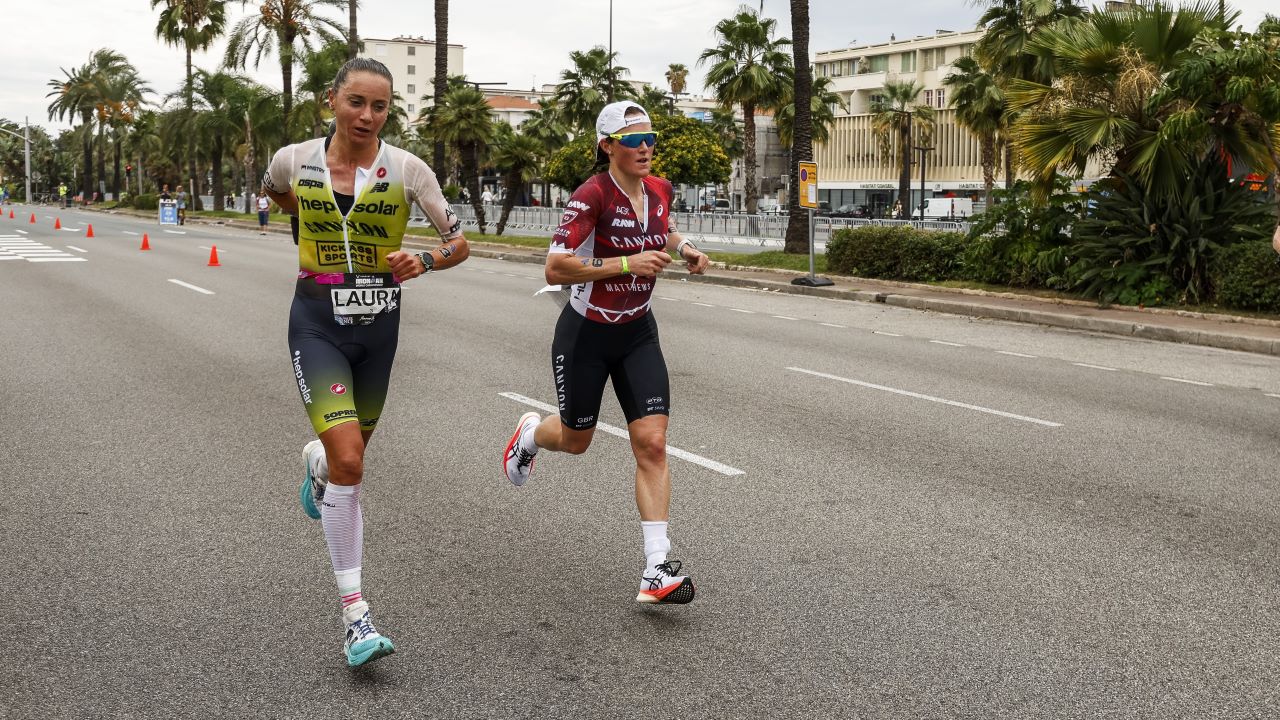


On 1 June, in Hamburg, Germany’s Laura Philipp clocked a new fastest women’s Ironman time with a jaw-dropping 8:03:13. The world champ’s splits would read – 54:40 for the 3.8km swim, a 4:23:38 for the 180km bike (40.1km/hr) and a marathon record of 2:38:27 (3:46/km). The time broke Kat Matthews’ benchmark of 8:10:34 that the Brit had set just five weeks earlier, in Texas. Matthews herself would also break her own record in Hamburg with a 8:05:13, to finish runner-up to Philipps.
The very same weekend, 10,625km away in Florianopolis, Brazil, Manoel Messias ran the sport’s first-ever sub-2:30hr marathon. In his first-ever long-distance race, the two-time Olympian stopped the clock at 2:26:50 (3:28/km), en route to finishing second overall in 7:37:11.
A new era for the sport has begun. But what’s led to such a leap in performance – and how much further can the limits be pushed? I spoke to a range of triathlon legends and performance experts, including Mirinda Carfrae, Tim Don and Matt Bottrill to get their take on whether triathlon has reached peak performance.
The writing for record times has been on the wall: the recent history of long distance triathlon finish times
These recent ‘record-breaking’ times, while unquestionably impressive and laudable, aren’t exactly surprising – certainly not for the people ‘behind the scenes’ of these epic performances. Long-distance times have been dropping consistently for the last few years.
Let’s start in Roth
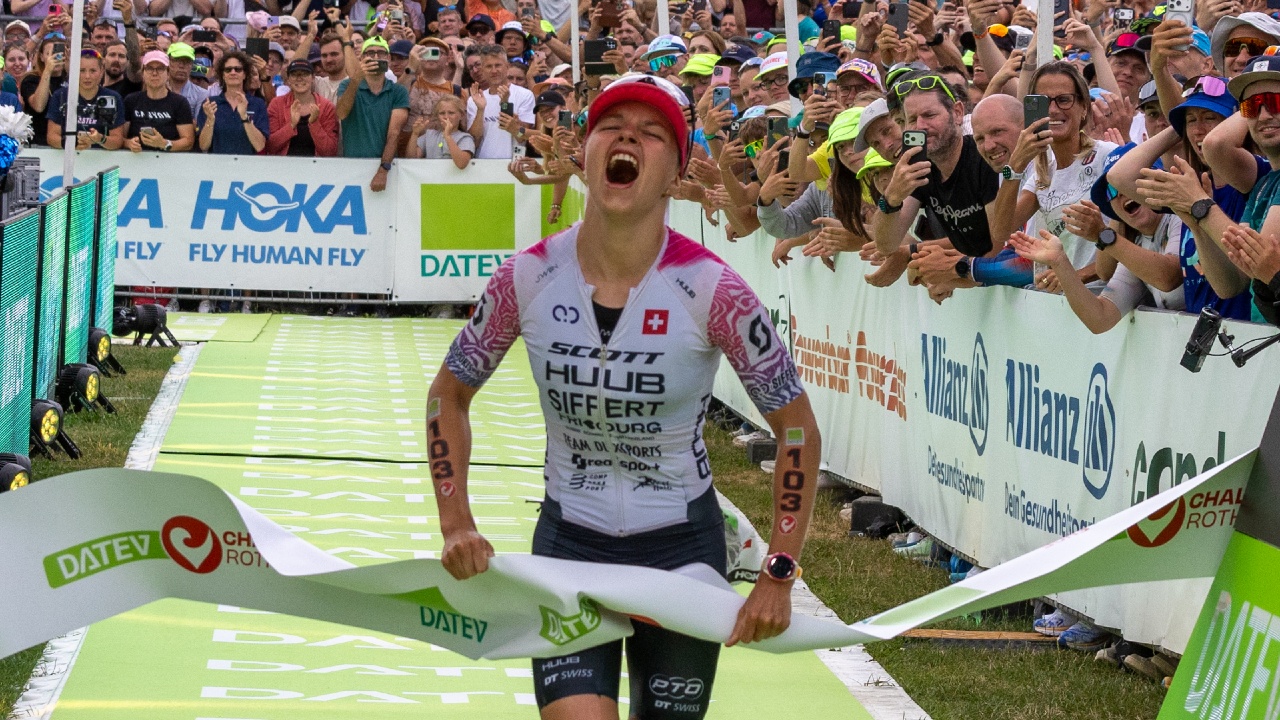
There can be no better race example of this consistent progression, than Challenge Roth – the hallowed German ground where records are set and legends are crowned.
At Roth 2023, five-time Ironman world champ Daniela Ryf finally smashed Chrissie Wellington‘s 2011 long-distance record with an 8:08:21, taking almost 10mins off the Brit’s time. Ryf would only hold the title for a year, though, when Anne Haug took a further 6mins off the record with an 8:02:38 in 2024.
What’s also worth noting here is that Philipp’s Hamburg time was only 35secs shy of Haug’s 2024 Roth time, showing that the gap between what has historically been seen as a ‘fast’ course compared with official Ironman courses is also reducing.
![Magnus Ditlev joy Challenge Roth 2024 [Photo credit: Simon Fischer | Challenge Roth]](https://www.tri247.com/wp-content/uploads/2024/07/Magnus-Ditlev-joy-Challenge-Roth-2024.jpg)
On the men’s side, in 2022 Magnus Ditlev was just 9secs shy of breaking GOAT Jan Frodeno’s then record time of 7:35:39 from 2019, who had himself smashed the five-year, long-standing record of Andreas Raelert’s by 5:56mins.
One year later, though, and Ditlev surpassed the benchmark – and not by mere seconds; his world-best of 7:24:40 was 11mins faster than Frodeno’s. Fast forward to 2024, and Ditlev reduced that time further to 7:23:24.
Cue Kona 2022 and the year of The Norwegian Method
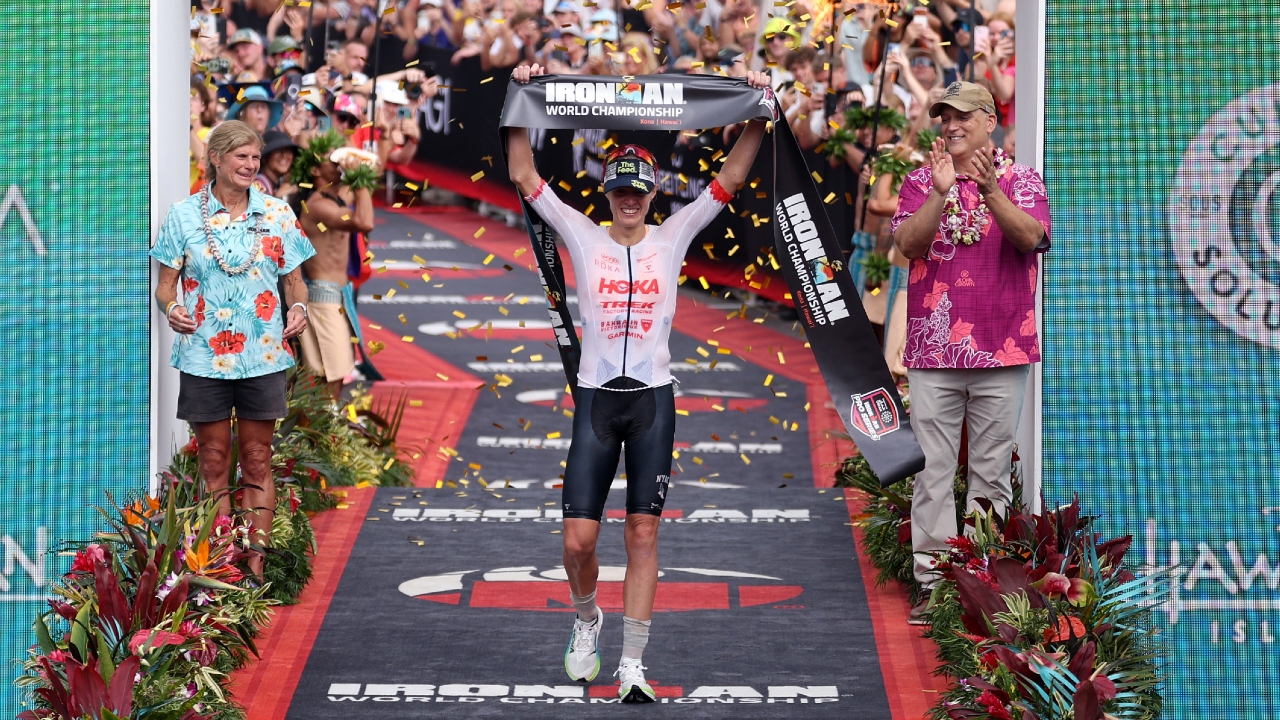
In the IRONMAN sphere, look no further than the 2022 IRONMAN World Champs for when the sport really started to witness some fundamental shifts in performance. This was also the year of the Norwegians – Gustav Iden and Kristian Blummenfelt, who, along with their coach Alexander Olav Bu, had adopted a 100% sports science approach to the sport, now coined ‘The Norwegian Method’.
Eventual champion Iden wiped an insane 11mins off Jan Frodeno’s 2019 course record to take the tape in 7:40:24. But the top four – all making their Kona debut – all also broke the existing mark: Sam Laidlow (7:42:24), Kristian Blummenfelt (7:43:23), and Max Neumann (7:44:44).
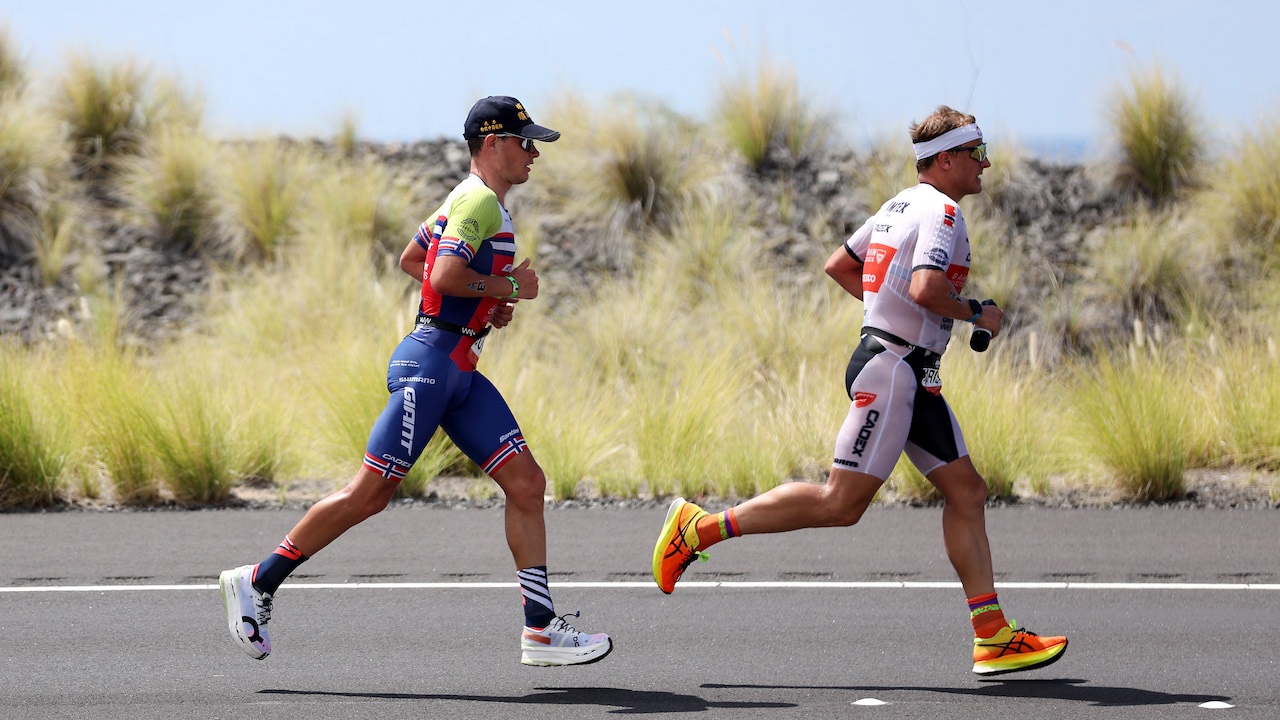
Laidlow broke the bike record with a 4:04:36 and Iden the men’s run course record – a 2:36:15, which still stands in Kona (when the men’s event switched to Nice in 2023, Patrick Lange clocked a 2:32:41).
In 2024, back in Kona, Lange took his third world title with a new course record, smashing Iden’s 2022 time by almost 5mins with a 7:35:53. Laidlow also set a new men’s bike course benchmark of 3:57:22 – he was one of seven men to go under Laidlow’s own previous record from 2022.
The men’s swim course record was also broken in 2024, Australia’s Sam Askey-Doran stopping the clock at 45:43mins for the 3.8km.
For the women, 2023 was the record year in Kona as GB’s Lucy Charles-Barclay not only won her first world title but also broke Daniela Ryf’s 2018 record by almost 2mins with an 8:24:31.
While the women’s swim and bike course records still stand from 2018 (Lucy Charles-Barclay, 48:14, and Daniela Ryf, 4:26:07, respectively), the run course record (which had been held for nine years by Mirinda Carfrae with a 2:50:26) was also broken in 2023 courtesy of Anne Haug’s 2:48:23.
The bar keeps getting raised – but why?
Those tumbling records seem to go beyond the ‘typical’ progression in sports performance. It’s not that long ago that the sport embarked on a mission to see if sub-7 and sub-8hr finish times over the Iron distance for men and women respectively, with a full roster of pacers and carefully managed conditions, could be possible. And now we’re getting close to seeing those times in a real life, unassisted, race scenario.
So what’s been happening in the last few years in tri to see such epic improvements in performance? As you’d expect, there’s not one simple answer when it comes to the complex world of professional endurance sport. But here’s what the experts and legends I spoke to thought.
Money, money, money
Andy Blow, CEO and founder of Precision Fuel & Hydration, believes the reason times are getting more and more competitive is both complex and multifaceted. But he highlights several significant contributing factors:
“The first is that the sport is more professional and there’s more prize money. As the sport grows and competition between organisations like PTO/IRONMAN and others bring more money in, more athletes are able to go truly ‘pro’ and race full-time.”
“Both the simple incentive of more money being on the line, and the depth of competition this environment brings, pushes the athletes to continually find ways to unlock more performance, and the result is faster times and records being broken.”
“It also expands the reach of the sport and more athletes coming in, which equals greater depth of competition at the top.”
More money means more opportunities for athletes to invest in their performance
Adam Acworth, founder and managing director of Santara Group, which manages the careers of Blummenfelt and Iden as well as other top tri elites, also believes that the increase in financial resources available for athletes has had a massive impact on performances.
“Some top athletes are now making millions because brands/organisations are seeing great ROI from the triathlon market both in race participation numbers but also consumer spending. It’s competitive between brands, they want to prove to the consumer their product is the best and that’s done by working with the top athletes who are winning.
“It’s allowed athletes to invest so much more across all aspects of their careers,” continues Acworth. “They can work with top brands to produce the best-in-class products, work with the best coaches/R&D teams and invest 100% into their training and recovery. It’s also important to note the level of coaches and the training they are implementing has got better and better. The level of knowledge these coaches have is next level.”
Is aero everything?
One such coach is Matt Bottrill. One of the most sought-after aero specialists in triathlon, Bottrill has been working with Taylor Knibb – who set the fastest bike split in women’s Ironman history in Texas this year, with a 4:19:46.
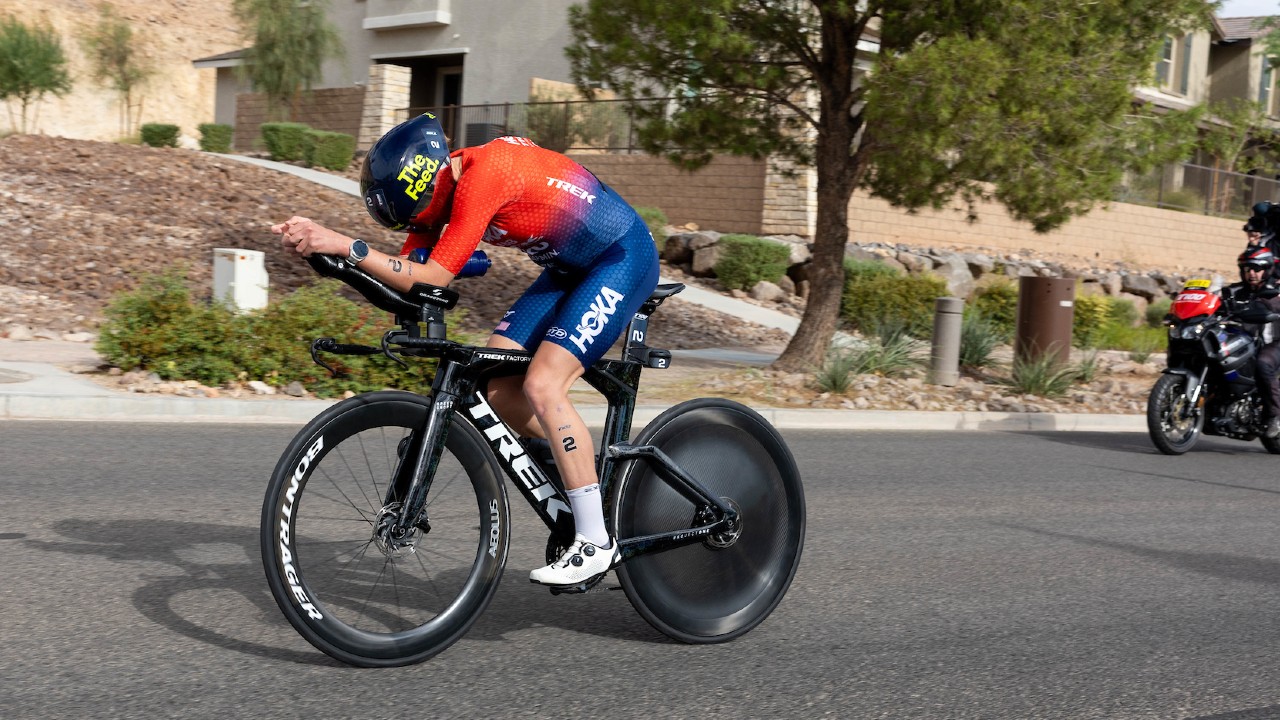
“Aerodynamics and the innovation associated with it are playing a massive part in the drop in times,” says Bottrill, “as we’ve seen in Hamburg and Brazil. Athletes are spending significant time and resources optimising kit and position, which not only speeds up the bike legs, but also for lower relative power, as the understanding of how to pace and ride the quickest has also increased.”
“But I think the optimisation of riders’ positions has played the biggest part in seeing times drop, as over 80% of the drag is from the rider, and there’s more and more options to allow athletes to get comfortable and achieve these positions.”
Fuelling the fire
Bottrill also cites what many consider to be the fourth element of triathlon, fuelling, and the increased knowledge in the science of nutrition being implemented to achieve further improvements in the sport.
“These improvements [in nutrition] mean that athletes can push harder on the bike, and still get to the run fresher and truly show their potential,” says Bottrill. “Bikes and athletes are also able to carry more fuel than ever, and in most cases even use this to improve their aerodynamics.”
To talk sport science, it’s back to Blow, who, not surprisingly, also believes fuelling is a key factor when it comes to improving times.
“While I have to be aware of my own biases here,” he admits, “it seems clear that more knowledge and better nutrition products that allow athletes to take 100+g of carbs per hour, are helping athletes go faster in longer races and possibly to recover faster and race more frequently, too”.
“It’s important to say that it’s not due to any magic in the products per se. More that using them effectively and learning to tolerate higher amounts of fuel consumption is simply effective. This is being shown in pro cycling, ultra and marathon running as well as triathlon, so it’s not unique to our sport.”
Super shoes and better tech are moving the sport on at ‘lightning speed’
The advancements in sport technology is another vast area which has seen incredible results across the sport. In speaking to the various experts for this piece, the advancements in shoe technology came up often.
Iden’s Kona run course record of 2:36:15, from 2022, was credited, in part, to his choice of pumps – a modified prototype of On’s Cloudboom Echo 3s, which were adjusted to his specific needs and said to boast a stack height in excess of 50mm.
“Carbon run shoes, which have a provable benefit to performance, have definitely had a massive impact – and will continue to do so,” says Blow.
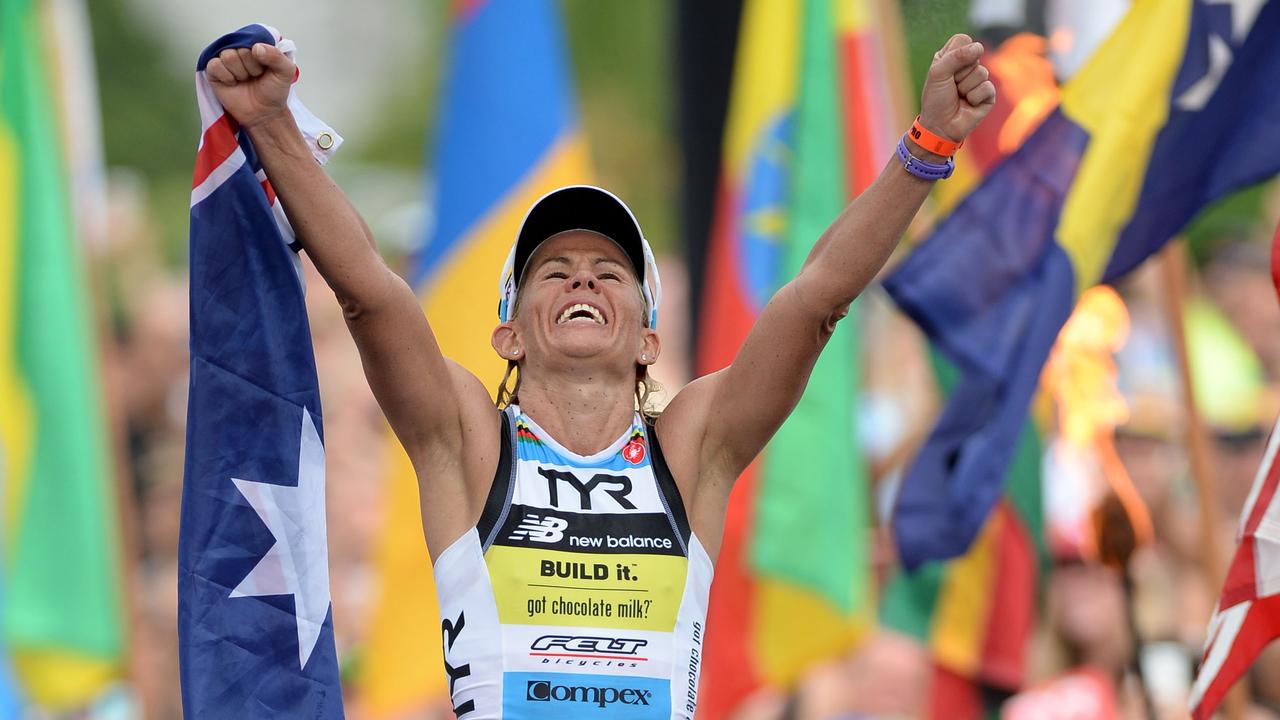
“That drop-dead fatigue seems to have been pushed further into the marathon,” adds three-time Ironman world champion Mirinda Carfrae, and one of the sport’s top runners.
Fellow former-pro-turned-coach, Tim Don, also mentions shoes alongside a whole host of new additions to the tri tech arsenal since he was competing:
“In 2014, maybe only a handful of us went into the wind tunnel, now it’s only a handful that don’t.”
“There’s also carbon shoes, bouncy shoes for training. MyWhoosh and specific indoor work. HRV (heart rate variability), ketones, S&C. All these things plus more are packaged together by the athlete’s team – and it’s a team, not just one coach now either. And that’s really moving the pro sport on at lightning speed.”
“Athletes will always find a way to keep getting faster.” How much quicker can the pros go over the Ironman triathlon distance?
So all this begs the question – just how much faster could times in the world of long-distance racing really get? Will we continue to see a plummet or are we now getting close to the sport’s limit? Over to our experts:
“I think that the trend of records being broken could well continue for some time yet,” believes Blow. “While periodically an era feels like it might represent a ‘peak’ in performance, history suggests people find ways to keep improving. Technology will always advance, and the sport still seems to be growing, so more money and participants will continue to push it forward.”
For Acworth, there’s always going to be a limit to performance.
“It’s going to get faster but like the 100 meters, it gets to a point where even with the best technology, training, conditions etc it just physiologically isn’t possible to go any faster. Under different race dynamics, we would have seen sub-8 hours in Hamburg, on the women’s side, and I see this dropping a lot in the coming years.
“On the men’s side, seven hours will be broken. It won’t be this year, but I think it certainly will be this decade.”
“I couldn’t put a number on it,” concludes Carfrae, “but mark my words it will keep getting faster. Maybe not the massive bump that we have seen in the past few years – unless there’s another big advancement in aerodynamics, shoe tech or nutrition etc. – but athletes will always find a way to keep getting faster.”
And so it seems the best is yet to come – and we’ve got front row seats.