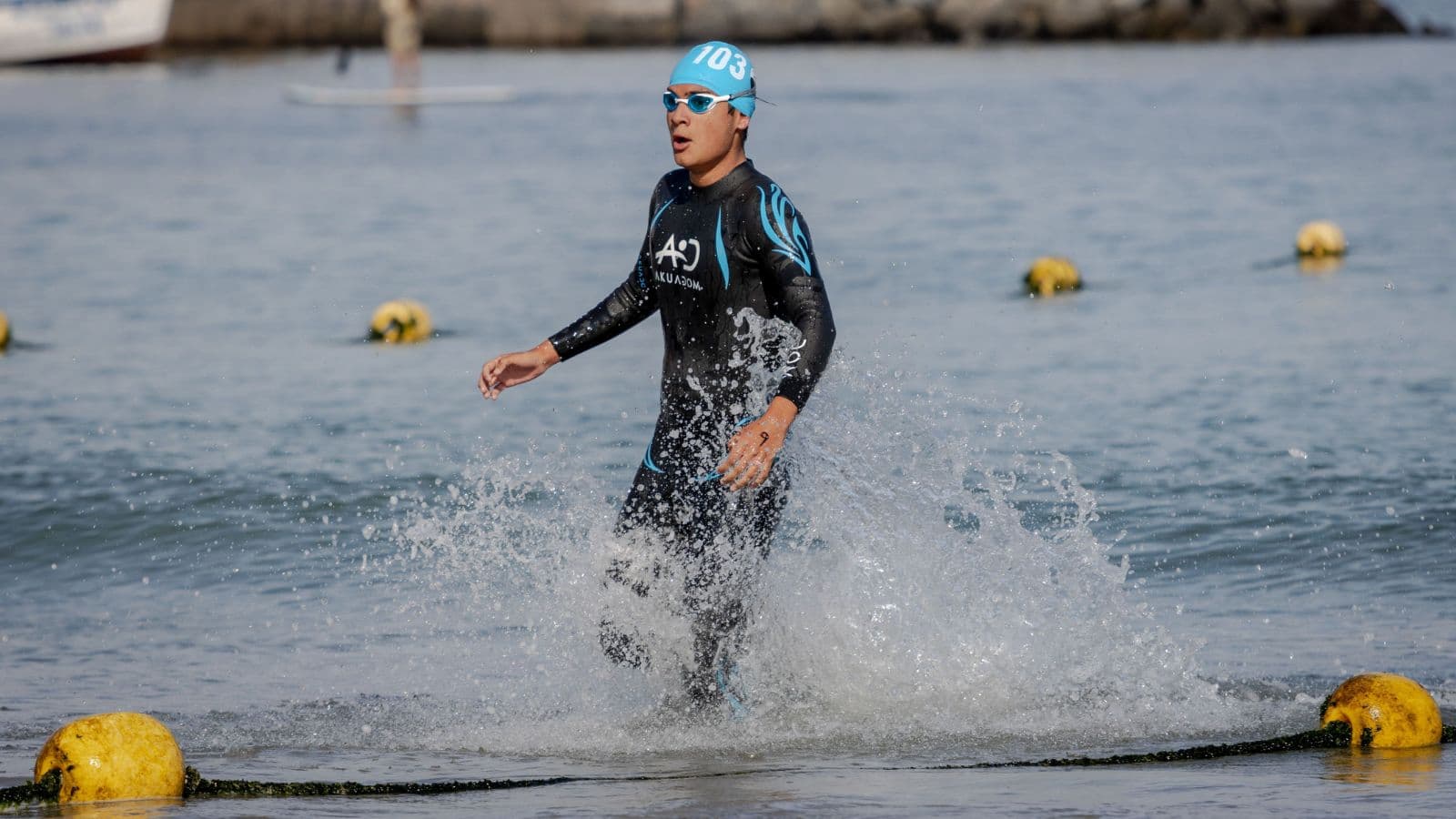


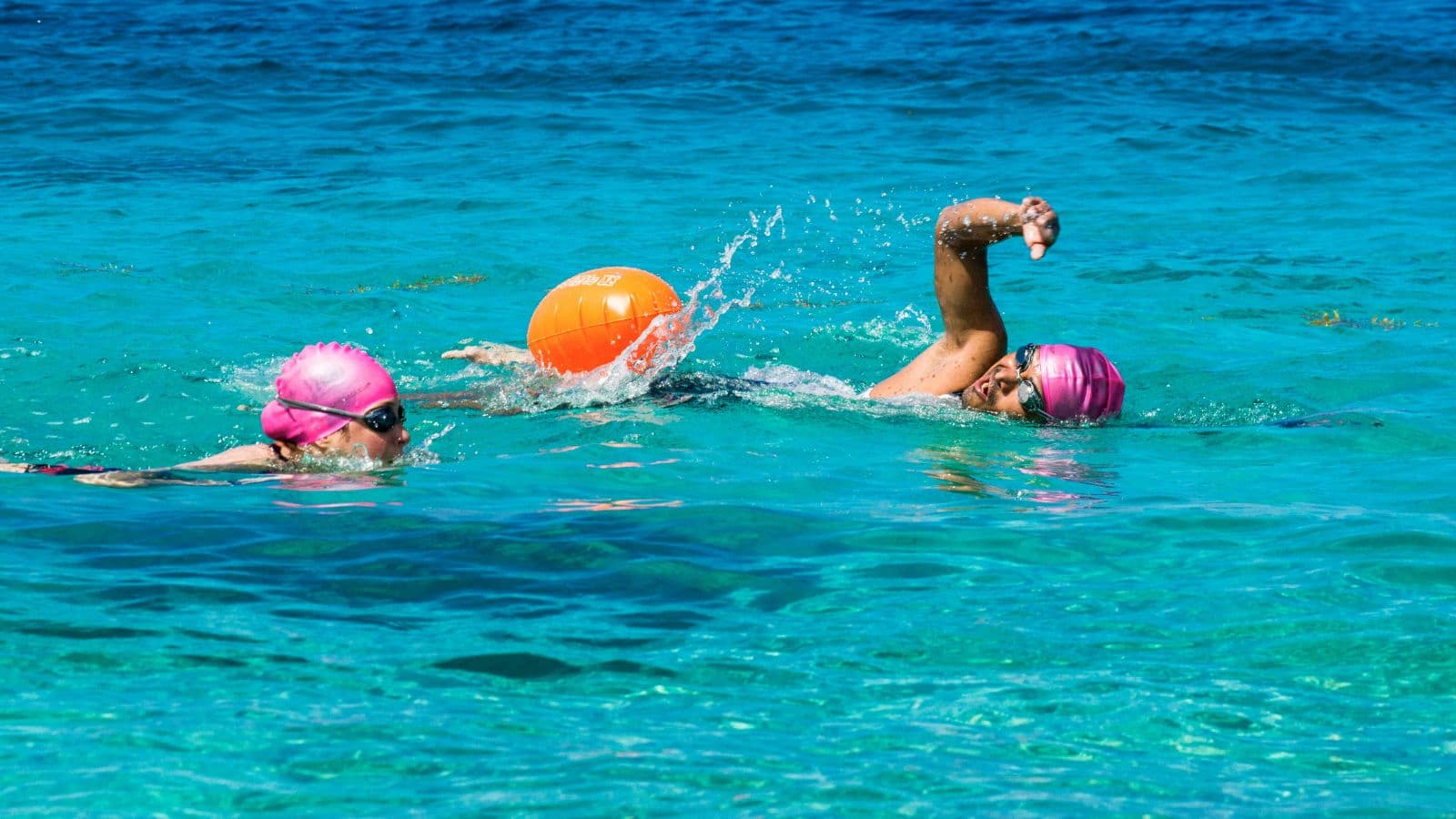
To turn around a buoy in open water, approach it on a controlled line, sight early, reduce unnecessary contact with other swimmers, and gradually change direction as you pass the buoy. You can use normal freestyle strokes for a wider turn or a tighter turning technique when space is limited. Buoy turns often feel harder during a triathlon because several swimmers may reach the same point at once. Poor positioning can force you to stop, lift your head repeatedly, or swim farther than necessary. A technically perfect tight turn is therefore not always the fastest option. The best approach depends on the course, direction of the turn, number of swimmers around you, and your confidence in close contact. Practicing different turning lines before race day helps you make better decisions rather than reacting at the last moment.
In Short
- Sight the buoy well before reaching it.
- Choose your approach line early.
- Avoid swimming directly into a crowded inside line.
- Keep swimming rather than stopping at the buoy.
- Use a wider freestyle turn when you have space.
- Practice turns in training rather than learning them on race day.
Sight the Buoy Before You Reach It
A good buoy turn begins well before the actual turn.
Sight periodically as you approach so you know:
- Where the buoy is.
- Which direction you need to turn.
- Where other swimmers are moving.
- Whether the inside line is congested.
- Where you want to position yourself.
You do not need to lift your head excessively high every few strokes. Brief, purposeful sighting is usually more efficient. The principles in why swimming straight matters in open water triathlon are particularly important here because an accurate approach can reduce unnecessary distance before and after the turn.
Choose Your Approach Line
Many swimmers aim directly for the inside of the turn because it covers less distance. During a crowded race, however, that area can become congested.
You may encounter:
- Slower swimmers.
- Physical contact.
- Interrupted strokes.
- Athletes stopping unexpectedly.
- Difficulty finding space to turn.
Taking a slightly wider line can allow you to maintain momentum and swim continuously. The best route depends on the race situation. A clear inside line can be efficient, while a congested inside line may cost more time than swimming a few extra meters.
Understand the Direction of the Turn
Know before the race whether you will pass each buoy on your left or right. Race organizers normally specify the course direction, and this should be part of your pre-race preparation.
Knowing the direction helps you decide:
- Which side to approach from.
- Where the crowd may concentrate.
- How to position your body.
- Where the next buoy will appear after the turn.
Do not simply follow the swimmers in front without knowing the course yourself. They can make navigation mistakes too.
Use a Simple Freestyle Turn
Beginners do not need a complicated turning technique. The simplest method is to continue swimming freestyle while gradually curving around the buoy.
As you approach:
- Sight the buoy.
- Maintain a controlled stroke.
- Begin changing direction.
- Swim around the buoy.
- Look toward the next course marker.
- Resume your normal line.
This approach may create a slightly wider arc, but it allows you to maintain rhythm and is often easier when you are still developing open water skills.
For beginners, smooth movement is usually more valuable than attempting an aggressive turn that interrupts swimming.
Use a Tighter Turn When Appropriate
Experienced swimmers may use a tighter technique to change direction more quickly. One option is a crossover style turn in which the body rotates more strongly while the arms help redirect the swimmer around the buoy. Some swimmers also use a brief sculling or shortened stroke movement to reposition themselves. The exact technique matters less than being able to perform it without stopping.
A tight turn can be useful when:
- There is clear space.
- You are comfortable near the buoy.
- The course requires a sharp change in direction.
- You have practiced the movement.
If the area is crowded, forcing a tight technical turn may provide no advantage.
Do Not Stop at the Buoy
A common beginner mistake is swimming to the buoy and then deciding what to do. This destroys momentum and allows swimmers behind you to catch up. Instead, approach, turn, and leave in one connected movement whenever possible. If you become disoriented, taking a moment to establish the correct direction is better than swimming the wrong way. But with regular practice, you should be able to make most turns without coming to a complete stop. Building enough endurance to maintain technique is also important. How can you improve your swim stamina for a triathlon can help you preserve controlled swimming when fatigue makes navigation more difficult.
Sight for the Next Buoy During the Turn
Do not keep looking at the buoy you have already reached. As your body changes direction, begin searching for the next marker. Once you identify it, align your body and return to normal freestyle. This prevents another common mistake: completing a good turn but then swimming several strokes in the wrong direction. If visibility is difficult, use larger fixed landmarks behind the next buoy when available. Buildings, trees, hills, or other prominent features may be easier to see from water level.
Expect Crowding Around Buoys
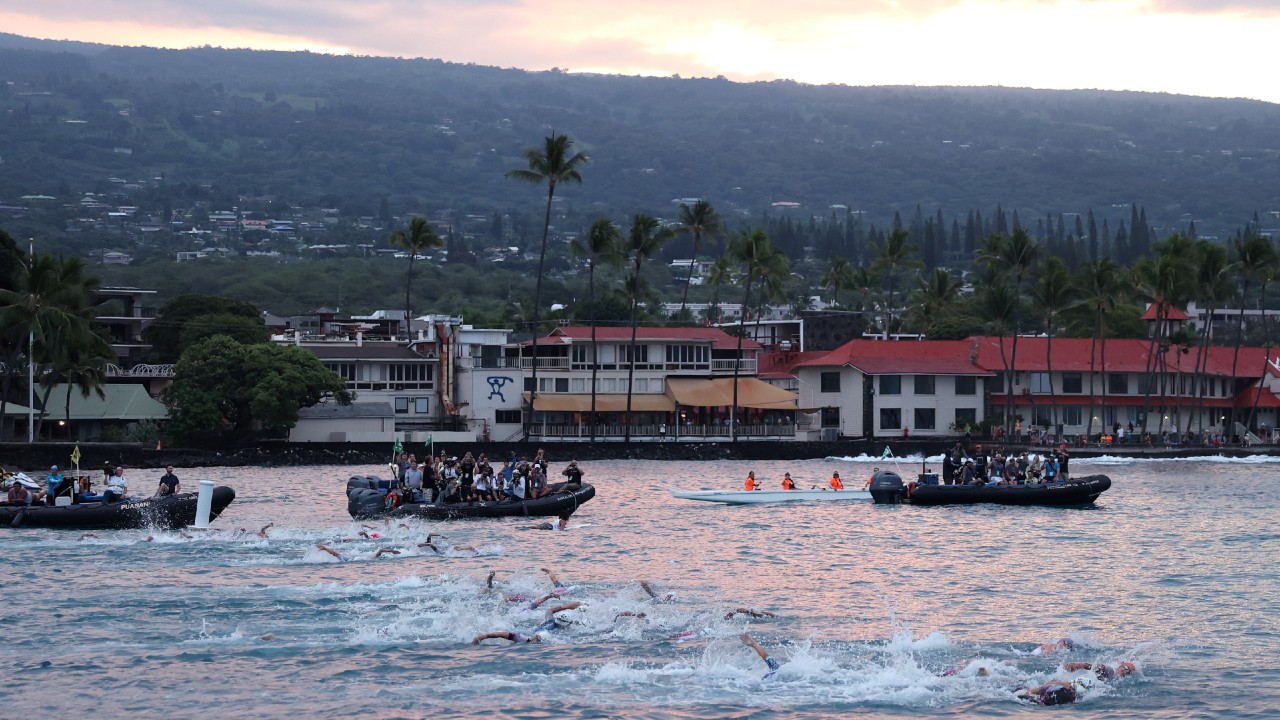
Buoys naturally concentrate swimmers. Athletes who were spread across a wide section of water may all converge on one small turning point. Some contact can therefore occur even when nobody is deliberately swimming aggressively. Stay calm if another swimmer touches your arm, leg, or shoulder. Maintain control and find clear water when possible.
If crowded swimming makes you anxious, why is level body positioning important for swimmers contains useful principles for positioning, maintaining composure, and dealing with close contact.
Avoid Fighting for the Inside Line
The inside line can save distance, but fighting for it is rarely worthwhile for a beginner. If several swimmers are already packed beside the buoy, moving slightly wider can provide cleaner water and uninterrupted strokes.
A wider turn may be faster if it prevents you from:
- Stopping.
- Getting trapped.
- Losing your stroke.
- Being pushed off line.
- Becoming anxious.
- Needing to accelerate suddenly afterward.
Race efficiency is about more than swimming the mathematically shortest route.
Maintain Your Stroke Rhythm
Your normal freestyle may shorten slightly when space becomes limited, but try not to completely lose your rhythm. If you are approaching a congested turn, slightly reducing speed before reaching the crowd can sometimes be more efficient than swimming directly into it and stopping. Once you have clear water after the turn, gradually return to your normal race rhythm. Good breathing technique helps you remain composed during these changes. How to coordinate breathing with your swim strokes in a triathlon can help make breathing more automatic when navigation requires additional attention.
Practice Turning in Both Directions
Do not practice only your preferred side. Race courses can require clockwise or counterclockwise turns, and some contain turns in both directions.
Set up a safe marker during open water practice and work on:
- Left turns.
- Right turns.
- Wide turns.
- Tighter turns.
- Approaching at different angles.
- Sighting immediately after turning.
If safe open water is unavailable, some directional movements can be practiced in a pool, although a pool cannot reproduce waves, poor visibility, or other swimmers surrounding a buoy.
Practice With Other Swimmers
Solo practice helps you learn the movement, but group practice adds the positioning demands you will encounter during racing. With training partners, practice approaching a marker from several different lines while maintaining safe and respectful contact.
Learn what it feels like when another swimmer is:
- Beside you.
- Slightly ahead.
- Crossing toward the buoy.
- Directly behind you.
Open water experience itself is valuable for beginners, particularly when the swim is their least familiar discipline. Why is swimming the hardest part of a triathlon for beginners explains several reasons pool fitness does not automatically create open water confidence.
Adjust the Turn for Waves and Current
Water conditions can change your approach. Waves may make the buoy difficult to see, while current can move you sideways as you approach. Sight more strategically when visibility is limited. You may need to look when you reach the top of a wave rather than when your head is in a trough. With current, aim according to how the water is moving you rather than repeatedly correcting at the last moment.
The goal remains the same: arrive at the buoy on a useful line with enough awareness to continue swimming smoothly.
Do Not Follow Feet Blindly
Drafting can reduce effort, but the swimmer ahead may choose a poor line.
A swimmer in front might:
- Miss the turn.
- Approach too wide.
- Enter congestion.
- Sight the wrong marker.
- Drift because of current.
You are responsible for your own navigation. Understanding how to improve every swim stroke effortlessly also helps explain why navigation decisions and course conditions can change the line swimmers take rather than every athlete following exactly the same path.
Practice the Complete Approach, Turn, and Exit
Do not train buoy turns as an isolated movement only. Practice swimming toward the marker at normal effort, making the turn, finding the next target, and continuing for another section. This teaches you to combine navigation with normal swimming.
A useful practice sequence is:
- Swim 50–100 meters toward a marker.
- Sight several times on approach.
- Complete the turn.
- Sight the next target.
- Swim away at controlled effort.
Stay Calm if the Turn Goes Wrong
Not every buoy turn will be clean. You may get boxed in, bumped, pushed wider than planned, or briefly lose sight of the next marker. Do not respond with an immediate sprint. First regain direction and breathing. Then return gradually to your normal effort. Sudden hard accelerations can waste energy, particularly when several turns remain. How to increase triathlon swim speed is most useful when speed is supported by efficient technique rather than repeated surges caused by poor positioning.
Common Mistakes
- Sighting the buoy too late.
- Automatically fighting for the inside line.
- Stopping before changing direction.
- Looking backward at the buoy after passing it.
- Following other swimmers without navigating independently.
- Sprinting immediately after a poor turn.
- Practicing turns only in one direction.
Practical Tips
- Learn the course direction before entering the water.
- Sight early on the approach.
- Choose your line based on congestion.
- Keep the turn continuous.
- Train both left and right turns.
- Practice safely with other swimmers.
- Prioritize clear water and rhythm over the shortest possible line.
Actionable Takeaways
A good buoy turn starts before you reach the marker. Sight early, understand the direction of the course, and choose an approach that gives you enough space to continue swimming. Beginners can use a simple curved freestyle turn. Tighter techniques can be added later when you can perform them confidently without disrupting your stroke. Do not automatically fight for the inside position. A slightly wider line through clear water can be more efficient than getting trapped in a crowded group.
As you complete the turn, shift your attention toward the next buoy and establish your new direction quickly. Practice the complete approach, turn, and exit in training so that buoy turns become part of normal open water swimming rather than a race-day obstacle.