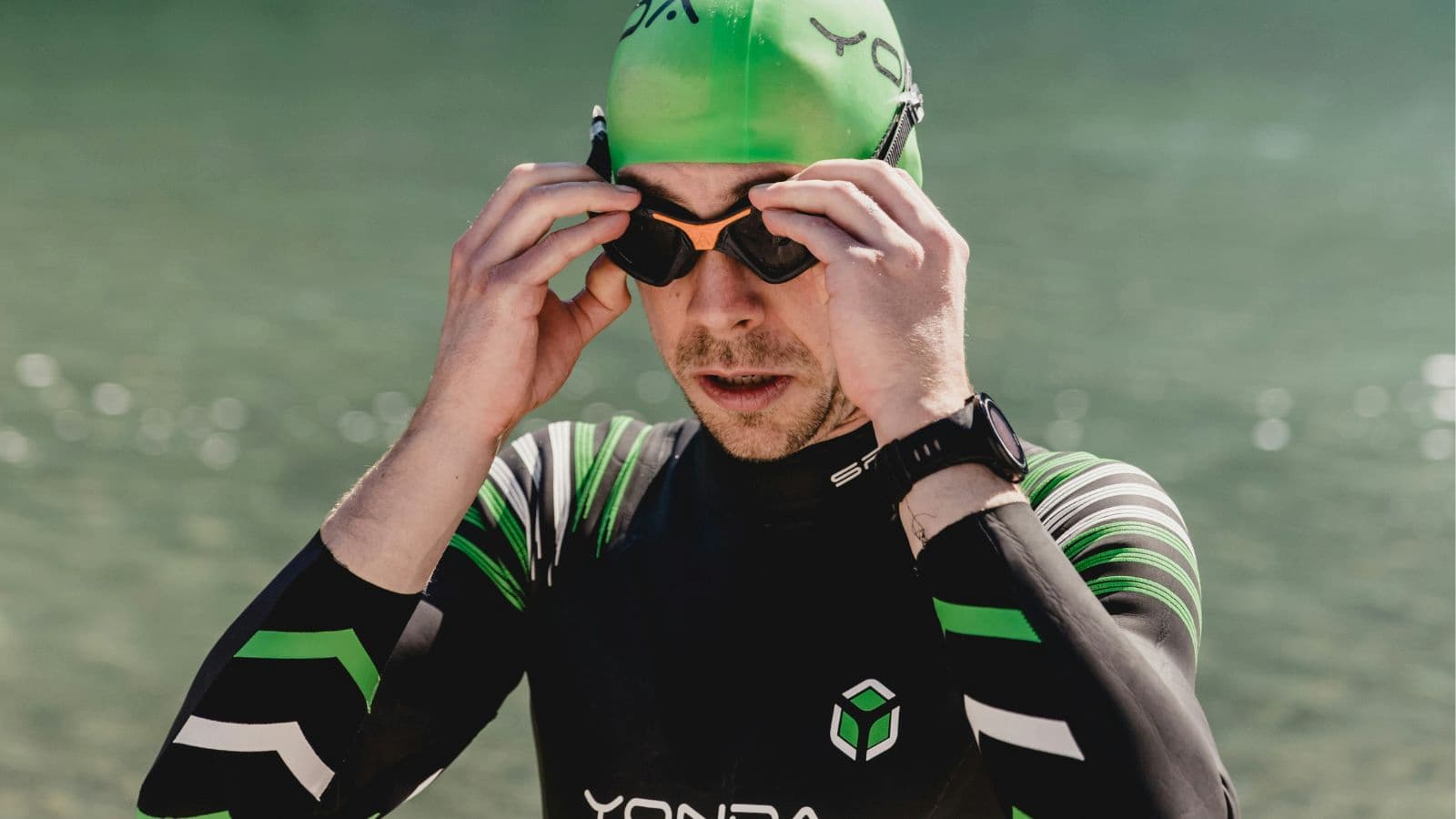


For many triathletes, the swim start is the most intimidating part of race day. Hundreds of athletes, cold water, deep water, limited visibility and the anticipation of the race can cause even experienced competitors to feel anxious. Pre-race nerves are normal and don’t necessarily indicate poor preparation. In fact, moderate levels of nervousness can improve alertness and performance. The goal isn’t to eliminate anxiety, it’s to manage it so you can swim efficiently instead of wasting energy fighting it. A calm start often leads to a better swim and a more enjoyable race.
Understand Why Swim Anxiety Happens
The swim start combines several unfamiliar challenges.
Common causes include:
- Deep or open water.
- Large groups of swimmers.
- Physical contact.
- Cold water.
- Fear of not keeping up.
- Uncertainty about the course.
Recognizing what specifically makes you nervous helps you prepare for it rather than fearing the unknown. Many beginners reduce uncertainty by following how to train for open water swimming in 8 weeks, where race-specific practice gradually builds confidence.
Accept That Nerves Are Normal
Even professional triathletes experience pre-race anxiety.
Typical symptoms include:
- Faster heartbeat.
- Butterflies in the stomach.
- Sweaty hands.
- Rapid breathing.
- Difficulty concentrating.
These are normal physiological responses to competition and don’t mean you’re unprepared. Trying to completely suppress them often makes them feel worse.
Arrive at the Venue Early
Rushing to the swim start increases stress.
Arriving early gives you time to:
- Register calmly.
- Set up transition.
- Check the course.
- Warm up.
- Use the toilets.
- Relax before your wave.
A calm morning routine reduces unnecessary pressure before entering the water. Many first-time athletes prepare their entire race week using training guide to your first triathlon, making race morning far more relaxed.
Warm Up in the Water
If the race allows it, spend a few minutes swimming before the start.
A short warm-up helps:
- Increase body temperature.
- Adjust to water temperature.
- Control breathing.
- Improve confidence.
- Reduce the shock of entering cold water.
Even a few easy minutes can make the start feel much more comfortable.
Control Your Breathing
Anxiety often causes rapid, shallow breathing.
Instead:
- Inhale slowly through your nose.
- Exhale fully through your mouth.
- Focus on long, controlled breaths.
- Repeat for one or two minutes.
Slowing your breathing helps lower your heart rate and improves your sense of control before the horn sounds.
Choose the Right Starting Position
You don’t have to begin on the front row.
If you’re nervous:
- Start to one side.
- Begin slightly behind faster swimmers.
- Give yourself space.
- Swim your own pace.
Positioning yourself appropriately reduces unnecessary contact during the opening minutes. Many athletes also improve confidence by understanding how to improve freestyle efficiency in open water, making it easier to maintain rhythm despite nearby swimmers.
Focus on the First 200 Metres
Don’t think about the entire race.
Instead, concentrate only on:
- Relaxing.
- Establishing your breathing.
- Finding your rhythm.
- Swimming smoothly.
Once you’ve settled into your stroke, anxiety usually decreases naturally. Breaking the swim into smaller sections makes the challenge feel more manageable.
Expect Some Physical Contact
Open water swimming is rarely as calm as pool training.
You may experience:
- Bumping shoulders.
- Light contact.
- Splashing.
- Crowded turns.
Expecting this beforehand prevents surprise if it happens during the race. Remain relaxed, keep swimming and avoid reacting emotionally.
Trust Your Training
Many first-time triathletes underestimate how well prepared they actually are.
Remind yourself that you’ve already practised:
- Swimming.
- Cycling.
- Running.
- Brick sessions.
- Open water skills.
Your race is simply an opportunity to demonstrate the work you’ve already completed. Athletes often reinforce this confidence by following how to train for a sprint triathlon, where race-specific sessions prepare them for competition.
Avoid Starting Too Fast
One of the biggest mistakes nervous athletes make is sprinting away from the start.
Instead:
- Swim comfortably.
- Breathe early.
- Settle into your normal stroke.
- Increase effort gradually if appropriate.
Swimming slightly easier during the opening minutes usually leads to a faster overall swim. This approach also complements how to pace a triathlon properly, where controlled effort early in the race preserves energy for the bike and run.
Develop a Simple Pre-race Routine
Consistency reduces anxiety.
Create a routine that includes:
- Checking equipment.
- Easy warm-up.
- Controlled breathing.
- Positive self-talk.
- One final equipment check.
Following the same sequence before every race creates familiarity and reduces uncertainty.
Practise Visualisation
Spend a few minutes imagining yourself:
- Walking confidently into the water.
- Breathing calmly.
- Swimming smoothly.
- Navigating the course.
- Exiting the water relaxed.
Visualisation prepares your mind for situations you’ve already rehearsed mentally.
Avoid Last-Minute Comparisons
It’s easy to look around and assume everyone else is more experienced.
Remember:
- Every athlete feels pressure.
- Every race has nervous competitors.
- Your race is against the course, not other people’s appearance.
Focus only on executing your own race plan.
Common Mistakes Before the Swim Start
Avoid these common errors:
- Starting too aggressively.
- Skipping the warm-up.
- Holding your breath.
- Starting in the wrong position.
- Comparing yourself with others.
- Trying new equipment.
- Ignoring hydration.
- Letting panic dictate your pace.
Most swim-start problems become much smaller once you settle into your rhythm.
Practical Tips
Before your swim starts:
- Arrive early.
- Warm up if possible.
- Control your breathing.
- Choose an appropriate starting position.
- Focus on smooth swimming.
- Trust your preparation.
- Stay relaxed during the opening minutes.
Many triathletes also build confidence by learning how to transition from pool to open water swimming, knowing exactly what comes after the swim and removing another source of race-day anxiety. Finally, athletes racing longer events often gain additional confidence from tips to improve your swim, where managing nerves becomes just as important as physical preparation.
The Bottom Line
Pre-race nerves before the swim start are completely normal and affect beginners and experienced triathletes alike. Rather than trying to eliminate anxiety, focus on controlling the factors you can influence, your breathing, preparation, positioning and mindset. When you trust your training, start at a comfortable pace and stay focused on your own race, those early nerves usually disappear within the first few minutes of swimming, allowing you to enjoy the rest of your triathlon.