

A triathlon race strategy is more than just pacing, it is the complete plan for how you manage effort, energy, transitions, nutrition, and mindset from the start of the swim to the finish line. Many athletes train hard but race poorly because they approach the event without a clear strategy. A smart race plan helps you stay controlled, avoid major mistakes, and perform consistently across all three disciplines.
The goal of a good triathlon strategy is not to go as hard as possible at every moment. It is to distribute your energy efficiently so you can maintain performance from start to finish.
Why Race Strategy Matters in Triathlon?
Triathlon is unique because performance in one discipline affects the next. Swimming too hard impacts the bike, and overbiking ruins the run. A successful race requires balancing effort across the entire event rather than focusing on one section in isolation.
Athletes who race strategically often outperform fitter competitors who pace poorly or mismanage nutrition. This becomes especially important in longer events where fatigue accumulates over several hours, similar to principles discussed in training for a 70.3 and half ironman triathlon, where energy management is critical.
Start With a Clear Race Plan
Before race day, you should know:
- Your pacing targets
- Fueling strategy
- Transition approach
- Equipment setup
- Mental checkpoints
Having a clear plan reduces decision fatigue during the race and helps you stay calm under pressure.
The Swim: Stay Controlled Early
One of the biggest mistakes in triathlon is starting the swim too aggressively. Adrenaline, crowding, and race excitement often push athletes above their sustainable effort.
Instead:
- Start slightly controlled
- Focus on rhythm and breathing
- Avoid fighting unnecessary battles in the water
Swimming efficiently conserves energy for the rest of the race. This is especially important in open water events, where composure and positioning matter, similar to techniques discussed in sighting properly in open water swimming, where smooth navigation improves efficiency.
Positioning During the Swim
Good positioning helps reduce wasted energy.
To improve efficiency:
- Stay relaxed in crowded sections
- Draft when possible
- Avoid zig-zag swimming
- Focus on smooth strokes rather than speed bursts
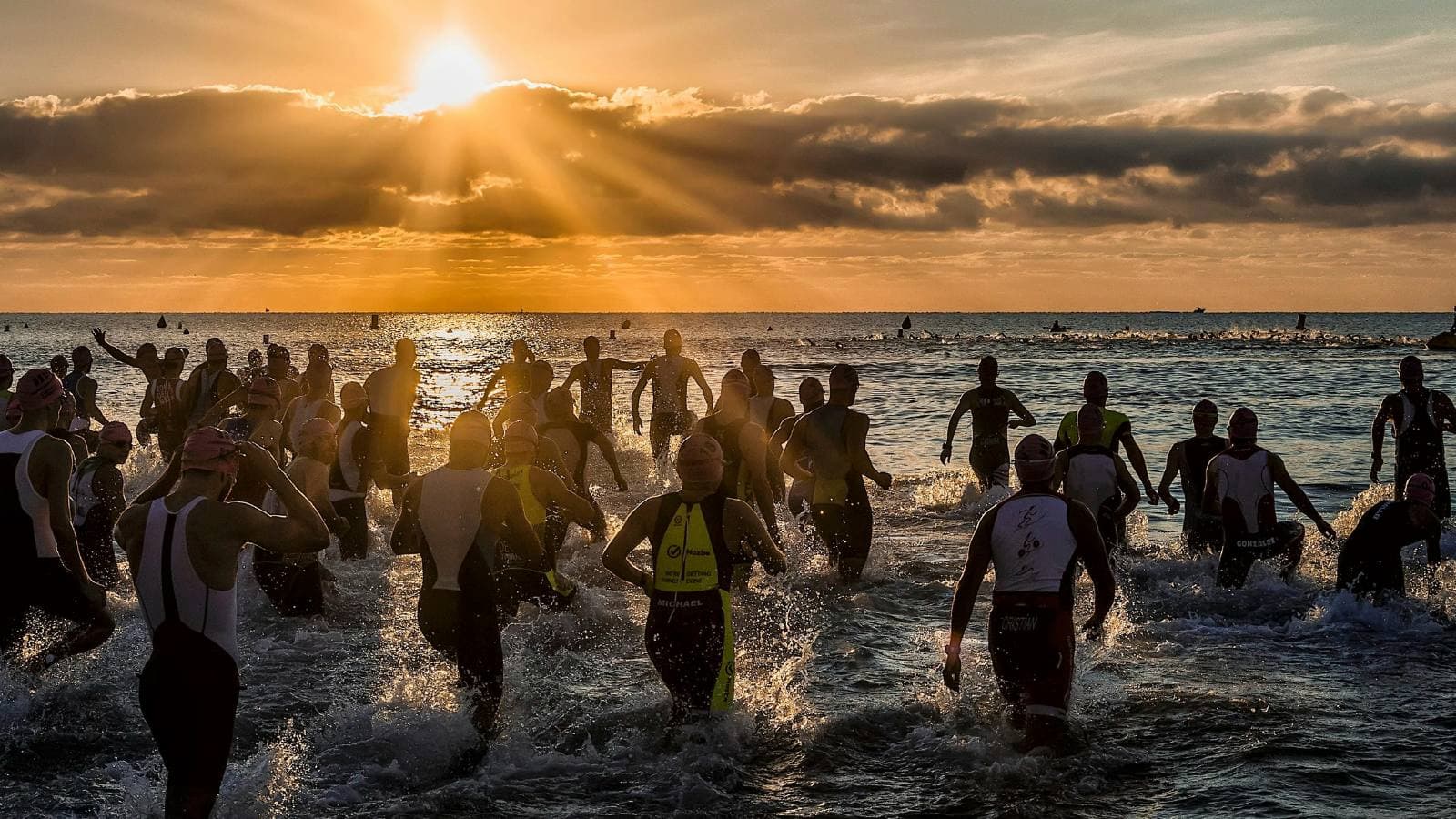
A calm and controlled swim sets up the rest of the race much more effectively than an overly aggressive start.
Transition One: Stay Calm and Efficient
Transitions are often overlooked, but they are part of the race.
The key is efficiency, not panic.
During T1:
- Control your breathing after the swim
- Move smoothly through gear changes
- Avoid rushing and making mistakes
A calm transition saves both time and mental energy.
The Bike Leg: Ride Within Yourself
The bike section is where many races are won, or lost. Riding too hard feels manageable early on but creates fatigue that destroys the run later.
Your bike pacing should feel controlled and sustainable. This is why pacing strategy is essential, as explained in pacing and fueling the bike leg in a triathlon, where controlled effort leads to stronger overall performance.
Fuel Consistently on the Bike
The bike is the best opportunity to fuel properly because intensity is usually lower than during the run.
Focus on:
- Consistent carbohydrate intake
- Steady hydration
- Electrolyte management
Waiting until you feel hungry or dehydrated is usually too late. Fueling consistently supports both bike and run performance.
Use Terrain Strategically
Smart triathletes adjust effort based on terrain rather than trying to maintain constant speed.
On climbs:
- Keep effort controlled
- Avoid large power spikes
- On descents:
- Recover while maintaining momentum
Managing terrain efficiently reduces unnecessary fatigue and improves pacing consistency. This becomes especially useful in technical races, similar to approaches in getting better at climbing on the bike in triathlon, where controlled effort improves overall efficiency.
Transition Two: Prepare for the Run
The final minutes of the bike should prepare your body for running.
Before T2:
- Increase cadence slightly
- Relax your upper body
- Mentally reset for the run
Smooth transitions help reduce the heavy-leg feeling many athletes experience after cycling. This adaptation is also improved through brick workout in triathlon and why it matters, where practicing transitions improves coordination and pacing.
Start the Run Conservatively
The opening section of the run often feels awkward because your body is adjusting from cycling mechanics to running mechanics.
One of the biggest mistakes is starting too fast because the finish feels close. Instead:
- Settle into rhythm gradually
- Control effort early
- Allow your legs to adapt
A controlled start usually leads to a stronger second half of the run.
Break the Race Into Segments
Long races become more manageable when broken into smaller sections.
Instead of focusing on the total distance, concentrate on:
- The next buoy
- The next aid station
- The next climb
- The next kilometre
This helps maintain focus and reduces mental overwhelm.
Adapt Your Strategy During the Race
- No race unfolds perfectly. Weather, fatigue, or nutrition issues may force adjustments.
- Good athletes stay flexible and respond calmly rather than panicking.
Adaptation is a key part of racing successfully, especially in longer events where conditions change over time.
Manage Your Effort, Not Your Emotions
Race excitement often causes athletes to abandon their pacing plan.
Stay disciplined by focusing on effort rather than competitors around you.
Many athletes who start aggressively fade significantly later in the race. Staying controlled early often leads to stronger finishing performances.
Practice Your Strategy in Training
Race strategy should not only exist on paper.
Use training sessions to practice:
- Fueling
- Pacing
- Transitions
- Equipment setup
This reduces uncertainty on race day and builds confidence. Structured preparation is also important in choosing a free triathlon training plan for sprint olympic and ironman, where consistency and planning support long-term improvement.
Avoid Common Race Strategy Mistakes
- Starting the swim too hard
- Overbiking early in the race
- Ignoring fueling until fatigue appears
- Rushing transitions
- Starting the run too aggressively
Avoiding these mistakes alone can significantly improve overall performance.
Practical Triathlon Race Strategy Tips
- Start controlled in every discipline
- Fuel early and consistently
- Use transitions to reset mentally
- Adapt pacing to terrain and conditions
- Stay patient during the run
- Focus on smooth execution rather than aggression
What You Should Do?
Start by creating a simple race plan before every event. Define pacing goals, fueling timing, and transition priorities clearly. Practice these strategies during training so they feel natural on race day.
Focus on staying controlled and consistent rather than chasing speed too early. Supporting your race strategy with proper preparation, like approaches used in how to fuel for an ironman triathlon effectively, helps maintain energy and performance throughout the event.
The athletes who race best are not always the fittest, they are often the ones who manage their energy and decisions most effectively from start to finish.