
Swim paddles are one of the most effective tools for improving strength, feel for the water, and stroke mechanics when used correctly. They increase resistance during each pull, forcing swimmers to engage the upper body more effectively while improving awareness of hand positioning and catch mechanics. However, paddles can also create shoulder strain, reinforce poor technique, and increase fatigue quickly if used incorrectly. Many triathletes make the mistake of using paddles too early, too often, or with poor mechanics.
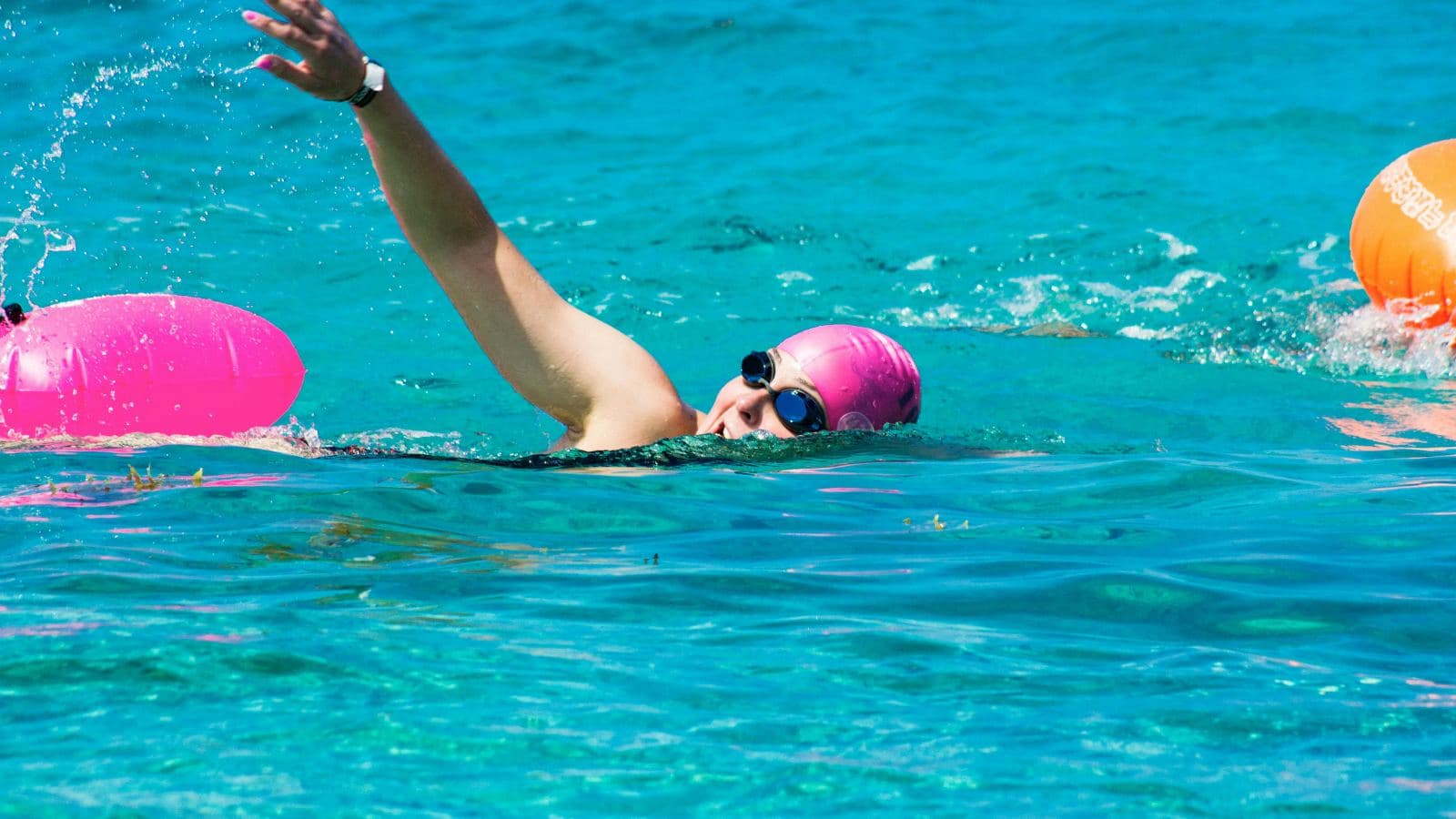
The goal of paddle work is not simply swimming harder. Proper paddle training improves efficiency, body position, propulsion, and strength without compromising stroke quality. This becomes especially important during structured swim progression like improving every swim stroke effortlessly where efficiency matters more than forcing speed.
What Do Swim Paddles Actually Do?
Swim paddles increase the surface area of the hands, which creates more resistance against the water during each pull.
This changes the stroke in several ways:
- Increased upper-body load
- Greater feel for water pressure
- Improved awareness of the catch phase
- Higher strength demand
- More emphasis on proper pull mechanics
When technique is good, paddles help swimmers develop stronger and more efficient strokes. When technique is poor, paddles magnify technical flaws and place excessive stress on the shoulders.
Why Triathletes Use Swim Paddles?
Triathletes often use paddles because swimming relies heavily on technical efficiency and upper-body endurance.
Proper paddle work can improve:
- Pull strength
- Stroke awareness
- Swim endurance
- Body alignment
- Catch efficiency
- Open-water strength
Paddles also help swimmers feel connected to the water more effectively. Many swimmers struggle to engage the forearm and maintain pressure throughout the pull phase. Paddles provide immediate feedback when mechanics break down. This becomes particularly valuable during endurance-focused preparation discussed in fixing breathing issues during swimming where swim efficiency directly affects energy conservation for cycling and running.
Start with Small Paddles First
One of the most common mistakes is choosing paddles that are too large. Oversized paddles dramatically increase shoulder stress and often encourage poor mechanics.
Smaller paddles are usually better for:
- Technique development
- Shoulder safety
- Controlled progression
- Better stroke awareness
Beginners should focus on maintaining natural stroke rhythm rather than forcing power. The goal is controlled resistance, not maximum load.
Technique Must Stay the Priority
Paddles should reinforce good swimming mechanics rather than override them.
Important technical focuses during paddle work include:
- High elbow catch
- Stable body position
- Controlled rotation
- Smooth pull path
- Relaxed recovery
- Balanced breathing
If stroke quality deteriorates significantly while using paddles, resistance is too high or fatigue is excessive. Paddles magnify technical errors quickly. This is why many coaches recommend developing efficient freestyle mechanics first through work like how to swim as a beginner before increasing resistance significantly.
Avoid Excessive Paddle Volume
More paddle work does not automatically improve swimming.
Excessive paddle volume commonly causes:
- Shoulder irritation
- Poor movement patterns
- Overloaded lats
- Excess fatigue
- Reduced stroke quality
Paddles are usually most effective when integrated strategically into selected parts of sessions rather than used continuously.
Many swimmers benefit from:
- Short paddle intervals
- Technique-focused paddle sets
- Controlled aerobic paddle work
Long nonstop paddle sessions often create unnecessary fatigue and increase injury risk.
Use Paddles for Specific Training Goals
Different paddle sessions can target different adaptations.
Examples include:
- Technique awareness
- Pull strength
- Aerobic endurance
- Open-water resistance tolerance
- Stroke efficiency
Useful paddle sets include:
- Short controlled intervals
- Pull buoy paddle work
- Aerobic steady swimming
- Technique-focused drills
The best paddle sessions maintain smooth mechanics under moderate fatigue rather than chasing exhaustion.
Pull Buoys and Paddles Often Work Well Together
Many swimmers combine paddles with pull buoys.
This setup:
- Reduces kick contribution
- Increases upper-body emphasis
- Improves body alignment
- Helps isolate pull mechanics
However, excessive pull buoy use can also create dependency and reduce natural body balance over time. Paddles and pull buoys should support technique rather than replace normal freestyle development completely.
Shoulder Health Matters with Paddle Training
The shoulders experience significantly higher loading when paddles are used.
Poor technique combined with excessive paddle volume commonly leads to:
- Rotator cuff irritation
- Shoulder impingement
- Tendon overload
- Muscular tightness
Swimmers should stop paddle work immediately if sharp shoulder discomfort develops.
Important shoulder-protection habits include:
- Gradual progression
- Smaller paddles initially
- Good mobility
- Proper warm-ups
- Controlled volume
Shoulder durability becomes especially important during higher swim-frequency periods described in improving your swim as a beginner.
Paddles Improve Feel for the Water
One of the biggest benefits of paddles is improved feel for water pressure. Efficient swimmers maintain consistent pressure throughout the pull phase.
Paddles amplify this sensation and help swimmers identify:
- Slipping hands
- Dropped elbows
- Uneven pulling
- Poor catch positioning
The goal is developing better awareness rather than simply creating muscular fatigue.
Timing and Rhythm Still Matter
Some swimmers lose stroke rhythm while using paddles because they focus entirely on pulling harder.
Efficient swimming still requires:
- Controlled timing
- Smooth rotation
- Balanced breathing
- Stable tempo
Power without rhythm often reduces overall efficiency. Paddle work should support coordinated movement rather than isolated upper-body effort.
Paddles Are Not Only for Advanced Swimmers
Beginners can use paddles successfully if progression is controlled.
However, newer swimmers should prioritise:
- Basic body position
- Breathing mechanics
- Stroke timing
- Relaxation in the water
before introducing heavy paddle work. Smaller technique-oriented paddles usually work best initially.
Athletes building confidence through your complete first triathlon guide often benefit more from controlled technique work than excessive resistance training.
Paddle Work Should Match Training Goals
Paddle use should align with the purpose of the swim session.
Examples:
- Aerobic sessions → controlled moderate paddle work
- Technique sessions → short precision-focused intervals
- Strength sessions → slightly higher resistance
- Recovery sessions → minimal or no paddles
Not every swim session needs equipment.
Good swimming still depends primarily on efficient freestyle mechanics.
Common Paddle Training Mistakes
Many triathletes misuse paddles through avoidable habits.
Common mistakes include:
- Choosing oversized paddles
- Swimming too hard
- Ignoring shoulder discomfort
- Using paddles every session
- Sacrificing technique for power
- Skipping warm-ups
- Pulling too aggressively
- Overextending the stroke
Most shoulder problems linked to paddles come from excessive load combined with poor mechanics.
Practical Ways to Add Paddles Safely
Triathletes can integrate paddles effectively by:
- Starting with smaller paddles
- Limiting paddle volume initially
- Focusing on technique first
- Maintaining relaxed shoulders
- Combining paddles with controlled aerobic work
- Monitoring fatigue carefully
- Building gradually over time
Consistency and technical quality matter more than resistance size.
Paddle Work Can Improve Open-Water Swimming
Open-water racing places additional resistance demands on swimmers because of:
- Wetsuits
- Waves
- Crowded conditions
- Variable pacing
- Fatigue accumulation
Paddle training helps swimmers tolerate sustained pulling demands more effectively during longer races. This becomes increasingly useful during endurance preparation like sighting properly in open water swimming where swim efficiency supports total-race energy management.
Recovery Still Matters
Paddle sessions create additional muscular stress compared to regular swimming.
Recovery becomes important for:
- Shoulder health
- Muscle adaptation
- Stroke quality
- Long-term consistency
Triathletes balancing swimming alongside cycling and running must manage overall fatigue carefully.
Recovery habits discussed in staying motivated during recovery of a triathlon become even more important when upper-body training load increases.