

Thigh cramps are one of the most frustrating problems triathletes experience during racing. They can appear suddenly during the swim, bike, or run and immediately affect pacing, power output, and movement control. In severe cases, cramps force athletes to stop completely.
Most thigh cramps are caused by a combination of fatigue, pacing mistakes, muscular overload, dehydration, electrolyte imbalance, and insufficient race preparation rather than a single isolated issue. The quadriceps and hamstrings work continuously throughout triathlon racing. When muscles become overloaded or fatigued beyond what they are prepared for, cramping risk rises sharply.
Stopping thigh cramps starts long before race day. Proper pacing, conditioning, hydration, nutrition, and muscular durability all play major roles in preventing cramping during competition. This becomes especially important during longer events explained in training for a half and 70.3 triathlon, where muscular fatigue accumulates progressively over several hours.
Fatigue Is the Biggest Cause of Thigh Cramps
Muscular fatigue is one of the strongest predictors of cramping during endurance racing.
As fatigue increases:
- Neuromuscular control declines
- Muscles become less coordinated
- Force production becomes inefficient
- Muscle fibres fire abnormally
This creates the conditions where cramping becomes more likely. Many athletes assume cramps are only caused by electrolytes, but muscular overload is often the primary trigger. Triathletes who train consistently for race-specific demands usually experience fewer severe cramps because their muscles tolerate fatigue more effectively.
Cycling Too Hard Often Triggers Run Cramps
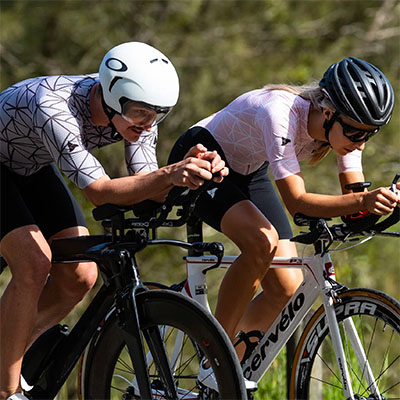
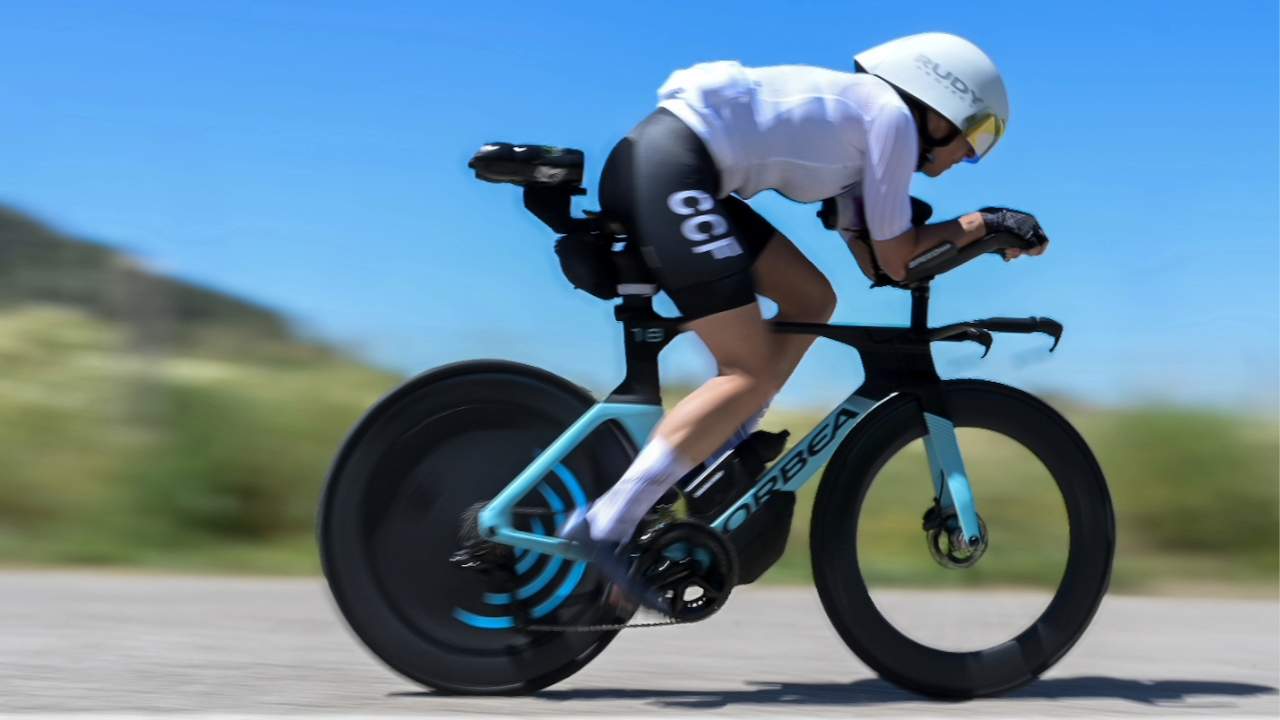
Many thigh cramps begin during the bike leg but only become noticeable later during the run.
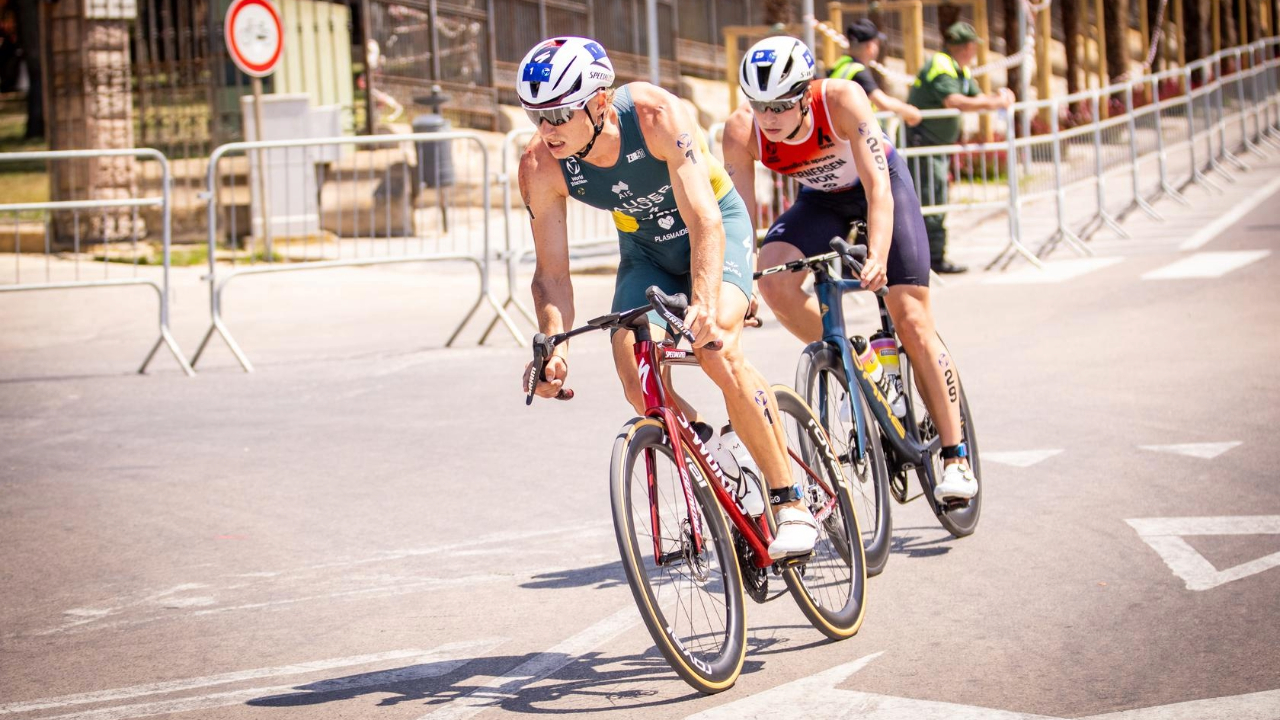
Aggressive cycling can overload:
- Quadriceps
- Hip flexors
- Hamstrings
- Calves
When athletes ride above sustainable effort:
- Glycogen depletion accelerates
- Muscular fatigue rises sharply
- Running mechanics deteriorate later
This is one reason why pacing discipline discussed in becoming an efficient cyclist strongly influences cramp risk during the run.
Dehydration Increases Cramp Risk
Sweat loss during racing affects:
- Fluid balance
- Blood volume
- Muscle function
- Nerve signalling
As dehydration progresses, muscles fatigue more quickly and become less efficient. Hot conditions increase this problem significantly because sweat loss accelerates. Triathletes who begin races already slightly dehydrated often struggle much earlier during longer events.
Hydration strategies become increasingly important during preparation like fueling for an ironman without GIT issues where fluid management directly affects endurance performance.
Electrolyte Loss Can Contribute
Sodium, potassium, magnesium, and other electrolytes help regulate muscular contraction and nerve function.
Heavy sodium loss through sweat may increase cramping likelihood in some athletes, especially during:
- Hot races
- Long-course racing
- High sweat-rate conditions
Signs of high sodium loss may include:
- Salt residue on clothing
- Frequent cramping
- Heavy sweating
- Strong sweat saltiness
Electrolytes alone rarely solve cramping completely, but they remain an important part of overall race management.
Poor Run Fitness Increases Cramping Risk
Thigh cramps commonly appear when race intensity exceeds current fitness.
Athletes who lack sufficient:
- Aerobic conditioning
- Muscular endurance
- Run durability
often compensate mechanically once fatigue develops. This places additional stress on already fatigued muscles.
Triathletes improving endurance through brick workouts every triathlete should try usually adapt more effectively to race-specific fatigue patterns.
Running Form Changes under Fatigue
As fatigue increases during racing:
- Stride mechanics deteriorate
- Cadence drops
- Posture collapses
- Overstriding increases
- Muscle recruitment changes
Poor mechanics increase muscular stress and often overload the quadriceps or hamstrings further. Efficient running form helps distribute workload more evenly under fatigue conditions.
Athletes improving efficiency through mental strategies that can improve triathlon often reduce late-race muscular breakdown significantly.
Heat Makes Cramping Worse
Hot weather increases:
- Sweat loss
- Dehydration
- Cardiovascular strain
- Muscular fatigue
- Energy expenditure
Triathletes racing in heat usually experience:
- Higher heart rates
- Faster glycogen depletion
- Reduced cooling efficiency
This combination often accelerates thigh fatigue and increases cramp likelihood.
Athletes preparing specifically for warm conditions generally tolerate heat stress more effectively during racing.
Sudden Pace Changes Trigger Muscle Overload
Large surges in effort commonly trigger cramps.
Examples include:
- Sprinting out of transition
- Aggressive hill climbing
- Chasing competitors suddenly
- Starting the run too hard
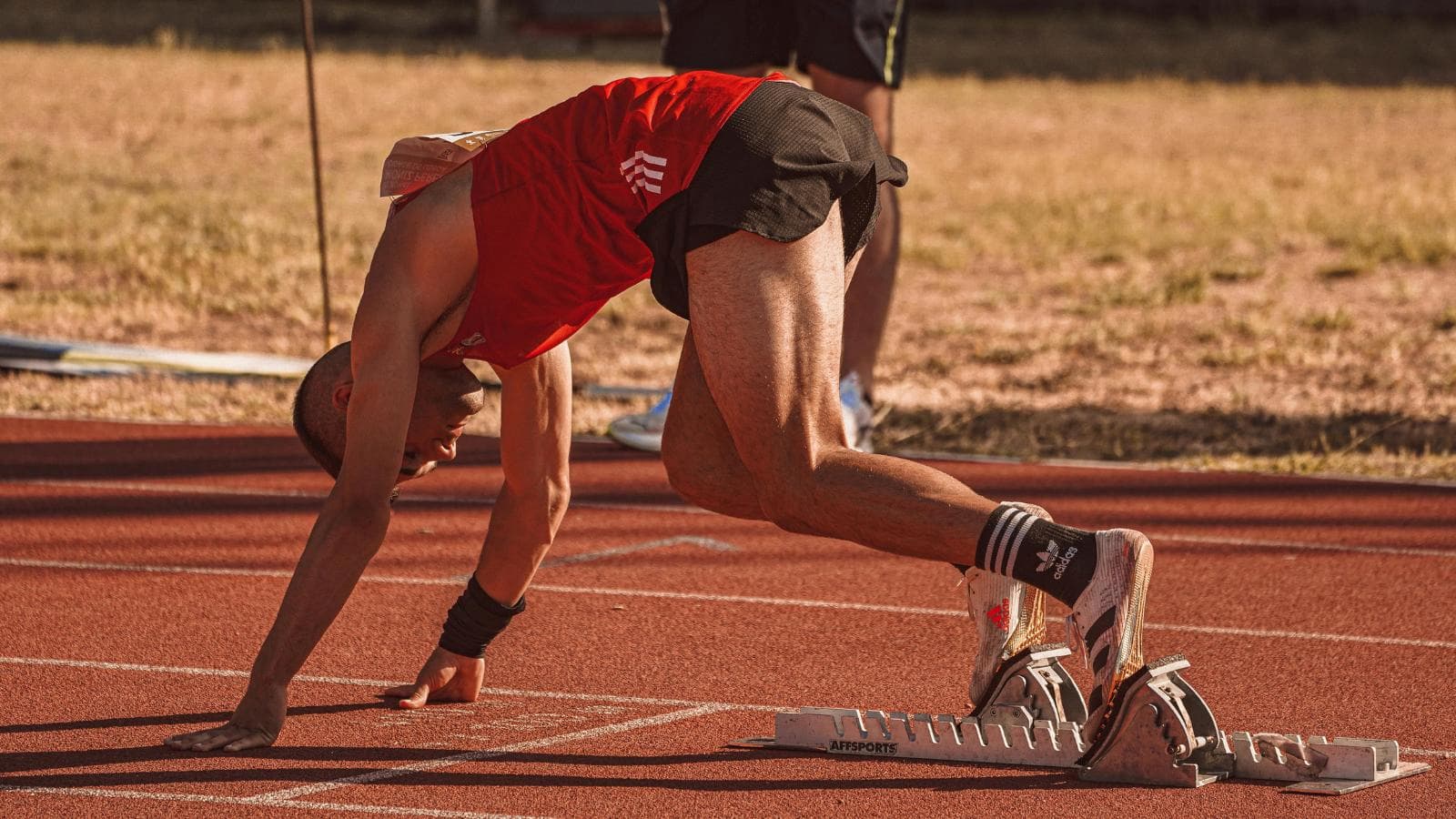
Muscles already near fatigue threshold often cramp when force demands spike abruptly.
Controlled pacing usually reduces this risk substantially.
Weak Glutes Can Overload the Quadriceps
Poor hip stability often forces the quadriceps to compensate excessively during running and cycling.
Weak glutes may contribute to:
- Early quad fatigue
- Reduced running economy
- Increased muscular tension
- Poor posture under fatigue
Strength training improves:
- Stability
- Force distribution
- Running efficiency
- Fatigue resistance
Useful exercises include:
- Split squats
- Step-ups
- Glute bridges
- Single-leg deadlifts
This becomes especially valuable during long-course preparation explained in triathlon time for beginners.
Nutrition Errors Lead to Fatigue Faster
Poor fueling increases muscular fatigue dramatically.
Without adequate carbohydrate intake:
- Glycogen stores decline
- Power output drops
- Muscles fatigue earlier
- Cramp risk increases
Longer races require consistent carbohydrate intake to support:
- Muscular endurance
- Nerve function
- Coordination
- Pacing stability
Athletes who underfuel often experience cramps late in races because muscular energy availability becomes severely compromised.
Transition Running Can Trigger Quad Cramps
The bike-to-run transition creates sudden changes in:
- Cadence
- Muscle recruitment
- Impact loading
- Hip movement
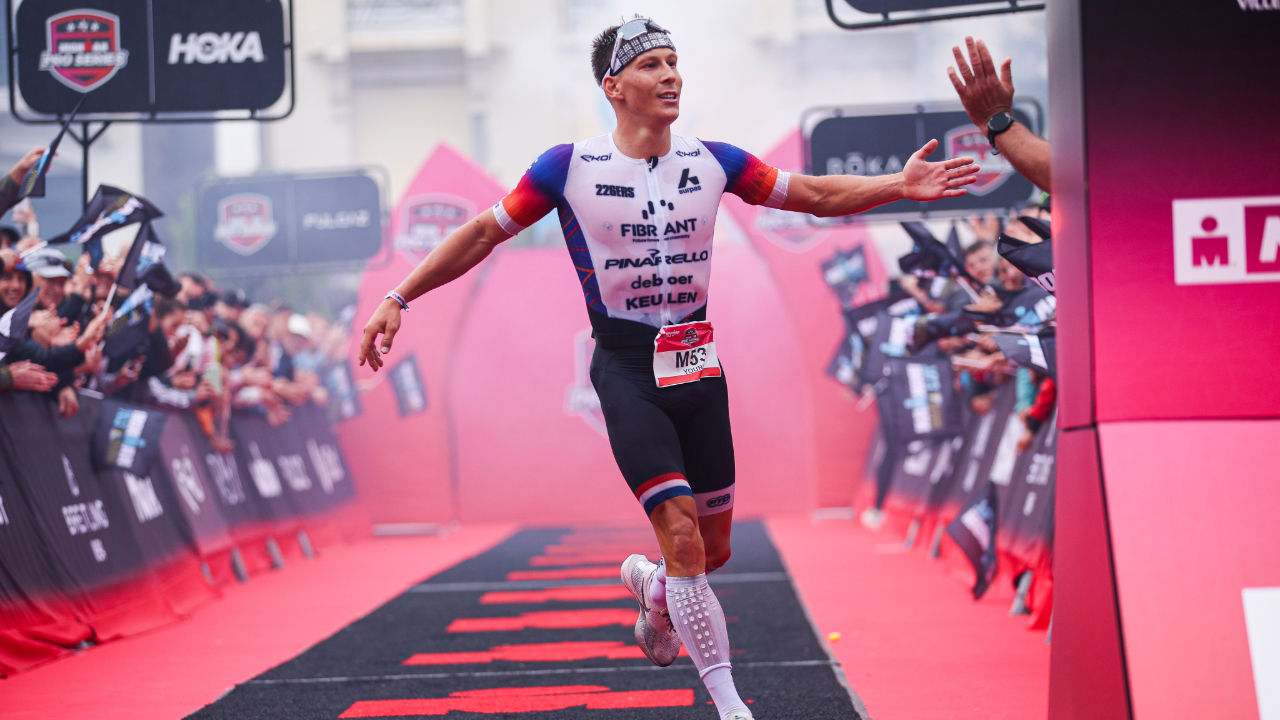
The quadriceps often feel overloaded during the opening run kilometres because they have already worked heavily during cycling.
This is one reason why athletes practising 7 out of 10 ideal workout for running in a triathlon adaptation sessions usually improve transition comfort over time.
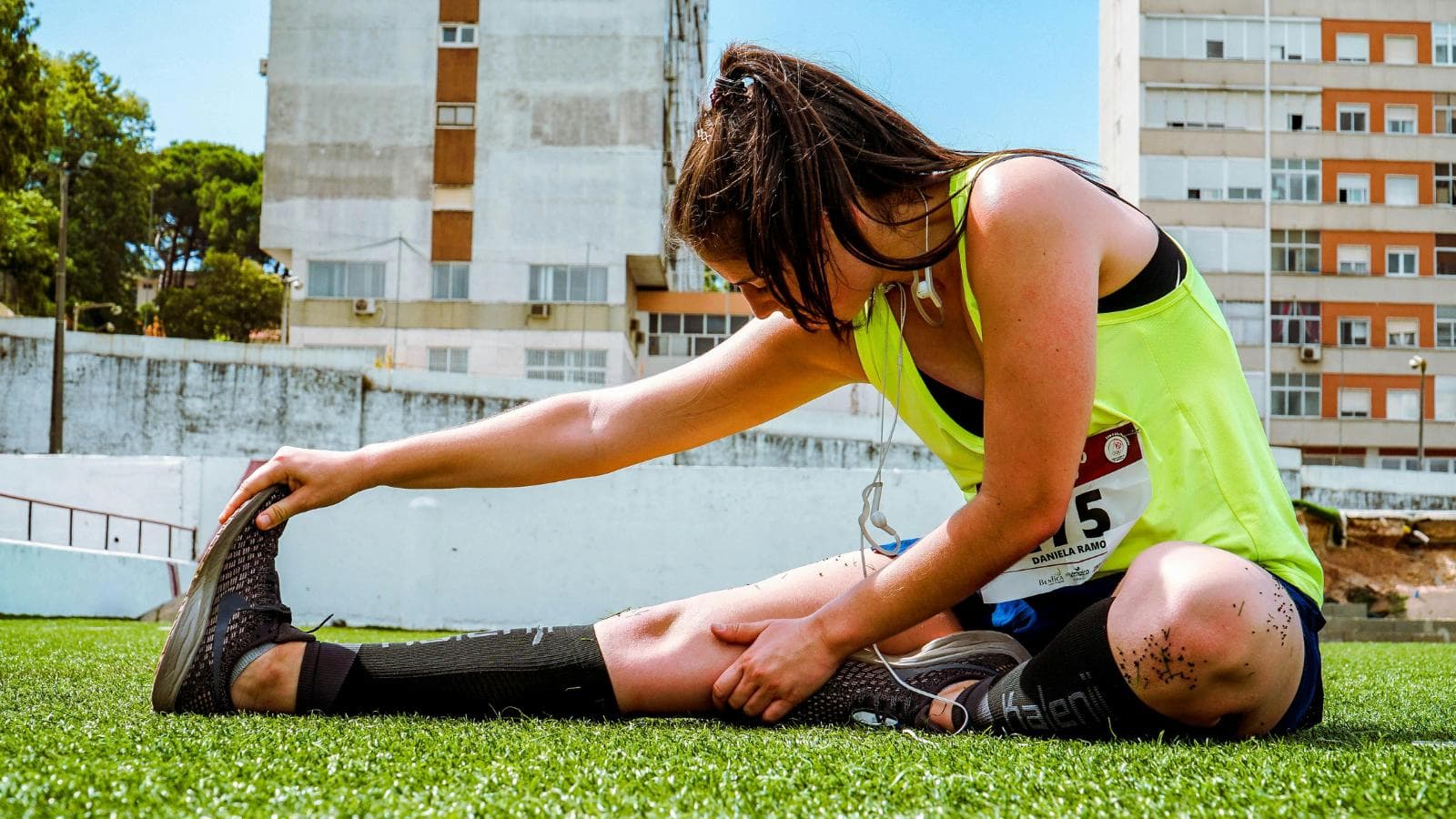
Stretching Alone Rarely Prevents Cramping
Many triathletes rely heavily on stretching after cramps begin.
Stretching may temporarily reduce muscular contraction, but it usually does not address:
- Fatigue
- Pacing errors
- Fueling problems
- Conditioning limitations
Long-term prevention depends much more on:
- Fitness
- Recovery
- Strength
- Pacing
- Hydration
Recovery Influences Cramp Resistance
Accumulated fatigue from training affects race-day durability significantly.
Athletes arriving at races overly fatigued often:
- Cramp earlier
- Recover slower
- Struggle maintaining form
- Experience reduced pacing control
Recovery priorities include:
- Sleep
- Nutrition
- Easy recovery sessions
- Reduced taper fatigue
This is one reason why staying motivated during recovery plays an important role in race-day muscular performance.
Common Mistakes That Increase Thigh Cramps
Many triathletes increase cramping risk through avoidable habits.
Common mistakes include:
- Riding too aggressively
- Starting the run too fast
- Underfueling
- Ignoring hydration
- Skipping strength work
- Poor pacing discipline
- Lack of race-specific training
- Inadequate recovery
Most cramping problems develop progressively rather than appearing completely randomly.
Practical Ways to Reduce Thigh Cramps
Triathletes can lower cramping risk significantly by:
- Pacing conservatively early
- Hydrating consistently
- Replacing electrolytes appropriately
- Fueling properly during racing
- Strength training regularly
- Practising brick workouts
- Improving aerobic fitness
- Maintaining efficient running mechanics
The goal is improving fatigue resistance rather than relying on quick fixes during races.