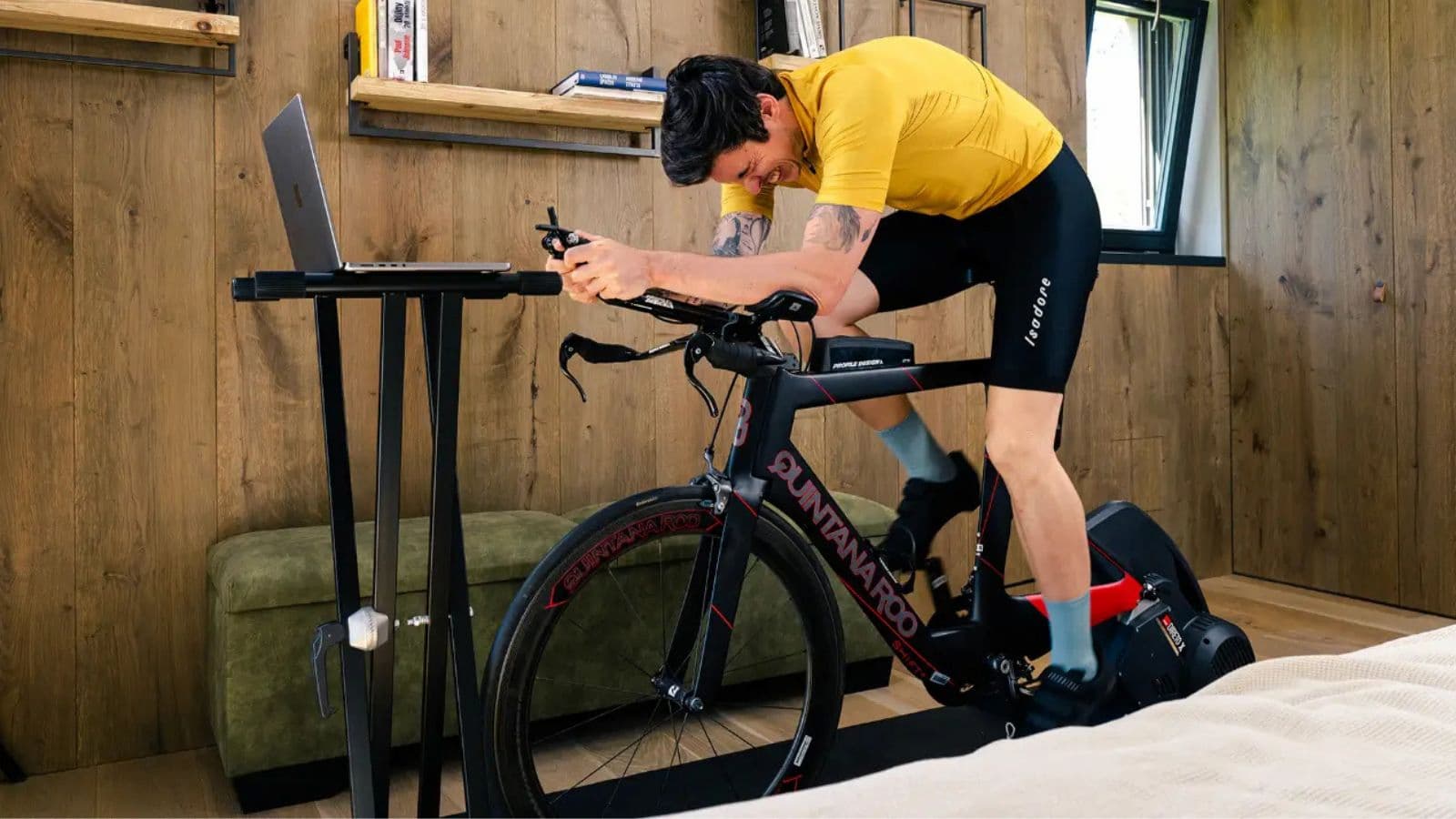


Indoor cycling is one of the most effective ways for triathletes to build bike fitness, but it can also be one of the hardest disciplines to stay motivated with. Unlike outdoor riding, there’s no changing scenery, group interaction or long descents to break up the effort. The good news is that motivation doesn’t have to depend on enjoyment alone. By creating purposeful sessions, setting achievable goals and keeping training varied, indoor cycling can become one of the most productive parts of your triathlon programme. Consistency, not perfection, is what drives long-term progress.

Train With a Clear Purpose
Every indoor ride should have a specific objective.
Instead of simply riding for an hour, decide whether the session is designed to improve:
- Endurance.
- Threshold power.
- Recovery.
- Cadence.
- Race pacing.
- Sprint power.
Many triathletes stay more engaged by following how to improve your bike split in triathlon, giving every workout a clear performance goal.
Set Short-Term Goals
Breaking large objectives into smaller milestones makes training more rewarding.
Examples include:
- Completing every scheduled ride for the week.
- Increasing FTP gradually.
- Improving cadence control.
- Riding consistently for a month.
- Completing a structured training block.
Small achievements create momentum and keep motivation high.
Follow a Structured Training Plan
Random workouts quickly become repetitive. A structured plan provides progression and variety while showing how each session contributes to race performance. Many athletes stay committed by following how to train for a sprint triathlon, where each workout has a specific purpose within the overall programme.
Keep Sessions Varied
Repeating the same workout every week can reduce motivation.
Rotate between:
- Zone 2 rides.
- Threshold intervals.
- VO₂ max sessions.
- Cadence drills.
- Recovery rides.
- Brick workouts.
Variety keeps both your body and mind engaged.
Remember Why Easy Rides Matter
Not every workout should leave you exhausted.
Easy rides improve:
- Aerobic fitness.
- Recovery.
- Fat metabolism.
- Consistency.
- Endurance.
Many athletes gain greater appreciation for these sessions after understanding zone 2 training for triathletes, recognising that easy riding forms the foundation of long-term performance.
Create a Comfortable Training Environment
A comfortable setup makes indoor riding much more enjoyable.
Consider:
- A powerful fan.
- Good ventilation.
- Plenty of water.
- A towel.
- Easy access to nutrition.
- Stable bike setup.
Small improvements often make long sessions feel significantly easier.
Ride at the Same Time Each Week
Consistency creates routine. Scheduling indoor rides at regular times reduces the need to rely on motivation alone. Training becomes part of your weekly habit rather than a daily decision.
Track Your Progress
Seeing improvement helps maintain enthusiasm.
Monitor:
- Power.
- Heart rate.
- Cadence.
- Training consistency.
- FTP changes.
- Session completion.
Progress over several months is usually far more meaningful than day-to-day fluctuations.
Include Brick Workouts
Indoor cycling becomes more purposeful when it’s connected to race-specific training.
Occasionally follow your ride with:
- Short transition runs.
- Easy recovery runs.
- Race-pace efforts.
Many athletes improve confidence through how to run faster off the bike in a triathlon, making indoor bike sessions feel directly relevant to race day.
Practise Race Nutrition
Indoor sessions provide an excellent opportunity to test nutrition strategies.
Use longer workouts to practise:
- Drinking regularly.
- Taking energy gels.
- Timing carbohydrate intake.
- Electrolyte intake.
Many triathletes refine these habits through how should triathletes fuel during the bike leg, making race-day nutrition much more predictable.
Focus on Technique
Indoor riding allows uninterrupted attention to cycling mechanics.
Practise:
- Smooth pedalling.
- Relaxed shoulders.
- Stable posture.
- Efficient cadence.
- Controlled breathing.
Technical improvements often make sessions feel more engaging than simply chasing numbers. Many athletes also benefit from how does cycling cadence affect triathlon performance, learning how cadence influences efficiency across different race distances.
Accept That Motivation Will Fluctuate
Even elite athletes experience days when motivation is low.
On those days:
- Start with a short warm-up.
- Focus on completing the session.
- Avoid judging motivation before riding.
- Trust your routine.
More often than not, motivation improves once the workout begins.
Avoid Comparing Yourself With Others
Training platforms make it easy to compare numbers.
Instead, focus on:
- Your consistency.
- Your improvements.
- Your race goals.
- Your progression.
The only meaningful comparison is with your previous performance.
Common Motivation Mistakes
Avoid these habits:
- Riding without a plan.
- Doing every workout at maximum effort.
- Ignoring recovery.
- Skipping easy sessions.
- Setting unrealistic goals.
- Comparing every workout with previous bests.
- Expecting constant motivation.
- Forgetting why you’re training.
Building habits is more reliable than waiting to feel inspired.
Practical Tips
Keep these strategies in mind:
- Plan sessions in advance.
- Rotate workout types.
- Celebrate small improvements.
- Use indoor rides to practise race skills.
- Create a comfortable environment.
- Stay consistent.
- Focus on long-term progress.
Many athletes also improve consistency after learning how can triathletes stay on track after missing a workout, preventing one missed session from disrupting an entire training block. Finally, remembering what is off season training for triathletes helps put indoor cycling into perspective, showing how these sessions build the aerobic foundation needed for success later in the racing season.
The Bottom Line
Motivation for indoor cycling doesn’t come from entertainment alone. It comes from having a purpose, following a structured plan and recognising how each session contributes to better triathlon performance. By keeping workouts varied, setting realistic goals and focusing on long-term consistency, indoor cycling can become one of the most valuable training tools available to triathletes, regardless of the weather outside.