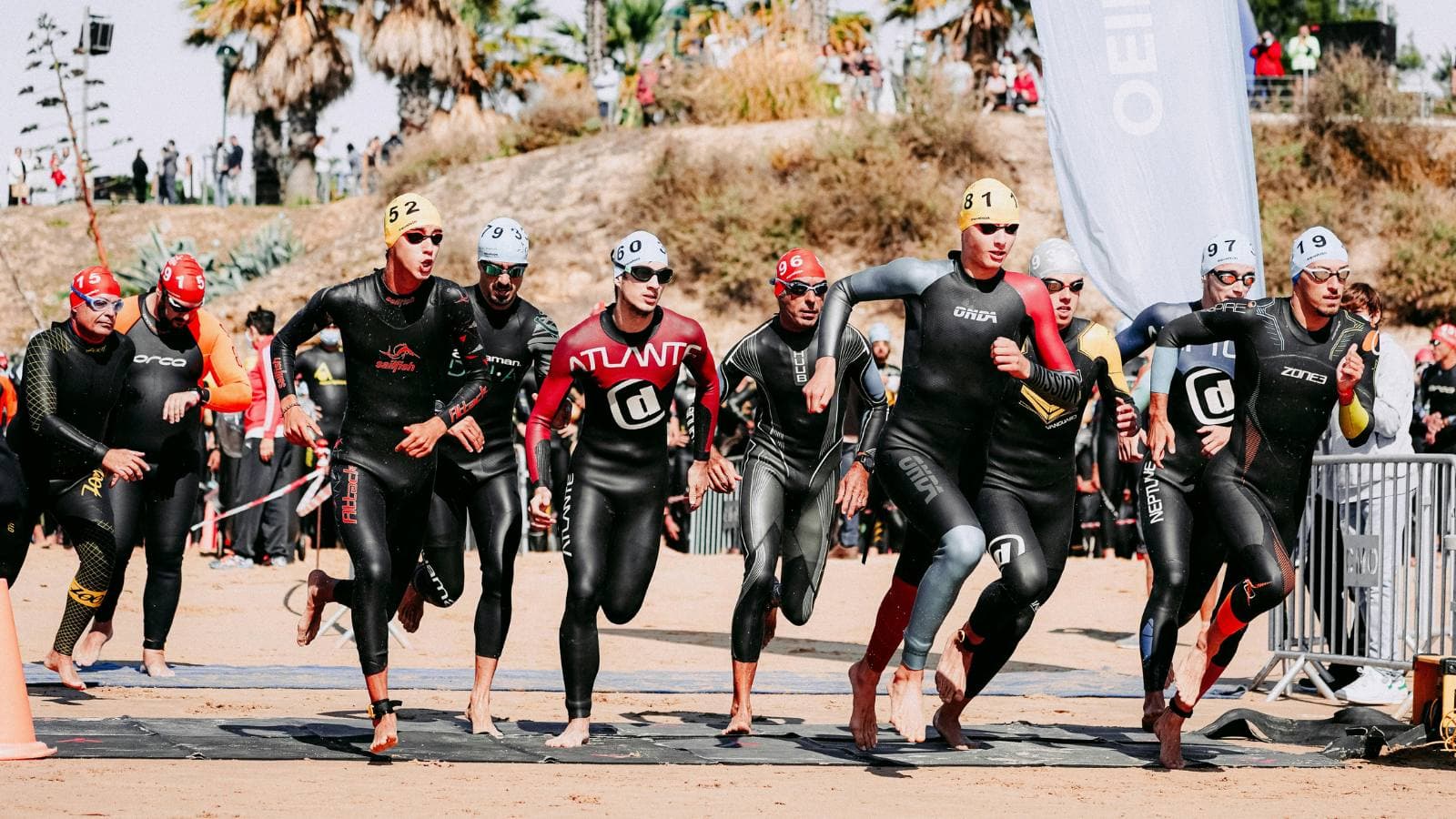


A fast triathlon transition after an open water swim is not just about moving quickly through T1. It is about staying controlled, reducing wasted energy, and preparing the body efficiently for the bike section.
Many triathletes lose valuable time during swim-to-bike transition because they:
- Panic
- Rush unnecessarily
- Forget equipment order
- Struggle with wetsuits
- Lose focus after the swim
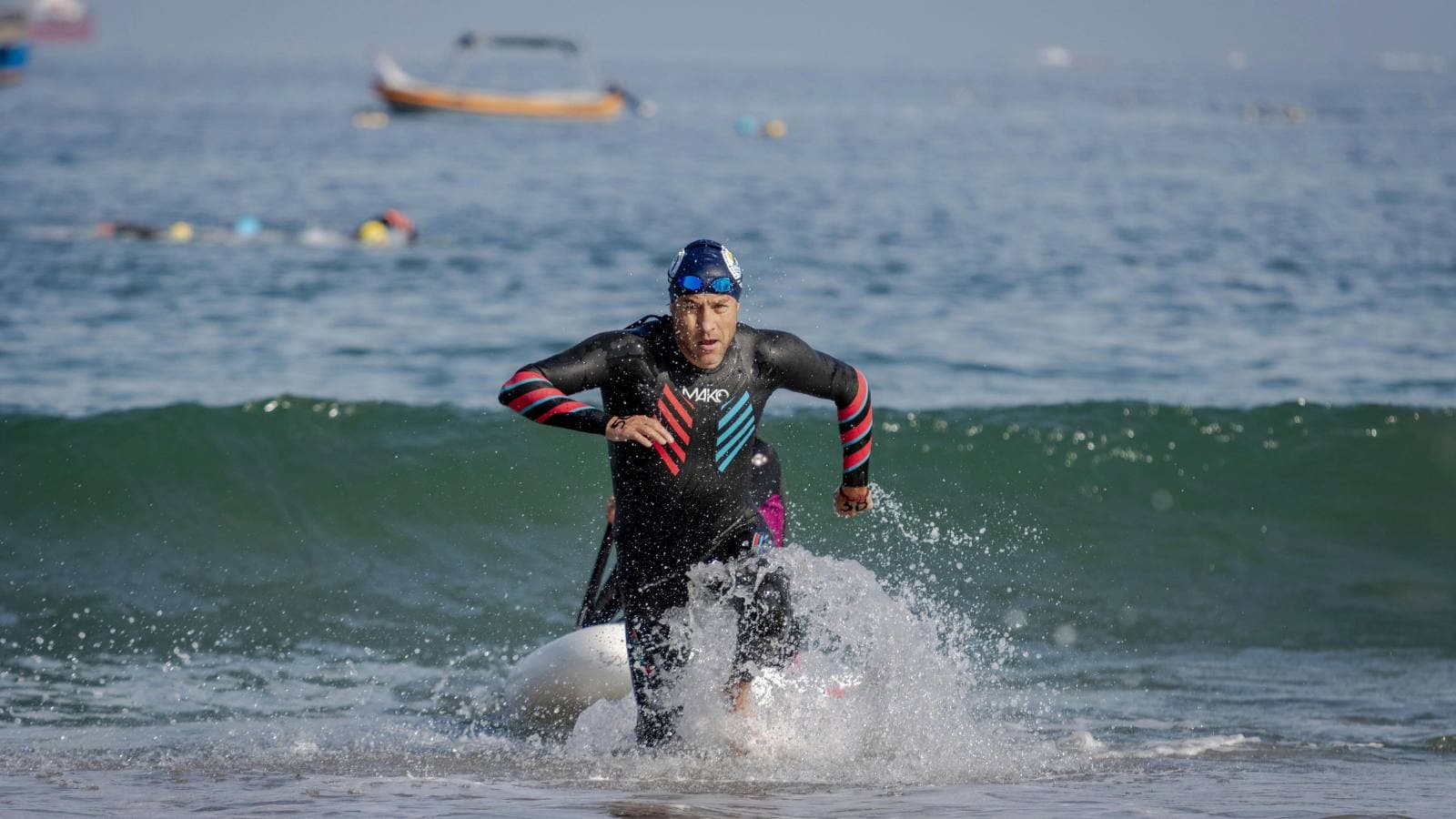
A smoother transition often saves more energy than a frantic one. Efficient triathletes stay calm, organised, and deliberate while moving quickly through every step. This becomes especially important during longer races discussed in Ironman vs 70.3 vs Olympic Triathlon, where transition efficiency affects pacing and energy management across the entire event.
Exit the Water Under Control
Many athletes sprint aggressively toward transition immediately after leaving the water.
This often causes:
- Dizziness
- Elevated heart rate
- Poor coordination
- Heavy breathing
- Mental panic
Swimming horizontally for a long period changes blood flow dynamics, so standing suddenly and sprinting immediately can feel disorientating.
The best approach is:
- Standing gradually
- Regaining balance
- Increasing effort progressively
Athletes who stay composed exiting the water usually transition more efficiently overall.
Start Preparing Before Leaving the Water
Efficient transitions begin before swimmers even reach shore.
During the final minutes of the swim:
- Increase kick slightly
- Focus on breathing rhythm
- Mentally rehearse transition steps
A slightly stronger kick near the end helps:
- Increase blood flow to the legs
- Prepare for standing
- Reduce dizziness during exit
This becomes especially useful during longer swims explained in improving your triathlon swim, where body position changes affect transition comfort significantly.
Practise Removing the Wetsuit Quickly
Wetsuit removal is one of the biggest areas where athletes lose unnecessary time.
Efficient removal depends on:
- Preparation
- Lubrication
- Technique
- Repetition
Useful areas for anti-chafing lubricant include:
- Ankles
- Wrists
- Neck
- Calves
Many athletes struggle because they try removing the wetsuit while:
- Standing awkwardly
- Rushing
- Pulling unevenly
Practising wetsuit removal repeatedly before race day improves:
- Speed
- Calmness
- Coordination
- Confidence
Keep Transition Setup Simple
Complicated transition areas create mistakes.
Efficient setups usually include:
- Helmet open and ready
- Sunglasses inside helmet
- Shoes positioned clearly
- Nutrition organised simply
- Towel minimal and tidy
Too much equipment creates:
- Mental overload
- Confusion
- Delays
- Unnecessary stress
Athletes improving race execution through wetsuit that you need in open water swimming often save significant transition time simply by simplifying setup.
Control Breathing During Transition
Open water swimming often elevates heart rate and breathing significantly.
Transition becomes smoother when athletes:
- Slow breathing consciously
- Relax shoulders
- Stay mentally calm
Rushing blindly through T1 usually increases:
- Mistakes
- Heart rate
- Anxiety
- Energy waste
Efficient athletes move quickly without looking frantic.
Learn to Run Properly After the Swim
Running after swimming feels awkward initially because:
- Blood flow shifts suddenly
- Legs feel unstable
- Balance changes
- Heart rate spikes
Practising swim exits helps athletes adapt to:
- Upright movement
- Faster cadence
- Transition rhythm
Many triathletes improve significantly through repeated race-simulation practice rather than only swim fitness itself.
Use Landmarks to Navigate Quickly
Transition areas can become confusing during large races.
Useful strategies include:
- Memorising row locations
- Identifying visual landmarks
- Counting bike rack positions
- Walking transition before racing
Athletes frequently waste time simply because they:
- Run past their bike
- Lose orientation
- Panic under pressure
Calm preparation usually prevents unnecessary mistakes.
Practise Barefoot Running
Triathletes often underestimate how awkward barefoot running feels after swimming.
Practising barefoot movement helps improve:
- Coordination
- Confidence
- Foot placement
- Transition comfort
This becomes especially important on:
- Wet surfaces
- Uneven terrain
- Long transition runs
Athletes training through brick workouts every triathlete should try often adapt more smoothly to race-specific movement changes.
Transition Speed Depends on Organisation
Fast transitions are usually organised rather than rushed.
Efficient athletes:
- Follow the same sequence every time
- Avoid unnecessary movement
- Keep focus narrow
- Minimise distractions
Repeating identical transition routines during training improves:
- Muscle memory
- Confidence
- Consistency
- Speed under stress
Wetsuit Choice Affects Transition Speed
Poorly fitted wetsuits slow transitions significantly.
A good triathlon wetsuit should:
- Fit snugly
- Allow shoulder mobility
- Remove smoothly
- Avoid excessive tightness around ankles
Some athletes lose large amounts of time because their wetsuit:
- Sticks badly
- Restricts movement
- Fills with water
Comfort and removal speed matter just as much as buoyancy.
Heart Rate Control Improves Bike Start
Athletes leaving transition overly stressed often start the bike too hard.
This commonly leads to:
- Elevated heart rate
- Poor pacing
- Excess fatigue
- Early glycogen use
Controlled transitions help athletes settle into sustainable bike effort more smoothly. This becomes especially important during longer races explained in open water swimming tips for beginners, where early pacing mistakes affect the entire event.
Mount Line Practice Saves Time
Many athletes lose time at the mount line because they:
- Stop awkwardly
- Fumble with shoes
- Lose balance
- Rush unnecessarily
Practising:
- Bike handling
- Mount technique
- Shoe entry
helps create smoother race execution.
Simple clean movement usually beats aggressive risky attempts.
Cold Water Changes Transition Difficulty
Cold swims often increase:
- Hand numbness
- Muscle tightness
- Reduced coordination
- Wetsuit removal difficulty
Athletes racing in colder conditions should:
- Practise cold-water exits
- Prepare mentally
- Focus on calm breathing
This becomes increasingly important during races discussed in fixing breathing issues during open water swimming, where cold exposure affects coordination and pacing.
Nutrition Setup Should Stay Simple
T1 is not the place for complicated fueling decisions.
Nutrition should be:
- Easy to access
- Pre-organised
- Familiar
- Minimal
Many athletes waste time:
- Searching for gels
- Dropping bottles
- Adjusting equipment
Simple systems improve efficiency and reduce stress significantly.
Mental Rehearsal Improves Transition Speed
Efficient transitions are often mental as much as physical.
Visualising:
- Swim exit
- Wetsuit removal
- Helmet sequence
- Bike mount
helps athletes stay calm under race pressure.
Athletes improving confidence through mental strategies that can improve triathlon performance often transition more smoothly because they reduce panic and hesitation.
Recovery After the Swim Matters
Transition is the bridge between disciplines.
Athletes who spike effort excessively during T1 often compromise:
- Bike pacing
- Breathing control
- Energy management
- Early nutrition
The fastest overall triathlon performance usually comes from:
- Controlled transitions
- Efficient movement
- Sustainable pacing
rather than chaotic sprinting through transition.
Common Open Water Transition Mistakes
Many triathletes lose time through avoidable habits.
Common mistakes include:
- Standing too quickly
- Rushing breathing
- Overcomplicated transition setup
- Poor wetsuit practice
- Losing transition orientation
- Starting the bike too aggressively
- Panicking under pressure
Efficient transitions should feel smooth rather than frantic.
Practical Ways to Transition Faster
Triathletes can improve T1 speed by:
- Practising swim exits regularly
- Rehearsing wetsuit removal
- Simplifying equipment setup
- Memorising transition location
- Staying calm under pressure
- Running efficiently barefoot
- Practising bike mounts
- Managing breathing carefully
The fastest transitions usually come from preparation and control rather than pure speed alone.