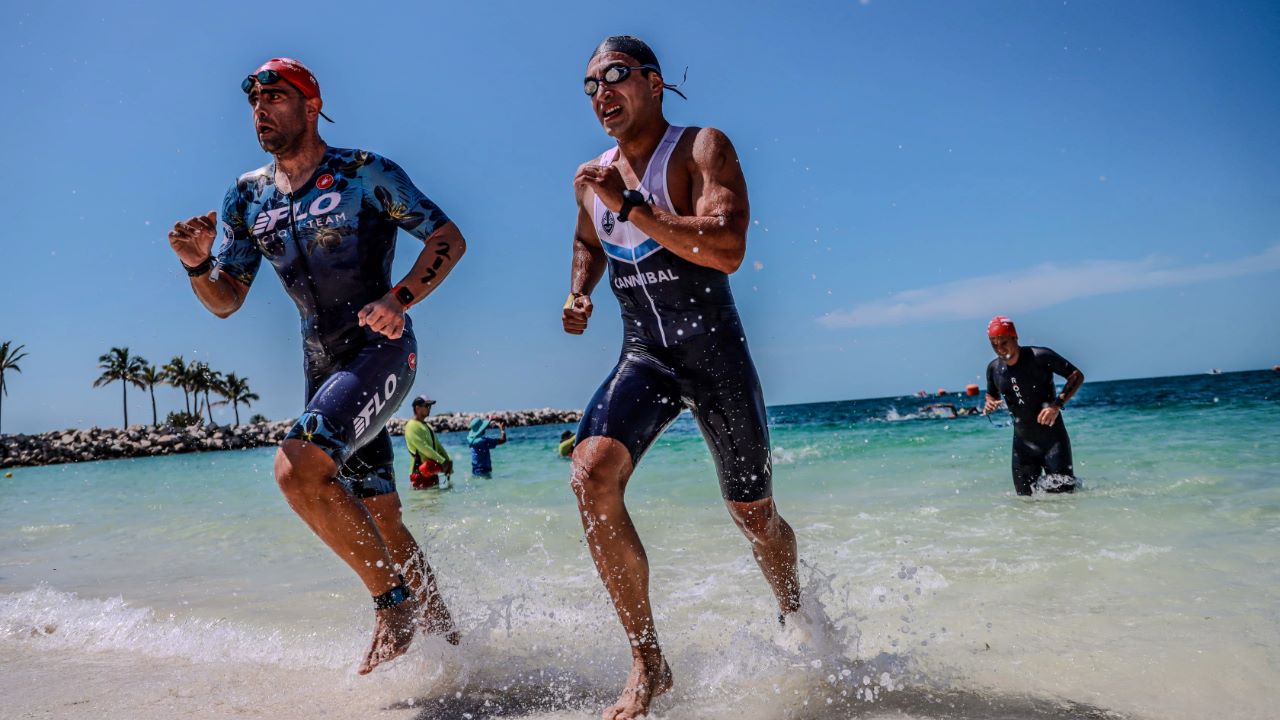


You can tell your swimming is improving when you swim faster, cover longer distances comfortably, maintain better technique, or complete familiar workouts with less effort. For triathletes, improvement also means developing efficient breathing, consistent pacing, and the ability to maintain swimming form throughout an open water race. Swimming progress can be difficult to recognize because improvements are not always reflected immediately in lap times. A swimmer may become more relaxed in the water, take fewer strokes per length, or recover more quickly between intervals before noticing a significant increase in speed. Beginners often experience early improvements through better body positioning, breathing coordination, and confidence. More experienced triathletes may need consistent measurements such as pace per 100 meters, stroke count, and repeatable swim tests to identify smaller performance gains.
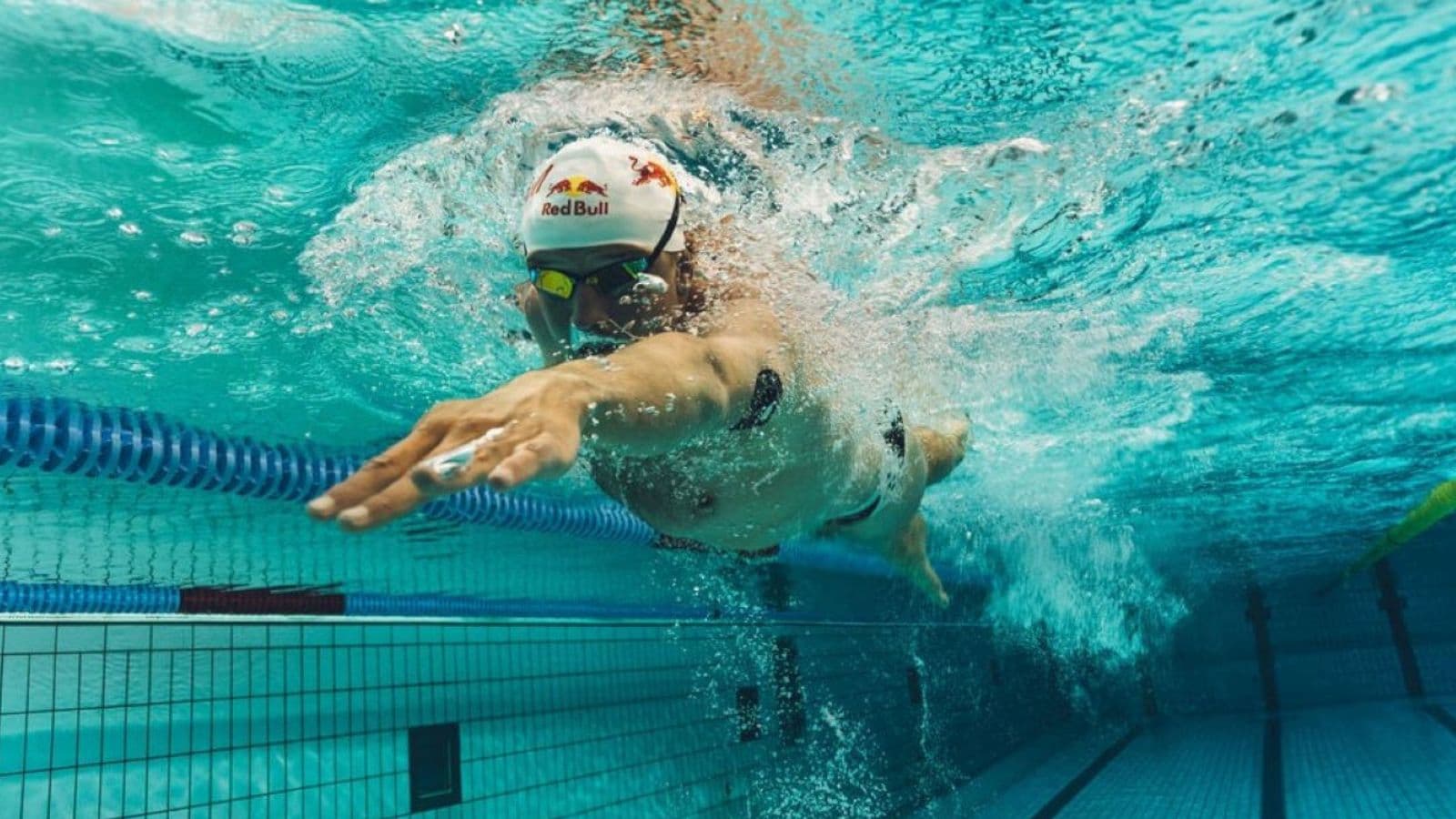
The most useful approach is to monitor several indicators over time rather than relying on one measurement. Understanding what swimming progress looks like helps triathletes evaluate training, maintain motivation, and identify which skills still need attention.
In Short
- Faster swimming can indicate improvement.
- Lower effort at the same pace is meaningful progress.
- Better breathing control improves comfort.
- Fewer strokes may indicate improved efficiency.
- Longer continuous swims demonstrate endurance.
- Consistent pacing reflects better effort management.
- Improved body position can reduce drag.
- Faster recovery between intervals suggests adaptation.
- Open water confidence is an important skill.
- Progress should be measured over several weeks.
Faster Swimming at the Same Effort
One of the clearest signs of swimming improvement is completing a familiar distance faster without feeling that you are working harder. For example, a swimmer who previously completed 100 meters in 2 minutes 20 seconds may eventually cover the same distance in 2 minutes 10 seconds at a similar perceived effort. This can indicate improved technique, fitness, or both. However, swim times should be compared under similar conditions.
Important factors include:
- Pool length.
- Push off technique.
- Rest between intervals.
- Training fatigue.
- Swimming equipment.
- Water conditions.
- Perceived effort.
Understanding how to increase triathlon swim speed can help athletes recognize how technical improvements and physical conditioning contribute to faster swimming. A single fast interval is less meaningful than consistently improved performance across several sessions.
Better Breathing Control
Breathing is one of the most important technical skills in freestyle swimming. Beginners often struggle because they hold their breath underwater, lift their heads excessively, or interrupt their stroke rhythm to inhale. As swimming improves, breathing usually becomes more comfortable and coordinated.
Signs of progress include:
- Exhaling naturally underwater.
- Turning the head without lifting excessively.
- Maintaining stroke rhythm while breathing.
- Feeling less breathless during familiar distances.
- Recovering breathing control more quickly after turns.
Understanding how to coordinate breathing with your swim strokes in a triathlon can help swimmers develop a consistent breathing pattern. Breathing every two or three strokes can work well, but no single pattern is appropriate for everyone. The priority is obtaining enough air while maintaining relaxed, controlled technique.
Improved Swimming Technique and Body Position
Swimming efficiency depends heavily on reducing unnecessary resistance through the water. Poor body alignment increases drag and makes maintaining speed more demanding.
As technique improves, swimmers may notice:
- A more horizontal body position.
- Reduced unnecessary head movement.
- Better hip and shoulder rotation.
- Smoother arm recovery.
- More controlled kicking.
- Less side to side movement.
Understanding why is level body positioning important for triathlon swimming can help athletes recognize why alignment matters for swimming efficiency. Technical improvement often makes swimming feel smoother before producing substantial changes in pace.
Fewer Strokes Per Length
Stroke count measures how many arm strokes a swimmer uses to complete a pool length. Tracking stroke count can help assess swimming efficiency when combined with pace.
For example:
| Swim measurement | Initial session | Later session |
|---|---|---|
| Distance | 25 meters | 25 meters |
| Stroke count | 24 strokes | 21 strokes |
| Time | 32 seconds | 30 seconds |
| Perceived effort | Moderate | Moderate |
In this example, the swimmer covers the same distance faster with fewer strokes. This may indicate improved propulsion or reduced drag. However, fewer strokes are not always better. Excessive gliding can reduce speed and disrupt rhythm. Understanding how do triathletes improve freestyle efficiency in open water can help swimmers balance stroke length, stroke rate, and forward movement. The goal is efficient propulsion rather than achieving the lowest possible stroke count.
Greater Swimming Endurance
Endurance improvement means sustaining swimming for longer without excessive fatigue or technical deterioration. A beginner may initially struggle to swim 50 meters continuously but eventually complete 200 or 400 meters comfortably. More experienced swimmers may notice that longer sets require less recovery.
Useful indicators include:
- Increased continuous swimming distance.
- More consistent pace during longer sets.
- Reduced fatigue near the end of workouts.
- Better breathing control over time.
- Maintaining technique during sustained swimming.
Understanding how can you improve your swim stamina for a triathlon can help athletes build endurance progressively. Increasing distance is useful only when technique remains sufficiently controlled.
More Consistent Swim Pacing
Pacing refers to how evenly a swimmer distributes effort across a distance. Beginners often start too quickly and slow substantially as fatigue develops. Improved pacing allows swimmers to maintain a more sustainable speed.
For example:
| 100-meter interval | Earlier workout | Improved workout |
|---|---|---|
| First | 2:00 | 2:08 |
| Second | 2:12 | 2:08 |
| Third | 2:20 | 2:09 |
| Fourth | 2:25 | 2:08 |
The improved workout demonstrates more consistent pacing despite a slightly slower opening interval. For triathletes, controlled pacing is particularly important because swimming is followed by cycling and running. The goal is not simply completing the first few lengths quickly but maintaining sustainable effort throughout the swim.
Maintaining Technique When Tired
Swimming technique often deteriorates as fatigue increases.
Common changes include:
- Dropping the hips.
- Shortening the stroke.
- Lifting the head excessively.
- Losing breathing rhythm.
- Increasing unnecessary kicking.
- Crossing the arms over the body’s centerline.
As swimming improves, athletes may maintain better movement patterns during longer or more demanding sessions. Understanding what swim drills improve front crawl technique can help swimmers reinforce technical skills. However, drills should complement normal swimming rather than replace the sustained efforts needed for endurance development.
Faster Recovery Between Swim Intervals
Improved swimming fitness may allow athletes to recover more comfortably between repeated efforts. For example, a swimmer who previously required 40 seconds of rest between 100-meter repetitions may eventually complete the same set with 25 seconds of rest while maintaining pace and technique. This can indicate improved endurance and tolerance for repeated swimming efforts. However, reducing recovery time is not automatically beneficial. Rest periods should reflect the purpose of the workout. Technique focused sessions may require generous recovery, while endurance sets can involve shorter rest intervals. Track both swimming pace and recovery duration when comparing workouts.
Better Open Water Swimming Skills
Pool improvements do not automatically translate into better open water performance. Triathletes must also develop skills for navigation, changing conditions, and swimming around other participants.
Signs of open water progress include:
- Swimming straighter between landmarks.
- Maintaining controlled breathing.
- Sighting without significantly disrupting rhythm.
- Feeling more comfortable in unfamiliar water.
- Managing contact with other swimmers.
- Maintaining effort without pool wall breaks.
Understanding why swimming straight matters in open water triathlon can help athletes recognize how navigation affects total swimming distance and race performance. Open water progress should be evaluated in supervised, suitable conditions rather than through speed comparisons alone.
How to Test Swimming Improvement?
Simple, repeatable pool tests can help swimmers measure progress. Testing every four to eight weeks is generally sufficient for recreational triathletes.
100 meter controlled swim
Swim 100 meters at a comfortably challenging effort.
Record:
- Completion time.
- Stroke count.
- Perceived effort.
- Breathing comfort.
400 meter continuous swim
Complete 400 meters at a sustainable pace. Record total time and whether technique deteriorates near the end.
Repeated 100 meter intervals
Complete four 100 meter repetitions with a fixed rest period. Compare pacing consistency and perceived effort. Use the same pool length and similar testing conditions whenever possible. Avoid turning every training session into a maximum effort test.
Tracking Swimming Progress Without Expensive Equipment
A stopwatch and simple training diary are sufficient for many beginners.
Useful measurements include:
| Metric | What it shows |
|---|---|
| Pace per 100 meters | Swimming speed |
| Stroke count | Potential changes in efficiency |
| Continuous distance | Endurance development |
| Interval consistency | Pacing control |
| Perceived effort | How demanding swimming feels |
| Breathing comfort | Technical confidence |
| Recovery time | Response to repeated efforts |
Tracking several indicators provides a more complete picture than relying exclusively on speed.
A swimmer who maintains the same pace with less effort may be improving even when lap times remain unchanged.
Why Swimming Progress Sometimes Slows Down?
Swimming improvement is rarely linear. Beginners may initially progress quickly because small technique changes can produce noticeable benefits. Later improvements often require more focused practice.
Common reasons for slower progress include:
- Repeating workouts without progression.
- Swimming with persistent technical errors.
- Increasing distance without maintaining form.
- Inadequate recovery.
- Inconsistent training frequency.
- Focusing only on speed.
- Avoiding technical feedback.
Understanding why is swimming the hardest part of a triathlon for beginners can help newer swimmers recognize why coordination and water confidence require patience. A qualified swim coach or video analysis can help identify technical limitations that are difficult to recognize independently.
Common Mistakes
- Judging improvement only by speed.
- Comparing different pool lengths.
- Counting fewer strokes without considering pace.
- Testing too frequently.
- Ignoring breathing technique.
- Increasing distance before developing control.
- Swimming hard during every session.
- Neglecting open water skills.
- Comparing progress with experienced swimmers.
- Expecting improvement every week.
Practical Tips
- Record swim times consistently.
- Track stroke count alongside pace.
- Monitor breathing comfort.
- Practice controlled pacing.
- Include technique focused sessions.
- Build continuous swimming distance gradually.
- Compare similar workouts.
- Allow recovery between demanding sessions.
- Practice open water skills safely.
- Review progress every four to eight weeks.
Actionable Takeaways
- Measure swimming progress using speed, effort, technique, and endurance.
- Compare repeatable workouts under similar conditions.
- Track stroke count without sacrificing pace.
- Prioritize sustainable improvement over isolated fast swims.