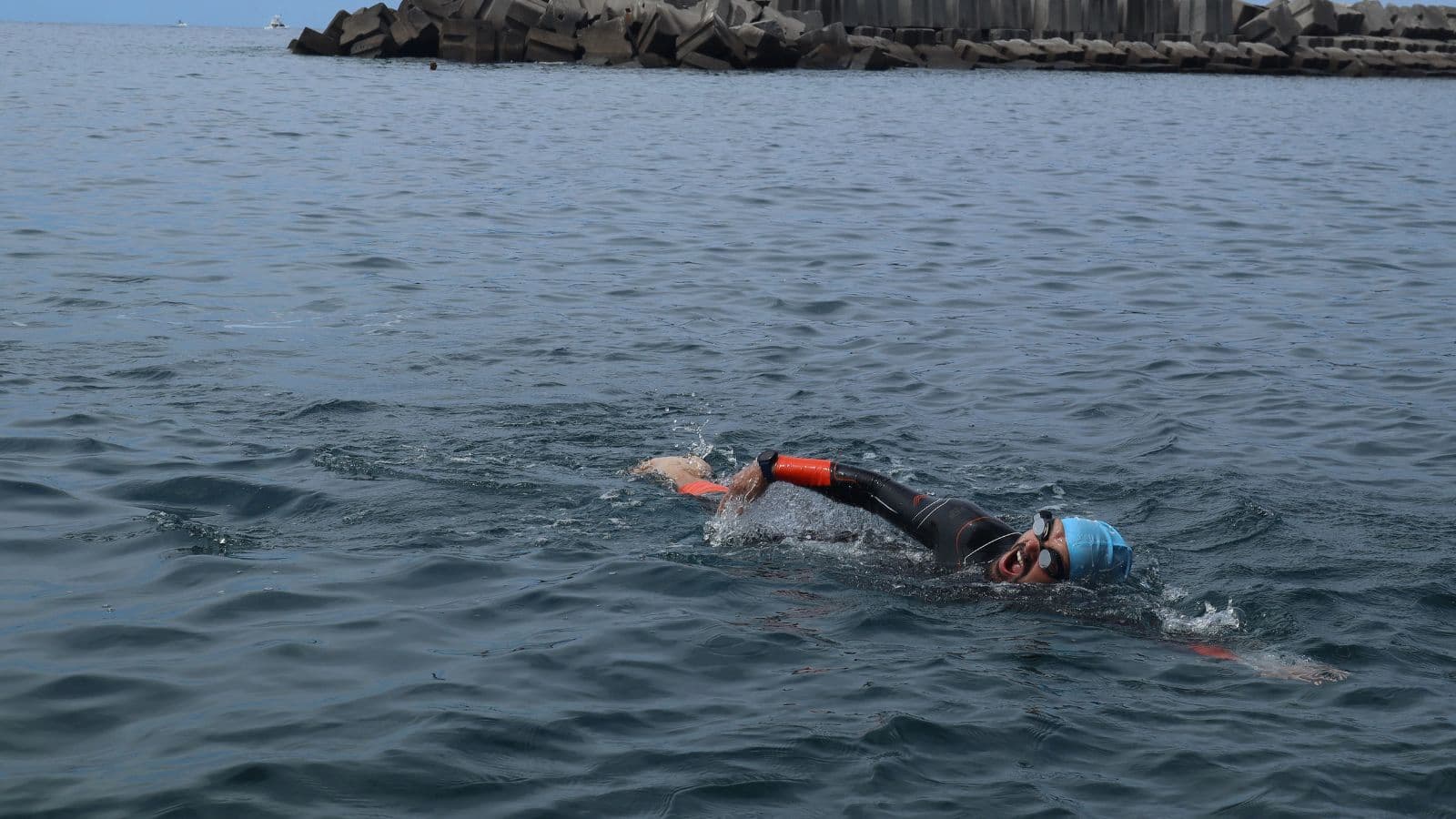


To fix an uneven pull in freestyle swimming, focus on developing a consistent catch, balanced body rotation, and controlled arm movement on both sides. An uneven pull occurs when one arm follows a different underwater path, generates less propulsion, or moves with different timing than the other. This can reduce swimming efficiency and make maintaining a straight course more difficult. Many triathletes develop subtle differences between their left and right arms. Breathing predominantly to one side, limited shoulder mobility, poor body alignment, or differences in strength and coordination may contribute to these imbalances. A perfectly symmetrical freestyle stroke is not necessary, and some differences between arms are normal. The important question is whether the imbalance creates unnecessary drag, disrupts rhythm, causes discomfort, or makes swimming more demanding.
Beginners can improve their pull through simple technique drills and regular practice. More experienced swimmers may benefit from underwater video analysis or coaching to identify specific problems rather than attempting to correct every visible difference.
In Short
- An uneven pull involves differences between the two arms.
- Breathing habits can influence stroke timing.
- Poor body rotation may contribute to imbalance.
- A consistent catch helps maintain propulsion.
- Crossing the centerline can disrupt alignment.
- Video analysis can reveal hidden technique problems.
- Single-arm drills develop stroke awareness.
- Paddles should be introduced carefully.
- Shoulder pain requires appropriate assessment.
- Balanced technique matters more than perfect symmetry.
What Causes an Uneven Freestyle Pull?
An uneven pull can develop from several interacting factors.
Common causes include:
- Breathing predominantly to one side.
- Unequal body rotation.
- Crossing an arm over the body’s centerline.
- Different elbow positions during the catch.
- Poor head alignment.
- Limited shoulder mobility.
- Fatigue or inconsistent coordination.
Understanding why is level body positioning important for triathlon swimming can help swimmers recognize how body alignment influences underwater arm movement. An uneven pull is not always caused by a weak arm. Sometimes the problem begins with breathing or body rotation.
Identifying an Uneven Pull
Watch for repeated differences between the left and right strokes.
Possible signs include:
- One hand crossing inward during entry.
- One elbow dropping during the catch.
- Different pull lengths.
- Uneven stroke timing.
- Excessive movement from side to side.
- Difficulty maintaining a straight swimming direction.
Underwater video recorded from the front and side can help identify these patterns. Understanding why swimming straight matters in open water triathlon can help athletes recognize how stroke consistency contributes to navigation. However, drifting in open water can also result from currents, sighting errors, and environmental conditions.
Improve Your Freestyle Catch
The catch is the phase when the hand and forearm begin applying backward pressure against the water. A controlled catch helps swimmers generate propulsion without unnecessary slipping.
To improve it:
- Enter the hand approximately in line with the shoulder.
- Extend forward without reaching across the centerline.
- Begin bending the elbow while positioning the forearm to press water backward.
- Maintain controlled pressure through the pull.
- Finish naturally without forcing excessive extension.
Avoid aggressively pushing downward at the beginning of the stroke.
Understanding can a better catch help you swim faster can help triathletes develop more effective underwater propulsion.
Correct Uneven Body Rotation
Freestyle swimming involves rotation around the body’s long axis. Rotation helps swimmers reach forward, breathe, and position their arms for propulsion. However, excessive rotation to one side can change the pull path. Practice rotating from the torso while keeping the head and hips reasonably aligned. A useful drill is side kicking with one arm extended. Alternate sides and focus on maintaining similar body positions. Understanding how do triathletes improve freestyle efficiency in open water can help swimmers connect body rotation with overall stroke coordination.
Fix Breathing Related Pull Imbalances
Breathing can affect freestyle timing. Some swimmers lift their heads excessively or rotate farther toward their preferred breathing side. This may cause the opposite arm to drop or begin pulling too early.
To improve breathing control:
- Keep one goggle near the water when breathing, where practical.
- Rotate the head with the body rather than lifting it.
- Exhale underwater.
- Avoid holding the breath.
- Maintain a stable lead arm during the breath.
Understanding how to coordinate breathing with your swim strokes in a triathlon can help athletes establish a smoother rhythm. Bilateral breathing can be a useful practice tool, but swimmers do not need to breathe equally to both sides during every workout.
Best Drills to Fix an Uneven Freestyle Pull
<text weight=”medium”>These drills develop awareness of arm position, timing, and coordination.</text>
| Drill | Main purpose | Suggested practice |
|---|---|---|
| Single arm freestyle | Focus on each arm independently | 4 × 25 m |
| Catch up drill | Improve front end timing | 4 × 25 m |
| Fingertip drag | Encourage relaxed recovery | 4 × 25 m |
| Sculling | Improve awareness of water pressure | 4 × 20 seconds |
| Side kicking | Develop balanced rotation | 4 × 25 m |
Single arm freestyle
Swim using one arm while keeping the other in a comfortable position. Alternate arms and compare the feeling of each pull. Avoid forcing identical movements if shoulder mobility differs.
Catch up drill
Keep one arm extended forward until the recovering arm approaches it. This can help swimmers identify rushed timing or unstable arm positions. Use it as a drill rather than exaggerating the pause during normal swimming. Understanding what swim drills improve front crawl technique can help triathletes select exercises that address their specific technique limitations.
Should You Use Swim Paddles?
Swim paddles increase the surface area of the hand and can make differences in underwater pressure more noticeable. However, larger paddles also increase loading on the shoulders. Beginners should first establish comfortable technique without equipment. If paddles are introduced, choose a manageable size and begin with short repetitions. Understanding what is the proper way to add paddles to swim workouts can help athletes avoid unnecessary shoulder stress. Stop if shoulder discomfort develops.
A Simple Workout for a More Balanced Pull
This example session focuses on technique rather than maximum speed.
| Set | Distance | Focus |
|---|---|---|
| Warm-up | 200 m easy | Relaxed swimming |
| Drill 1 | 4 × 25 m single arm | Arm awareness |
| Drill 2 | 4 × 25 m catch up | Stroke timing |
| Drill 3 | 4 × 25 m sculling and swimming | Catch awareness |
| Main set | 4 × 100 m easy | Consistent technique |
| Cool down | 100 m easy | Relaxed movement |
Total: 1,000 m
Take sufficient rest between repetitions to maintain technique. Beginners can shorten the main set or use shorter pool lengths. Understanding how can you improve your swim stamina for a triathlon can help swimmers combine technical development with appropriate endurance training.
How Long Does It Take to Fix an Uneven Pull?
Improvement depends on the cause, swimming experience, and consistency of practice. Some swimmers notice better coordination within a few sessions. Others need several weeks of focused practice to change established movement habits. Avoid trying to correct too many details simultaneously. Choose one technique cue, practice it during short repetitions, and assess whether swimming becomes smoother.
When Should You Seek Professional Help?
An uneven pull accompanied by pain, weakness, or reduced shoulder movement requires additional attention. A qualified swim coach can help identify technical problems through observation or video analysis. Persistent shoulder pain should be assessed by a healthcare professional. Understanding what is swimmer’s shoulder and how can triathletes prevent it can help athletes recognize why technique, workload, and shoulder capacity matter. Do not continue demanding pull workouts through pain.
Common Mistakes
- Forcing perfectly identical arm movements.
- Crossing the centerline during entry.
- Dropping the elbow during the catch.
- Lifting the head excessively to breathe.
- Rotating much farther to one side.
- Using large paddles too early.
- Swimming faster before correcting technique.
- Practicing drills without applying them to normal swimming.
- Ignoring shoulder discomfort.
Practical Tips
- Record underwater video when possible.
- Focus on one correction at a time.
- Practice single-arm freestyle.
- Maintain a relaxed head position.
- Keep hand entry aligned with the shoulder.
- Develop controlled body rotation.
- Use short technique repetitions.
- Avoid forcing bilateral breathing.
- Review technique when fatigued.
- Seek coaching feedback when needed.
Actionable Takeaways
- Identify the source of your pull imbalance.
- Improve catch position and body rotation.
- Practice controlled single-arm drills.
- Maintain comfortable breathing mechanics.
- Prioritize efficient movement over perfect symmetry.