
Open-water swimming is one of the most challenging aspects of triathlon. Unlike the controlled environment of a swimming pool, open water introduces variables that can significantly affect performance, including:
- Waves
- Wind
- Currents
- Crowded starts
- Limited visibility
- Changing water temperatures
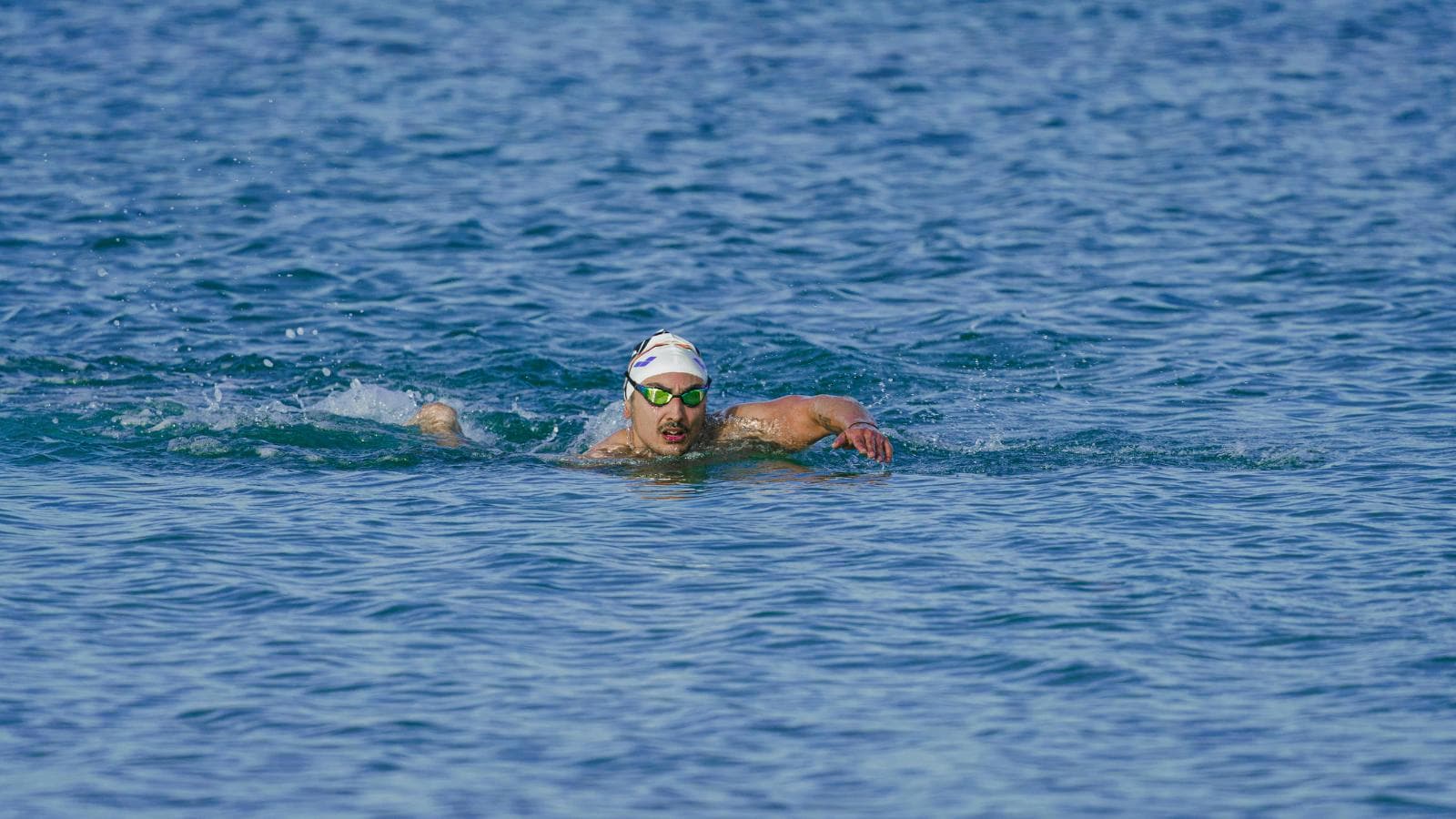
For many triathletes, becoming faster in open water is not simply about swimming harder. It is about swimming more efficiently.
Freestyle efficiency allows athletes to:
- Conserve energy
- Maintain better technique
- Reduce fatigue
- Improve navigation
- Exit the water fresher for the bike leg
The goal is not necessarily increasing stroke rate or swimming with maximum effort. The goal is moving through the water with the least possible energy cost. This becomes especially important during longer races discussed in good triathlon time for beginners, where energy conservation during the swim can have a significant impact on overall race performance.
Focus on Body Position First
One of the biggest barriers to freestyle efficiency is poor body position. When the hips and legs sit too low in the water, drag increases dramatically.
Efficient swimmers aim to maintain:
- A horizontal position
- Relaxed posture
- Balanced alignment
- Stable head position
Small improvements in body position often produce larger gains than trying to increase effort. Many triathletes waste energy fighting the water rather than moving through it.
Improve Your Catch
The catch is the phase where swimmers begin applying force to the water.
An effective catch allows athletes to:
- Generate propulsion
- Maintain momentum
- Improve stroke efficiency
Common mistakes include:
- Slipping through the water
- Dropping the elbow
- Pulling too early
Efficient swimmers focus on holding water and creating consistent pressure throughout the stroke. Athletes improving through what is the proper way to add paddles to swim workouts often use paddles strategically to develop better feel for the water and improve catch mechanics.
Learn to Sight Efficiently
Unlike pool swimming, open-water athletes must navigate independently.
Poor sighting technique often causes:
- Increased drag
- Loss of rhythm
- Excess fatigue
Efficient sighting involves:
- Lifting the eyes briefly
- Maintaining forward momentum
- Returning quickly to position
Many experienced triathletes combine sighting with breathing to minimise disruption to their stroke. Practising this skill regularly can improve both efficiency and navigation accuracy.
Relax Your Breathing
Anxiety and tension commonly reduce freestyle efficiency.
When breathing becomes rushed, swimmers often:
- Lift the head excessively
- Disrupt body position
- Increase drag
- Waste energy
Controlled breathing helps maintain:
- Rhythm
- Relaxation
- Stroke consistency
Athletes who improve through transitioning faster after an open water swim often discover that remaining calm in the water allows them to maintain better technique throughout the swim leg.
Increase Stroke Consistency
Open-water conditions are rarely predictable.
Waves and currents can make stroke rhythm difficult to maintain.
Efficient swimmers focus on:
- Consistent turnover
- Stable effort
- Smooth timing
Rather than constantly reacting to conditions, they maintain a reliable stroke pattern and make small adjustments when necessary.
Consistency often leads to greater efficiency than frequent technical changes.
Draft Whenever Possible
Drafting is one of the easiest ways to improve open-water efficiency. Swimming behind or beside another athlete can reduce water resistance significantly.
Benefits include:
- Lower energy expenditure
- Easier pace maintenance
- Improved efficiency
Drafting allows triathletes to save energy that can later be used on the bike and run. Athletes who understand how to pace a triathlon properly often view drafting as an important pacing tool rather than simply a tactical advantage.
Improve Open-Water Confidence
Efficiency is heavily influenced by comfort level.
An anxious swimmer often:
- Kicks harder
- Breaths less efficiently
- Wastes energy
- Loses rhythm
Confidence grows through:
- Practice
- Familiarity
- Experience
Training regularly in open water helps athletes become comfortable with:
- Waves
- Limited visibility
- Physical contact
- Variable conditions
The more comfortable a swimmer becomes, the more efficiently they tend to move.
Develop Better Rotation
Freestyle power comes from more than the arms.
Efficient swimmers use:
- Core rotation
- Hip engagement
- Body roll
Proper rotation helps:
- Increase stroke length
- Improve propulsion
- Reduce shoulder stress
Many triathletes become more efficient simply by improving how the body rotates during each stroke cycle.
Avoid Overkicking
A powerful kick is useful, but excessive kicking can be costly in triathlon.
Unlike pool specialists, triathletes must preserve energy for:
- Cycling
- Running
A controlled kick often improves:
- Efficiency
- Energy conservation
- Overall race performance
Athletes improving through what makes triathlon runners faster often recognise that saving energy during the swim can benefit performance across the remainder of the race.
Train in Different Conditions
Pool swimming develops technique, but open-water efficiency requires adaptation.
Whenever safe, athletes should experience:
- Calm water
- Choppy water
- Cold water
- Windy conditions
This helps develop:
- Confidence
- Adaptability
- Technical consistency
Swimmers who only train in perfect conditions often struggle when race-day conditions become challenging.
Improve Shoulder Endurance
Freestyle efficiency often declines because fatigue causes technique breakdown.
Building swim-specific endurance helps maintain:
- Stroke quality
- Rhythm
- Propulsion
Longer aerobic swim sets can improve:
- Muscular endurance
- Technique durability
- Open-water performance
Athletes improving through aerobic endurance workouts often discover that endurance improvements benefit swimming just as much as cycling and running.
Wear the Right Equipment
Equipment can influence efficiency significantly.
This includes:
- Goggles
- Wetsuits
- Swim caps
Poorly fitted equipment may create:
- Discomfort
- Distraction
- Reduced confidence
Athletes should always test equipment during training rather than relying on race-day experimentation.
Manage Effort Early
Many triathletes start open-water swims too aggressively.
This often causes:
- Elevated heart rate
- Poor breathing
- Technical breakdown
Efficient swimmers settle into rhythm quickly and avoid wasting energy during the opening minutes. Athletes improving through tapering before a triathlon often understand that managing effort and energy availability begins from the first discipline of the race.
Practise Swimming Straight
Swimming extra distance is one of the most common efficiency killers in open water.
Poor navigation can add:
- Time
- Fatigue
- Frustration
Regular sighting practice and open-water exposure help athletes:
- Hold straighter lines
- Minimise unnecessary distance
- Improve overall efficiency
Even small navigation improvements can save substantial energy during longer swims.
Recovery Supports Swimming Efficiency
Technique often deteriorates when athletes are excessively fatigued.
Good recovery supports:
- Motor control
- Coordination
- Stroke quality
Athletes who prioritise recovery strategies for triathletes often maintain better swim mechanics because their body is able to execute skills more effectively. Recovery is an important part of technical development.
Mental Calm Improves Efficiency
Open-water swimming challenges many athletes psychologically.
Stress commonly leads to:
- Increased tension
- Shorter strokes
- Poor breathing
- Higher energy expenditure
Athletes who develop avoiding burnout from swimming drills often become more efficient swimmers because they remain relaxed and composed even in difficult conditions. A calm swimmer is usually a more efficient swimmer.
Common Open-Water Efficiency Mistakes
Many triathletes lose efficiency through avoidable habits.
Common mistakes include:
- Lifting the head too high
- Overkicking
- Poor sighting
- Starting too fast
- Swimming tense
- Ignoring drafting opportunities
- Neglecting open-water practice
- Fighting conditions unnecessarily
Addressing these issues often produces immediate performance improvements.
Practical Ways to Improve Freestyle Efficiency
Triathletes can improve freestyle efficiency by:
- Improving body position
- Developing a stronger catch
- Practising sighting
- Drafting effectively
- Maintaining relaxed breathing
- Training in open water regularly
- Managing effort wisely
- Building confidence in variable conditions
The fastest open-water swimmers are not always the strongest athletes. They are often the athletes who move through the water most efficiently while conserving energy for the remainder of the race.